
The Pentagon’s latest annual UAP report records 319 reports, hundreds of conventional resolutions and a large body of cases that still cannot be assessed. One U.S. Navy case involving approximately 100 airborne objects remains under active investigation.
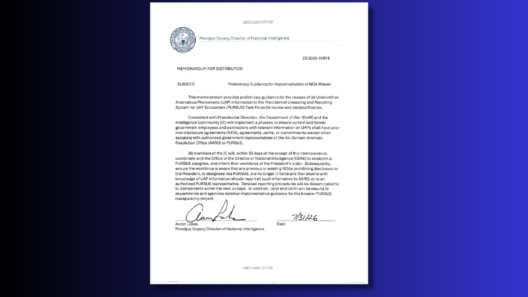
The All-domain Anomaly Resolution Office, or AARO, published its Fiscal Year 2025 Consolidated Annual Report on Unidentified Anomalous Phenomena on July 20, 2026.
The report covers UAP-related events from June 2, 2024, through May 30, 2025, as well as older events not included in previous annual reports. During that period, AARO received 319 reports. It resolved 114 of them, while 191 were moved to what the office calls its “active archive” because there was not enough corroborating information to determine what occurred. Nine reports were identified as requiring further analysis by intelligence and science and technology specialists.
Those figures tell two stories at once: AARO is becoming better at identifying conventional objects, particularly satellites, but inadequate data remain a fundamental obstacle in a significant proportion of UAP cases.
319 reports does not mean 319 new incidents
Of the 319 reports received by AARO, 284 concerned events occurring during the reporting period. Another 35 concerned incidents from between 2010 and 2024 that had not previously been included.
By the May 30, 2025 information cutoff, AARO’s total holdings had reached 1,870 reports.
The 319 received reports were divided by operational domain: 274 were classified as airborne, 44 as space-domain reports and one as maritime. The report notes that none of the space-domain assessments originated from sensors located in space. Forty-two came from civilian pilot reports supplied through the Federal Aviation Administration, while two came from ground-based U.S. Space Command sensors.
The distinction between reports and confirmed anomalous events is important. A UAP report begins as an observation requiring investigation; inclusion in AARO’s database does not establish that the object demonstrated extraordinary capabilities.
Hundreds of cases were given conventional explanations
AARO resolved 114 of the 319 reports received during the period. The office also closed 256 cases carried over from previous periods, bringing the total number of resolutions during the reporting period to 370.
According to AARO, every resolved case was attributed to conventional objects or events, including balloons, birds, satellites, aircraft and unmanned aerial systems. Individual cases were also attributed to a commercial rocket launch and a crewed jet pack.
Satellite reflections have become particularly significant.
AARO says a new three-dimensional modelling and simulation capability enabled analysts to resolve 238 reports as satellite flaring. Satellite flares occur when sunlight reflects from a satellite at an angle that can make it appear as a bright or moving light to an observer.
Elsewhere in the report, AARO specifies that 44 UAP-related events from the reporting period were resolved as satellite flaring. The larger 238 figure therefore reflects the broader body of cases processed using the new analytical capability rather than simply the 319 reports received during the year.
191 cases remain open because the data are insufficient
One of the most important numbers in the report is 191.
AARO transferred 191 of the 319 reports to its active archive. The term does not mean that the office determined the events to be genuinely extraordinary. Instead, it means the available evidence is insufficient to establish whether they involved natural phenomena, conventional technology or something exceeding known technological capabilities.
Those cases may be reopened if better information becomes available.
The report explicitly identifies inadequate sensor information as an ongoing problem, stating that a lack of timely and actionable data continues to restrict AARO’s ability to reach conclusions.
That distinction is central to interpreting official UAP statistics. Unresolved is not synonymous with anomalous, and neither term establishes an extraterrestrial explanation. In many cases, the government simply does not possess enough usable evidence to determine what was observed.
Nine reports require deeper investigation
A much smaller group may be more significant from an investigative perspective.
AARO identified nine reports for further analysis by Intelligence Community and science and technology partners with relevant expertise. The unclassified report provides little detail about those cases.
It also describes several reports involving UAP near national-security sites or critical infrastructure. Some narrative accounts suggested performance characteristics beyond known state-of-the-art capabilities, according to AARO, but those reports were not accompanied by technical data capable of validating the descriptions.
Two reports described electronic or avionics interference allegedly occurring when UAP were near operational aircraft. AARO says it has not determined whether the reported interference was actually caused by the unidentified phenomena.
The report recorded no UAP incidents identified as flight-safety concerns during the period.
A Navy case involving approximately 100 objects remains under investigation
The report’s only maritime-domain case stands apart from the broader statistics.
According to AARO, U.S. Navy assets operating off the coast of Virginia reported approximately 100 airborne UAP and two likely uncrewed surface systems. The office says it is actively investigating the incident in coordination with the unit that reported it.
The unclassified report provides no identification of the airborne objects, no publicly available sensor data and no conclusion about whether the aerial and surface observations were related.
That makes the case noteworthy, but not evidence of extraordinary technology. What is documented is that Navy personnel reported the objects and that AARO had not resolved the event when the report was prepared.
The distinction is especially important because AARO states that none of the cases it resolved indicated advanced foreign adversarial capabilities or breakthrough technologies. That conclusion applies to the resolved cases; it does not constitute an explanation for cases still being investigated or retained because of insufficient evidence.
Nuclear-site drone reports require another important distinction
The report also records 50 unmanned aerial system incidents near U.S. nuclear infrastructure, weapons and launch sites, up from 18 in the previous annual report.
Most occurred at night, and some lasted for an hour or longer. Reported objects ranged from small hobbyist drones to larger multirotor systems.
But AARO makes a critical distinction: none of the 50 incidents were reported as UAP. They were reported as unmanned aerial systems.
Including those incidents in discussions of the report without that qualification would therefore give a misleading impression of what AARO actually documented.
Seven authorized disclosures led to follow-up requests
The report also provides an unusual glimpse into AARO’s mechanism for people claiming first-hand knowledge of secret U.S. government UAP programs.
Between June 2, 2024 and May 30, 2025, 262 people contacted AARO through the secure reporting system. The office classified 255 submissions as outside the scope of the mechanism. Seven individuals presented claims that AARO determined warranted a request for a follow-up interview.
That does not mean AARO validated the seven claims. It means only that they met the threshold for additional investigation.
Separately, the FY2025 report states that AARO has found no evidence that the U.S. government or a private organization has captured or exploited material derived from UAP. This remains AARO’s official assessment and should be distinguished from allegations made by whistleblowers and other witnesses, some of whom have disputed previous government conclusions.
The central problem remains access to evidence
The FY2025 report does not provide evidence that unexplained UAP represent extraterrestrial technology. Nor does the number of cases eventually attributed to satellites, balloons or aircraft demonstrate that every unresolved report will have a conventional explanation.
What it demonstrates more clearly is the continuing data problem.
AARO can resolve cases when adequate sensor information, environmental data and contextual information are available. Hundreds of others remain difficult or impossible to evaluate because those data are missing.
For disclosure, publishing aggregate numbers is therefore only part of the process. The more consequential question is how much underlying evidence from genuinely unresolved cases can eventually be declassified and made available for independent scrutiny.
The FY2025 report identifies where the uncertainties remain. Public access to the evidence behind those uncertainties will determine how much further the disclosure process can actually go.