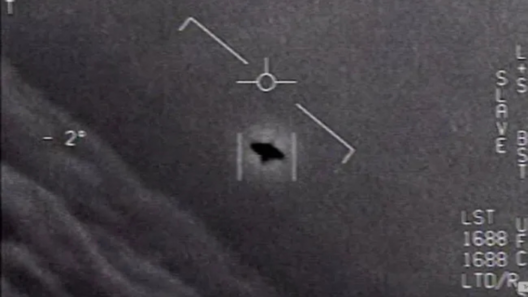
Dan Farah’s documentary assembles an unusually senior group of military officers, intelligence officials, lawmakers and UAP investigators who argue that the phenomenon is real and that crucial information remains hidden. The testimony is significant. The harder question is whether the film provides enough evidence to establish its most extraordinary claims.
Few UFO documentaries can put former intelligence leaders, members of Congress, military aviators and former UAP program officials on screen together and allow them to speak under their own names.
The Age of Disclosure can.
Directed and produced by Dan Farah, the 109-minute documentary premiered at SXSW on March 9, 2025, before receiving a wider theatrical and streaming release that November. It features 34 people from U.S. government, military and intelligence backgrounds and is now available internationally on Prime Video.


The film does not cautiously ask whether some UAP might be unusual.
It advances a much stronger thesis: non-human intelligence is present, this reality has been concealed for approximately 80 years, and major powers are engaged in a secret competition to recover and reverse-engineer technology of non-human origin. That is also how the film describes itself.
Those claims would rank among the most consequential discoveries in human history.
The question is what the documentary actually demonstrates.
The strength of the people willing to speak
Farah’s most effective decision is the people he puts in front of the camera.
Participants include Marco Rubio, Kirsten Gillibrand, Mike Rounds, former Director of National Intelligence James Clapper, Christopher Mellon, Luis Elizondo, Jay Stratton, Navy aviators David Fravor, Alex Dietrich and Ryan Graves, retired Rear Admiral Tim Gallaudet, scientist Garry Nolan and others with backgrounds in defense, intelligence or government.
That is an unusual concentration of institutional credibility for a documentary making claims about UFOs.
But the phrase “34 government insiders” can also obscure an important distinction.
The 34 participants do not all provide the same type of testimony.
Some describe military encounters or UAP investigations they personally participated in. Some discuss classified briefings or problems gaining access to information. Lawmakers describe national-security concerns and resistance encountered while seeking greater transparency. A smaller group makes much stronger claims involving recovered technology, non-human intelligence or covert reverse-engineering programs.
These should not be treated as 34 independent confirmations of a single proposition.
Their access, evidence and proximity to the underlying claims vary substantially.
From unidentified objects to non-human intelligence
One of the documentary’s strongest passages comes from Rubio discussing unidentified objects operating around restricted nuclear facilities.
His point is significant without requiring an extraterrestrial explanation: objects have reportedly entered highly sensitive airspace, they are not acknowledged U.S. systems, and officials do not necessarily know whose they are. Rubio argues that this alone warrants serious investigation.
That is a national-security issue.
But The Age of Disclosure moves considerably further.
Former UAP Task Force official Jay Stratton states in the film that he personally saw what he considers non-human craft and beings. Elizondo describes classified material that he says convinced investigators they were dealing with technology not made by humans. Others allege a secret program attempting to retrieve and exploit such technology.
These are fundamentally different levels of claim.
Evidence that an unidentified object penetrated restricted airspace does not establish that the object originated from a non-human intelligence.
Likewise, evidence that classified UAP programs existed does not by itself establish that those programs recovered non-human spacecraft.
The documentary often moves between those levels quickly.
Testimony is evidence — but evidence has levels
Farah has argued that the collective credibility of the 34 participants is itself among the strongest evidence available. He has emphasized that senior officials are putting their names and reputations behind what they say publicly.
That argument should not simply be dismissed.
Eyewitness testimony and insider testimony are forms of evidence. A statement from someone with relevant access can justify investigation, particularly when multiple witnesses describe overlapping concerns.
But testimony has limitations.
People can accurately describe what they observed while being mistaken about its cause. They can accurately repeat what they were told without the original information being correct. Multiple people can also receive information from the same underlying source, creating the appearance of independent corroboration where there is actually only one origin.
For the strongest claims in The Age of Disclosure, the documentary does not give the public access to recovered hardware, biological material, complete sensor datasets or authenticated program records that independently establish non-human origin.
That is the film’s central evidentiary problem.
The government’s official conclusion is almost the opposite
The documentary’s thesis also sits in direct conflict with the Pentagon’s All-domain Anomaly Resolution Office, or AARO.
AARO’s 2024 historical review stated that it found no empirical evidence that the U.S. government or private companies had been reverse-engineering extraterrestrial technology. It also reported no evidence that any official U.S. investigation had confirmed a UAP as extraterrestrial technology.
The Pentagon’s subsequent annual UAP report similarly stated that AARO had found no evidence of extraterrestrial beings, activity or technology, while acknowledging that many cases remained unresolved because available data were insufficient.
That does not automatically disprove the documentary.
If genuinely compartmented programs exist outside normal oversight, an official office could theoretically lack access to them. Critics of AARO have raised precisely that concern.
But that argument creates a difficult evidentiary situation: lack of official confirmation cannot itself become evidence that the alleged program is successfully concealed.
The answer has to come from independently verifiable material.
A documentary designed to make a case
The Age of Disclosure is not structured as an open-ended investigation presenting competing hypotheses with equal weight.
Farah believes the core proposition is true, and the documentary is constructed to persuade viewers of it.
There are no meaningful skeptical interviews examining individual claims in detail. Reviewers noted this after its SXSW premiere, with criticism focusing less on the absence of opposing personalities than on the absence of new evidence capable of independently testing many of the allegations.
That does not make the film worthless.
It makes it an argument rather than a verdict.
Viewers should evaluate each witness separately: What did this person personally observe? What did they learn secondhand? What documents support the account? Are other witnesses genuinely independent? Can the underlying evidence be examined?
Those questions become more important as the claims become more extraordinary.
Why the film matters to disclosure
Where The Age of Disclosure unquestionably succeeds is culturally and politically.
A UFO documentary featuring senators, former intelligence officials, military officers and people who ran government UAP investigations would have been difficult to imagine as a mainstream production a decade earlier.
Its existence illustrates how dramatically the boundaries of acceptable public discussion have shifted.
Senior officials can now publicly discuss UAP, unidentified objects around sensitive facilities, alleged hidden programs and non-human intelligence without the subject automatically ending their careers.
That is significant.
But disclosure ultimately requires more than reducing stigma.
If the film’s central claims are accurate, the next stage cannot simply be another documentary containing additional testimony. It must involve evidence that can leave the classified environment: records, sensor data, program documentation, materials and independent scientific examination.
The Age of Disclosure presents an unusually formidable collection of people saying there is much more to the story.
It does not yet give the public what would finally settle it.
And that distinction may be the most important thing to understand about the film.
Sources
The Age of Disclosure — Official website
SXSW — The Age of Disclosure world premiere
Prime Video — The Age of Disclosure
U.S. Department of Defense — AARO Historical Record Report, Volume I