

Researchers examining a recently released Pentagon UAP video have identified evidence consistent with birds rather than extraordinary aircraft. Meanwhile, newly obtained federal records document dozens of unresolved drone reports at U.S. nuclear facilities, exposing persistent gaps in what authorities can publicly explain.
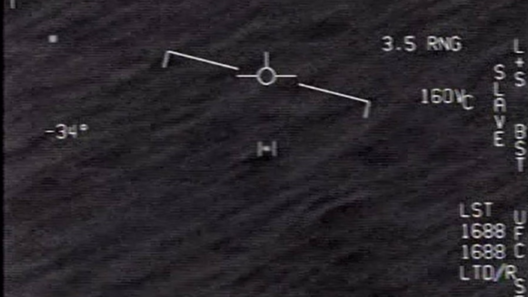
A new scientific analysis published on October 6 challenges one of the most striking claims to emerge from the Pentagon’s latest release of unidentified anomalous phenomena (UAP) footage: six apparently spherical objects reportedly travelling at 480 miles per hour over the Middle East.
The researchers conclude that the objects are more plausibly explained as birds whose apparent speed was distorted by the movement of the observing aircraft.
The study arrives alongside a separate disclosure development. On October 7, Liberation Times published an investigation based on 67 reports obtained from the U.S. Nuclear Regulatory Commission (NRC), documenting drone activity at 28 nuclear facilities across 17 states.
Together, the developments illustrate two different challenges facing UAP investigations: distinguishing extraordinary observations from conventional phenomena and obtaining sufficient government records to determine what actually occurred. arXiv
Scientists Revisit a Pentagon Video Reported at 480 MPH
The scientific paper, titled Six objects reported at 480 mph in a declassified military infrared video show brightness flicker at bird wingbeat rates, was submitted to arXiv on October 6 and revised October 7.
Its six authors include Jacob Haqq-Misra, NASA scientist Ravi Kopparapu and Harvard astrophysicist Abraham Loeb.
The research examines video DOW-UAP-PR135, released by the Department of War on September 18 through the Presidential Unsealing and Reporting System for UAP Encounters (PURSUE).
The original incident occurred on July 29, 2025, according to the accompanying military mission report.
A U.S. military aircraft recorded six objects that appeared to move together while changing direction. The reporting crew estimated their speed at approximately 480 mph, or 772 kilometres per hour.
However, that figure was an estimate, not a velocity independently established through publicly available sensor measurements.
The new research challenges the assumption that the objects were moving at anything approaching that speed. arXiv
The Evidence for a Conventional Explanation
Using frame-by-frame analysis, the researchers measured changes in the infrared brightness of all six objects.
Each displayed a regular oscillation between approximately 7.1 and 7.9 times per second.
Importantly, the objects did not brighten and dim simultaneously. Their individual frequencies and phases differed.
The researchers tested whether video compression, sensor characteristics or image-processing artefacts could explain the pattern. Their analysis found that these mechanisms did not adequately reproduce the observed behaviour.
They then compared the measurements with infrared recordings of flying animals collected by Harvard’s Galileo Project.
Those recordings showed similar periodic brightness changes associated with wingbeats.
The team also examined parallax, an optical effect in which an observer’s movement makes nearby objects appear to move rapidly against a more distant background.
Their calculations indicate that relatively slow-moving objects positioned below the aircraft could produce the reported apparent ground-relative speed.
The researchers therefore favour a small flock of birds as the explanation.
The paper has been submitted to Scientific Reports but has not yet undergone completed peer review. Its findings represent a scientific interpretation, not an official Pentagon identification.
The authors also acknowledge that the available imagery cannot completely exclude a more distant, fast-moving object.
That limitation is significant. The original footage contains redactions that prevent independent researchers from reconstructing all relevant flight parameters. arXiv
Why the Study Matters for Disclosure
The investigation demonstrates that meaningful analysis remains possible even when governments release incomplete sensor recordings.
It also illustrates why military estimates of extraordinary performance must be examined rather than accepted automatically.
An object appearing to travel at hundreds of miles per hour does not necessarily possess that velocity. Establishing actual speed requires reliable information about distance, viewing geometry and the observing platform.
The Pentagon’s All-domain Anomaly Resolution Office (AARO) has previously explained another widely discussed Navy recording, known as Go Fast, using comparable geometric reasoning.
The new study strengthens the case for releasing additional technical information alongside UAP footage.
Without such information, public disclosure may produce more debate than understanding.
Federal Records Detail Drone Activity at Nuclear Facilities
A different transparency problem emerged on October 7.
Investigative journalists Kyle Warfel and Christopher Sharp reported obtaining 67 NRC records covering drone sightings between February 2024 and March 2026.
The reports involve 28 nuclear facilities in 17 states, including operating reactors, spent-fuel storage locations and facilities associated with nuclear fuel production.
Several incidents involved aircraft entering protected areas.
At Virginia’s Surry Nuclear Power Plant, security personnel reported multiple drones during December 2024, including one that passed over both reactor containment buildings.
Other reports describe unusual formations, aircraft of varying sizes and incidents in which operators could not be identified.
The records reportedly carry the administrative designation Closed Unresolved.
That designation does not establish that the aircraft possessed extraordinary capabilities. Nor does it necessarily mean that subsequent investigations by law enforcement or other agencies reached no conclusions.
The NRC has previously acknowledged the broader problem.
Its official guidance explains that nuclear plant operators must report relevant drone sightings and that facility security personnel generally lack authority to intercept or shoot down aircraft.
An NRC Inspector General report covering April through September 2025 also documented federal scrutiny of unauthorized drone activity at licensed facilities. Liberation Times | Reimagining Old News
Nuclear Security Is Not Evidence of Non-Human Technology
Reports of unusual aircraft around nuclear installations have occupied a prominent place in UFO history for decades.
However, the newly reported NRC records do not establish a connection to extraterrestrial technology, recovered spacecraft or alleged non-human intelligence.
Some incidents may involve commercially available drones, unauthorized surveillance or other conventional activity.
The central unresolved questions concern identification, operator responsibility and the results of subsequent investigations.
Those questions deserve attention independently of the extraterrestrial hypothesis.
For disclosure researchers, the records also demonstrate the value of obtaining contemporaneous government documentation rather than relying exclusively on witness recollections.
Bigelow Says DIA Has Located Missing AAWSAP Records
Another potentially important development emerged on October 7 through George Knapp’s Mystery Wire podcast.
During a discussion involving Robert Bigelow and Colm Kelleher, Bigelow said the Defense Intelligence Agency had located an inventory of previously missing documents associated with the Advanced Aerospace Weapon System Applications Program (AAWSAP).
Bigelow described a September 29 letter that he said indicated the agency intended to release material following appropriate redactions.
AAWSAP operated between 2008 and 2012 and has become central to debates about the origins of modern U.S. government UAP investigations.
However, Bigelow’s account has not yet been independently confirmed through a newly published DIA statement or the release of the complete referenced correspondence.
The existence of additional documents would be relevant to understanding the program’s historical activities. It would not, by itself, validate extraordinary claims associated with those activities. Apple Podcasts
The Next Test Is Better Evidence
The week’s developments demonstrate that transparency and scientific scrutiny must advance together.
The new infrared analysis provides a testable conventional explanation for a previously unresolved military observation.
The NRC records raise legitimate questions about security incidents and investigative follow-up.
And the reported discovery of additional AAWSAP material, if independently verified, could expand the historical record of government UAP research.
None of these developments establishes non-human technology.
But each demonstrates something essential to meaningful disclosure: the difference between possessing information and making that information available for independent examination.
The next significant advances will come from releasing complete records, preserving technical context and allowing competing explanations to be tested against the evidence.
That is how unidentified observations become understood — regardless of what the eventual explanations turn out to be.
Sources
Scientific research
Official government documentation
Department of War / DVIDS — DOW-UAP-PR135, September 18, 2026
Department of War — DOW-UAP-D108 Mission Report
Nuclear Regulatory Commission — Drones and Nuclear Power Plant Security
NRC Inspector General — Semiannual Report, April–September 2025
Investigative reporting
Podcast
Mystery Wire with George Knapp — Robert Bigelow Discusses AAWSAP Files, October 7, 2026