For four years, Bryce Zabel and Ross Coulthart built Need to Know around investigative journalism and a rapidly developing UAP story. With historian Richard Dolan now alongside Zabel, the podcast has shifted toward a longer view of secrecy, history and what disclosure might actually mean.
When Need to Know began in late 2021, its premise was unusually straightforward for a UFO podcast: treat the subject like a developing news story.
The original hosts, Australian investigative journalist Ross Coulthart and American writer, producer and former broadcast journalist Bryce Zabel, presented themselves not simply as commentators but as journalists actively investigating the UAP question.
The show’s own description called it an “active investigation,” intended to bring listeners into the reporting process while providing news updates and analysis for a mainstream audience.
That format proved well suited to the period in which it emerged. Congress was establishing new UAP oversight mechanisms, Pentagon offices were being reorganized, whistleblowers were beginning to speak publicly, and Coulthart was developing sources that would eventually lead to his high-profile 2023 interview with David Grusch.
But Need to Know sounds different today.
Coulthart’s final regular episode aired in July 2025. Richard Dolan subsequently joined Zabel as co-host, beginning a new phase in which the podcast increasingly places current UAP developments inside a much longer history of alleged secrecy, government policy and disclosure.
The subject remained the same.
The lens changed.
The Coulthart–Zabel years
Coulthart and Zabel brought complementary backgrounds to the original show.
Both had worked in broadcast journalism, but Coulthart was increasingly engaged in active UAP reporting and confidential sourcing, while Zabel brought a mixture of journalism, Hollywood experience and decades of interest in disclosure.
Their early episodes moved rapidly between current events and historical context: congressional hearings, military sightings, government reports, presidential involvement, the U.S. Air Force’s relative silence and figures such as Luis Elizondo.
The official archive shows just how closely the program followed the developing story. Its first episodes in December 2021 dealt with that year’s UAP developments and new legislation; by May 2022, Coulthart and Zabel were responding directly to congressional hearings.
The approach was deliberately journalistic. The show’s website described the hosts as trying to provide information “fast and accurately,” while allowing listeners to follow their investigation as it developed.
That also meant the program sometimes became a platform for information that was difficult for listeners to independently verify.
Coulthart increasingly reported claims based on confidential sources — a legitimate tool of investigative journalism, but one that requires audiences to place considerable trust in a reporter’s source assessment.
This tension became especially visible during Coulthart’s final episode.
A controversial final episode
Episode 65, published in July 2025, was explicitly billed as “Ross Coulthart’s Final Show.”
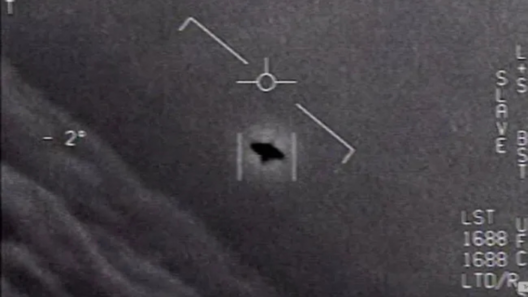
During the conversation, Coulthart made a significant claim concerning the famous 2004 Nimitz “Tic Tac” encounter, suggesting that aspects of the case could involve advanced human technology and Lockheed Martin.
The episode description itself noted that Zabel had not known Coulthart was going to make the claim and said he would have challenged it with additional questions had he known in advance.
That is journalistically important.
It demonstrates that Need to Know was not simply presenting a unified disclosure narrative. The hosts could reach different conclusions even about some of the field’s most consequential cases.
There was public speculation about whether the disagreement contributed to Coulthart’s departure. There is no need to infer that. The podcast’s current description gives a simpler explanation: Coulthart moved on to his Reality Check work for NewsNation, while Zabel continued Need to Know.
Richard Dolan changes the perspective
Richard Dolan joined the program in 2025.
It was not a random pairing.
Dolan and Zabel had already collaborated extensively and co-authored A.D. After Disclosure, their 2012 book examining the possible political, cultural and social consequences of an official acknowledgement of non-human intelligence.
Dolan also brings a very different professional identity from Coulthart.
He is primarily a historian and researcher rather than a working television reporter. Much of his work has focused on reconstructing the historical relationship between UFO reports, military institutions, intelligence agencies and government secrecy.
That difference is visible in the podcast.
When Zabel announced Dolan’s arrival, he described the intended audience as people who wanted not simply the latest UAP developments, but enough historical context to understand why those developments matter.
Recent episodes reflect that approach.
A February 2026 program on alleged UFO crash retrievals drew heavily on historical research, including the work of Leonard Stringfield. A March discussion examined disclosure in the context of geopolitical instability and whether governments would choose to reveal destabilizing information during periods of international crisis. In June, Zabel and Dolan returned directly to ideas from A.D. After Disclosure, asking what the word “disclosure” should actually mean.
The program increasingly treats disclosure as a historical process rather than a sequence of breaking stories.
The podcast can now examine its own past
Perhaps the clearest demonstration of the change came in July 2026.
Zabel and Dolan devoted an episode to Coulthart’s earlier claim concerning the Nimitz Tic Tac and Lockheed Martin. Rather than simply repeating it, they examined what Coulthart had actually said and asked whether the available evidence justified the conclusion.
That kind of internal scrutiny is useful.
The disclosure community frequently suffers from claims being repeated until their original evidentiary basis becomes difficult to identify. Returning to a specific allegation and asking what is actually known should be standard practice regardless of who originally made it.
But the Dolan era carries its own risks.
Historical interpretation can become speculative when documented events are connected into larger theories. Dolan has discussed concepts such as a possible “breakaway civilization” operating through deeply compartmentalized structures — an intriguing hypothesis, but not an established fact. An August 2026 episode explicitly presented the idea while also examining competing UAP narratives and their supporting evidence.
The same evidentiary rules must therefore apply whether a claim comes from a confidential intelligence source or from historical synthesis.
Why Need to Know matters
The transformation of Need to Know mirrors a broader change in the disclosure conversation.
During the Coulthart–Zabel years, the story often felt immediate: new witnesses, congressional hearings, whistleblower allegations and potentially consequential information arriving through sources.
The Zabel–Dolan version asks a different set of questions.
Where does today’s disclosure effort fit within 80 years of UFO history? Are current institutional responses genuinely new? What patterns repeat? How should conflicting claims be evaluated? And what would disclosure actually look like if it occurred gradually rather than through a single government announcement?
Neither approach can resolve the underlying UAP mystery by itself.
Breaking journalism can reveal information that institutions would prefer to keep hidden, but confidential sourcing requires verification. Historical analysis can expose patterns that disappear when events are viewed separately, but patterns can also be mistaken for proof.
At its best, Need to Know now sits between those two traditions.
The podcast began by asking what the public needed to know about the latest UAP developments.
Its newer incarnation increasingly asks a harder question:
How do we know what we think we know?
Sources
Need to Know — Official website
Need to Know — Coulthart & Zabel archive and host background
Need to Know — Apple Podcasts
Ross Coulthart’s final Need to Know episode — Stellar Productions
Need to Know — current episodes on iHeart