Bryce Zabel and Brent Friedman’s 2026 podcast asks whether Hollywood has merely reflected decades of UFO culture — or whether government insiders have sometimes tried to shape it. Their investigation begins with an extraordinary encounter they say happened during the production of Dark Skies.
Hollywood has been imagining UFO disclosure for decades.
From The Day the Earth Stood Still and Close Encounters of the Third Kind to The X-Files and Disclosure Day, film and television have helped define what government secrecy, first contact and hidden non-human intelligence are supposed to look like.
A new podcast asks a more uncomfortable question:
What if that relationship occasionally worked in the opposite direction?
Launched by iHeartPodcasts on February 19, 2026, Sound, Light & Frequency is hosted by writer-producers Bryce Zabel and Brent Friedman. The planned 36-episode series uses individual films and television shows as entry points into the history of UFOs, UAP and disclosure. Its central hypothesis is deliberately provocative: could elements within the U.S. government have used entertainment as part of a long-term process of familiarizing the public with UFO-related ideas?
The podcast does not begin with a government document proving such a campaign existed.
It begins with something Zabel and Friedman say happened to them.
The strange story behind Dark Skies
Zabel and Friedman created the NBC science-fiction series Dark Skies, which premiered on September 21, 1996.
Set primarily in the 1960s, the series constructed an alternate history in which events including Roswell, Project Blue Book and the Kennedy era were connected to a secret struggle involving extraterrestrial infiltration and a covert organization called Majestic 12.
Contemporary coverage confirms that Zabel and Friedman deliberately combined real historical events with UFO lore. In a 1996 interview with The Washington Post, Zabel described researching UFO reports and placing historical events alongside alleged UFO incidents to construct the show’s fictional timeline.
That much is documented.
What allegedly happened after the show was made is considerably harder to verify.
Zabel and Friedman now say that at the Dark Skies premiere party, an unfamiliar man approached them and claimed to represent the Office of Naval Intelligence. According to their account, he told them they had gotten several things right and proposed that the series could be used to introduce truthful UFO information gradually through fiction.
It is this alleged encounter that forms the foundation of Sound, Light & Frequency.
The podcast’s title itself comes from the encounter, according to the hosts.
There is currently no publicly available documentation establishing that the man actually represented Naval Intelligence or that the proposed arrangement was an authorized government initiative.
That distinction is essential.
The encounter is evidence of what Zabel and Friedman say they experienced. It is not, by itself, evidence of a government disclosure program.
A “slow-drip disclosure” hypothesis
The podcast expands outward from that personal story.
Each episode examines entertainment dealing with UFOs or non-human intelligence and compares its themes with real-world UFO history. Zabel and Friedman describe the format as an investigation into whether Hollywood and government have participated in what they call a “slow-drip” disclosure process.
That idea has existed within UFO culture for decades.
The basic argument is that fictional portrayals of extraterrestrial life could gradually reduce the psychological shock of eventual disclosure. Repeated exposure to alien contact, government secrecy and advanced non-human technology might make those concepts culturally familiar before any official confirmation.
There is an obvious problem, however.
Cultural familiarity does not demonstrate coordination.
Hollywood repeatedly returns to UFOs because they make compelling stories. Writers borrow from existing folklore, government history, newspaper reports and each other. Once concepts such as Roswell, Men in Black, Area 51 and crash retrieval become embedded in popular culture, later films inevitably resemble earlier UFO claims.
That creates what Zabel and Friedman themselves have described elsewhere as a “chicken-and-egg” problem: did Hollywood introduce ideas that later entered UFO mythology, or did filmmakers simply adapt stories already circulating among researchers and witnesses?
Sometimes both processes may be occurring simultaneously.
When fiction and disclosure begin to resemble each other
The question has become more interesting since Dark Skies aired.
In 1996, concepts such as secret UFO programs, recovered craft and government concealment were overwhelmingly associated with fringe literature and entertainment.
Thirty years later, parts of that vocabulary appear in actual congressional hearings and legislation.
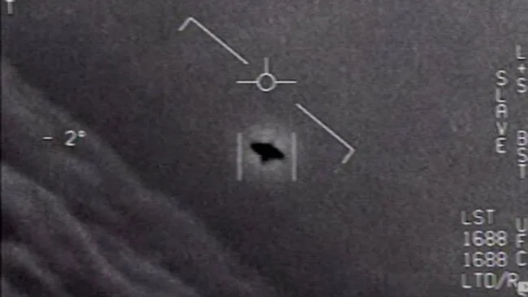
Former intelligence official David Grusch has publicly alleged the existence of crash-retrieval and reverse-engineering programs. U.S. senators have introduced legislation using terms including “non-human intelligence,” “technologies of unknown origin” and “legacy program.” Military UAP encounters have been discussed in congressional hearings.
None of this proves that the fictional history presented by Dark Skies was secretly based on classified facts.
But it creates fertile territory for Sound, Light & Frequency because cultural fiction and the modern disclosure debate increasingly share the same language.
That convergence deserves examination without assuming why it exists.
Hollywood can influence disclosure without being part of a conspiracy
There is also a less dramatic way entertainment can play a genuine role in disclosure.
Popular culture shapes what society considers thinkable.
Close Encounters of the Third Kind helped create a visual language for benevolent contact. The X-Files turned government UFO secrecy into mass entertainment. Dark Skies integrated alleged UFO history into real twentieth-century events. More recently, Disclosure Day has drawn explicitly from the post-2017 UAP environment.
None of those productions needs to have been directed by intelligence agencies to influence public attitudes.
Fiction can reduce stigma, provide vocabulary and establish expectations. It can also introduce misleading assumptions that later become difficult to separate from evidence.
That makes Hollywood relevant to disclosure even if the strongest version of the “slow-drip” hypothesis ultimately proves wrong.
The evidence question remains
Sound, Light & Frequency is most compelling when it treats its premise as a question rather than an answer.
Zabel and Friedman genuinely worked inside Hollywood. They genuinely created a network television series deeply informed by UFO history. And they say they had an extraordinary encounter with someone claiming an intelligence connection.
What remains unestablished is whether that encounter represented anything larger.
To demonstrate an organized government effort to influence entertainment, stronger evidence would be required: documents, independently corroborating participants, production records, communications or named officials capable of establishing that such a policy actually existed.
Until then, the distinction should remain clear.
Hollywood has unquestionably helped shape how generations imagine UFOs and disclosure.
Whether government agencies deliberately helped shape Hollywood’s version of that story is a much more extraordinary claim.
That is the mystery Sound, Light & Frequency is trying to investigate.
Sources
Sound, Light & Frequency — Official Website
iHeart — Sound, Light & Frequency
Apple Podcasts — Sound, Light & Frequency
iHeart — Launch announcement, February 19, 2026
Los Angeles Times — Dark Skies, September 21, 1996
The Washington Post — Dark Skies and its UFO influences, October 12, 1996