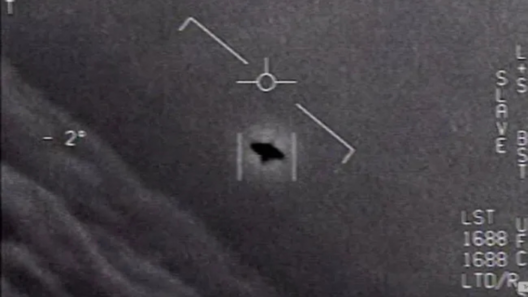

Washington’s UAP disclosure architecture expanded this week as the Pentagon opened a protected reporting pathway, ODNI acknowledged outside advisers to its UAP Governance Board, and lawmakers in the United States and Japan called for international cooperation.
The U.S. government took several concrete steps on unidentified anomalous phenomena this week, but none amounts to confirmation of the extraordinary claims that continue to surround the subject.
On September 14, the Department of War issued a legal waiver designed to allow current and former military personnel, civilian employees and contractors to provide UAP-related National Defense Information to designated representatives of the Presidential Unsealing and Reporting System for UAP Encounters, or PURSUE. The department described it as an authorized and legally protected disclosure mechanism.
Three days later, senior intelligence official Aaron Lukas publicly acknowledged that representatives from the UAP Science Advisory Council, the Disclosure Foundation and To The Stars had recently participated as advisers to the intelligence community’s UAP Governance Board. The acknowledgment provides an unusually clear view into an emerging government structure that until recently had largely been described through interviews and secondary reporting.
The Pentagon removes one barrier — not classification itself
The September 14 waiver is potentially significant because secrecy agreements have repeatedly been cited by UAP witnesses and lawmakers as obstacles to disclosure.
The measure provides targeted relief from civil and administrative enforcement provisions in Non-Disclosure Agreements and Special Access Program Indoctrination Agreements when qualifying information is provided through the authorized PURSUE pathway.
But its limits are equally important.
It does not authorize public disclosure of classified information, release personnel from all secrecy obligations or establish that secret UAP programs exist. Information submitted through the process remains subject to security review and possible declassification.
The distinction matters because some online discussion has characterized the measure as effectively freeing UAP whistleblowers from their NDAs. That description is too broad.
The Black Vault also noted that statutory protections for certain authorized disclosures already existed, raising a legitimate question about how much additional practical protection the new waiver provides. The more important test will therefore be whether insiders actually use it — and whether their information ultimately reaches congressional overseers or the public.
ODNI confirms outside advisers inside the UAP governance process
Another piece of the emerging architecture became clearer on September 17.
Lukas publicly thanked astrophysicist Avi Loeb, the UAP Science Advisory Council, Disclosure Foundation and representatives from To The Stars for recently joining ODNI as advisers to the intelligence community’s UAP Governance Board.
The statement is noteworthy because musician and To The Stars co-founder Tom DeLonge had previously described himself publicly as an active U.S. government consultant on UAP issues. The ODNI acknowledgment now establishes that To The Stars representatives have participated in an official advisory capacity, although the statement did not identify individual representatives by name. Claims that it specifically confirms DeLonge or former CIA officer Jim Semivan should therefore be treated cautiously unless ODNI names them directly.
Loeb separately told Space.com that the government appeared sincere about investigating UAP scientifically. His comments concern the government’s approach and the council’s work; they do not constitute scientific evidence for extraterrestrial or non-human technology.
U.S. and Japanese lawmakers seek an international disclosure strategy
The disclosure debate also moved beyond Washington this week.
On September 16, U.S. Representative Eric Burlison, former Japanese defense minister Yasukazu Hamada and former Japanese lawmaker Yoshiharu Asakawa published a joint statement arguing that democratic allies should cooperate on UAP oversight and information sharing. Asakawa independently confirmed the initiative on September 17.
Their argument is significant for disclosure because it identifies a structural weakness in nationally compartmentalized investigations: UAP incidents can cross jurisdictions while elected representatives in allied countries may receive different information from their respective defense and intelligence establishments.
The authors cited both U.S. PURSUE records and the 2025 incident near Japan’s Genkai Nuclear Power Station. However, their conclusion that available evidence indicates an unknown technology is their assessment, not an established finding. Japanese reporting has documented alternative interpretations of the Genkai lights, including aircraft, and the available public evidence does not establish exotic technology.
“Immaculate Constellation” remains unverified
A separate development on September 17 illustrates why disclosure journalism still requires careful distinctions between documents and what those documents actually prove.
The Black Vault reported that the National Security Agency rejected an appeal seeking records concerning the alleged UAP program known as “Immaculate Constellation.”
NSA maintained a so-called Glomar response — refusing to confirm or deny whether responsive intelligence records exist. The Pentagon, by contrast, has stated that it has no record, present or historical, of a Special Access Program by that name.
Neither response proves the allegation.
The existence of the whistleblower-origin report describing Immaculate Constellation is documented, and it was entered into the congressional record. But no program charter, budget trail, underlying imagery or independently authenticated intelligence records have been publicly produced establishing that the alleged program exists as described.
NSA’s refusal to answer cannot legitimately be converted into confirmation.
Disclosure is becoming a system — evidence remains the test
The week’s developments suggest that UAP disclosure is increasingly becoming institutionalized rather than depending exclusively on hearings, leaks and individual whistleblowers.
There is now PURSUE, a specific legal waiver, an intelligence-community UAP Governance Board, a scientific advisory structure and an emerging effort by lawmakers to coordinate internationally.
That is a meaningful change in process.
But process is not proof.
The decisive measure of these initiatives will be whether they produce primary records, sensor data, scientifically useful evidence and information that elected oversight bodies — and eventually the public — can independently evaluate.
Until then, the most important development may be that the machinery for disclosure is becoming more visible, while the central claims behind the modern UAP controversy remain unresolved.
Sources
Department of War — UAP legal waiver, September 14, 2026
Department of War — PURSUE public records portal
DefenseScoop — Pentagon legal relief for UAP disclosures
Space.com — Avi Loeb on the UAP Science Advisory Council
The Debrief — U.S.–Japan lawmakers call for coordinated UAP disclosure
Yoshiharu Asakawa — confirmation of the September 16 joint statement
The Black Vault — NSA FOIA decision on Immaculate Constellation