

Luis Elizondo’s 2024 memoir makes some of the strongest claims yet from a former Pentagon official about UAP, crash-retrieval programs and non-human technology. But the book’s significance rests as much on who is making those claims as on what can currently be proven.
When Imminent: Inside the Pentagon’s Hunt for UFOs was published in August 2024, Luis Elizondo was already one of the central figures in the modern UAP disclosure movement. The former Department of Defense official had helped bring Pentagon investigations of unidentified anomalous phenomena into public view after leaving government service in 2017.
The book goes considerably further.
Elizondo argues that some UAP represent intelligently controlled technology beyond known human capabilities. He describes a government environment in which information is highly compartmented and claims that the United States has recovered anomalous technology — and biological material associated with it.
Those are extraordinary assertions. Imminent does not provide publicly accessible physical evidence capable of independently establishing them. But Elizondo has subsequently repeated some of his central claims before Congress, under oath, making the book more than a conventional UFO memoir.
From Pentagon insider to public advocate
Elizondo spent years working in counterintelligence and national security before becoming involved with the Pentagon effort commonly known as the Advanced Aerospace Threat Identification Program, or AATIP.
Exactly how AATIP was structured remains surprisingly complicated.
The Pentagon’s own 2024 historical review says the Defense Intelligence Agency established the Advanced Aerospace Weapon System Applications Program, or AAWSAP, in 2009 after Congress appropriated $22 million to investigate advanced aerospace threats. According to the All-domain Anomaly Resolution Office’s historical report, the names AAWSAP and AATIP were sometimes used interchangeably in official documentation.
AARO maintains, however, that after AAWSAP ended in 2012, “AATIP” referred to an informal UAP effort carried out by government personnel alongside their normal duties rather than a formally funded Pentagon program.
That distinction matters because Elizondo has described himself as leading AATIP. Former Senate Majority Leader Harry Reid, one of the original sponsors of the Pentagon effort, publicly supported Elizondo’s account of his role. Internal Defense Department emails released under the Freedom of Information Act also confirm that Elizondo was involved in UAP-related activity and briefings, although questions have persisted over the formal status of that work.
The disagreement illustrates a recurring problem in the disclosure debate: people may agree that activity occurred while disagreeing sharply over what organizational label should be attached to it.
The claims at the center of Imminent
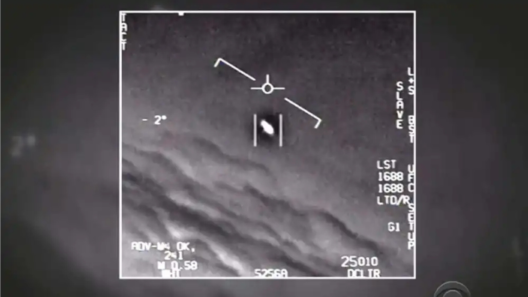
The most consequential parts of Imminent are not Elizondo’s descriptions of unexplained military encounters. The U.S. government has already acknowledged that military personnel have encountered objects they could not immediately identify.
The larger claims concern what allegedly happened afterward.
In the book and subsequent interviews, Elizondo has said the U.S. government has recovered technology of non-human origin and possesses biological material connected with UAP retrievals. In an August 2024 CNN interview discussing Imminent, he stated that the United States possessed something “made by nonhumans,” while leaving the precise origin open.
He also recounts information he says was shared with him by senior officials concerning biological remains recovered from alleged UAP incidents.
This distinction is important. Some of what Elizondo describes comes from his own government experience; other claims are information reportedly provided to him by colleagues or officials. A secondhand account from an intelligence insider may deserve investigation, but it is not equivalent to personally examining a recovered object or biological specimen.
Imminent also contains more unusual personal material. Elizondo has described luminous green orbs appearing inside his family home over an extended period. In later interviews he said members of his family and others witnessed the phenomena. No publicly available photographic or sensor evidence has established what those reported objects were.
Elizondo takes the claims to Congress
What happened after publication significantly changed the context in which Imminent should be read.
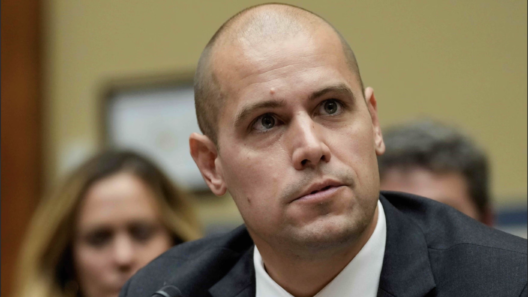
On November 13, 2024, Elizondo appeared before a joint hearing of two U.S. House Oversight subcommittees. In his written testimony to Congress, he stated that advanced technologies not made by the United States or another government were monitoring sensitive military installations and that the United States possessed UAP technology.
During questioning, Representative Nancy Mace asked whether the government had conducted secret UAP crash-retrieval programs.
Elizondo answered yes.
Asked whether such programs were intended to identify and reverse-engineer what Mace called “alien craft,” he again answered yes. He also said he had signed government documentation limiting what he could publicly discuss about crash retrievals and that the contents of Imminent had undergone the government’s prepublication security review process. The exchange appears in the official House hearing transcript.
That is significant testimony. It is not, however, independent confirmation of the underlying programs.
Nor does government security clearance of a manuscript mean the Pentagon certified the truth of its contents. Prepublication review primarily determines whether publication would disclose protected classified information.
The official government position remains very different
Elizondo’s account directly conflicts with AARO’s public conclusions.
AARO’s 2024 historical review stated that its investigation found no empirical evidence that the U.S. government or private contractors possessed extraterrestrial technology or had successfully operated programs to reverse-engineer it. The office said many modern allegations could be traced to interconnected individuals associated with earlier UAP research efforts and that witnesses had not supplied AARO with empirical evidence supporting the most extraordinary claims.
That does not automatically settle the question either.
Critics argue that an office investigating highly compartmented programs may not necessarily be granted access to everything it seeks. Conversely, claims that evidence is hidden inside inaccessible classified compartments cannot themselves substitute for evidence.
This is the fundamental tension surrounding Imminent.
Why the book matters for disclosure
The lasting importance of Imminent may ultimately depend less on whether every claim in it survives scrutiny and more on the institutional questions it raises.
A former Pentagon intelligence official has publicly alleged that UAP crash-retrieval and reverse-engineering programs exist. He has made related statements before Congress. Other former officials and witnesses have made overlapping allegations. The Pentagon’s designated UAP office rejects the central conclusion.
Both positions cannot fully describe the same reality.
The obvious next step is therefore not another round of increasingly dramatic claims. It is access: documents, program records, witnesses with direct knowledge, sensor data and — if recovered material genuinely exists — scientifically examinable evidence.
Imminent makes the case that such evidence is hidden behind classification.
Whether that case can eventually be demonstrated outside the pages of a memoir remains one of the central unanswered questions in the disclosure debate.