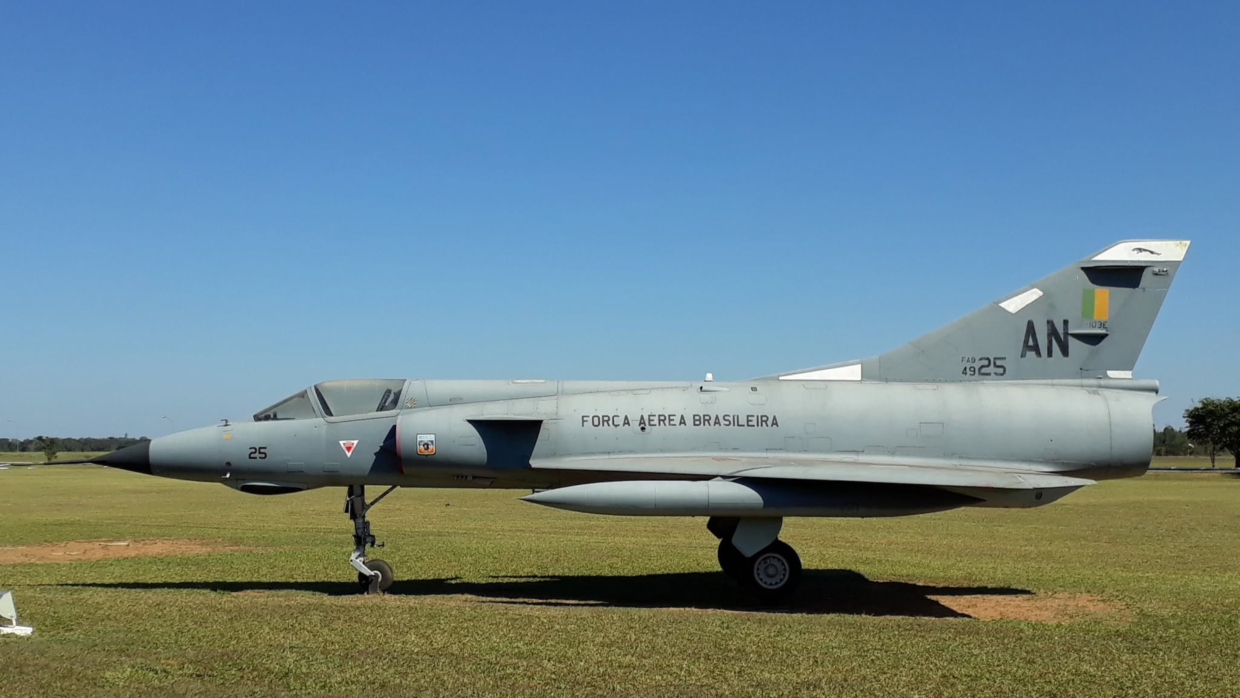
On 19 May 1986, unidentified radar contacts and luminous objects triggered a Brazilian air-defence alert. Fighter aircraft were launched from two bases, but the operation ended without a confirmed identification.
The episode now known as Brazil’s “Official Night of UFOs” was not created by a later rumour or a single witness account. Air-traffic personnel reported unusual lights, military radar operators tracked unidentified contacts and the Brazilian Air Force sent fighters to investigate.
Those facts are preserved in government records. What caused the observations remains a separate question.
How the incident began
The events unfolded on the evening of 19 May 1986. Brazil’s National Archives says coloured lights were observed around São José dos Campos in the state of São Paulo. Radar systems operated by CINDACTA — the country’s integrated air-defence and air-traffic-control network — also registered unidentified targets.
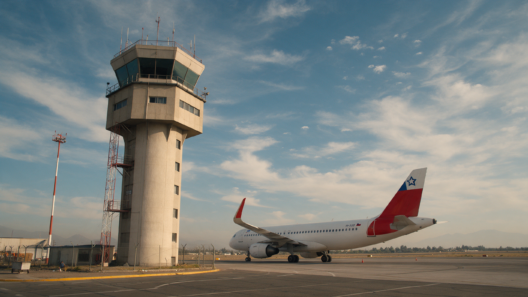
As further contacts appeared, the Air Defence Operations Centre activated an alert. Fighter aircraft took off from Santa Cruz Air Base near Rio de Janeiro and Anápolis Air Base in Goiás with orders to approach and identify the targets. The National Archives summarises the alert and launches.
An official National Archives history states that 21 UFOs were recorded over more than three hours and that five fighters were involved. “UFO” in this context means an object or radar contact that had not been identified during the operation. The number does not by itself prove that 21 separate physical craft were present. Read the archive’s overview of Brazil’s UFO collection.
The attempt to intercept the targets
The archived communications document controllers directing aircraft towards reported positions while crews attempted to locate and identify the targets. The public summaries indicate that the operation ended without a confirmed interception or identification.
That outcome is important. The operation establishes that air-defence personnel reacted to something they could not immediately classify, but it does not establish the objects’ construction, purpose or origin.
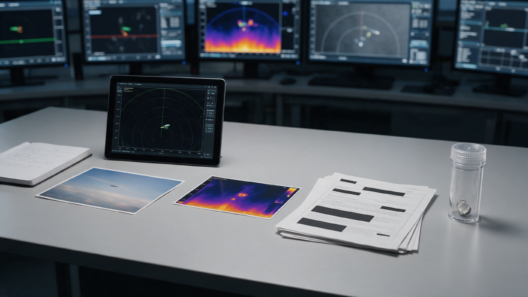
The distinction also applies to reported performance. Estimating the speed or distance of an unknown light is difficult without a known size and a reliable common position. A ground-radar return, an onboard contact and a visual light must be synchronised and shown to represent the same target before their data can safely be combined.
What evidence survives?
Brazil’s National Archives preserves the case within its Objeto Voador Não Identificado collection. The material includes written reports and recordings of communications involving pilots, controllers and the air-defence system.
| Evidence | What it establishes | Main limitation |
|---|---|---|
| Air-defence records | An alert occurred and aircraft were launched | An operational response does not identify its cause |
| Controller and pilot audio | What personnel reported and how the operation developed | Audio does not reproduce the radar display or sensor data |
| Pilot reports | The crews’ observations and actions | Distance, size and speed estimates may remain uncertain |
| Command report | The Air Force’s subsequent assessment | An official assessment is not independent scientific verification |
In 2015, the National Archives released 16 audio recordings from a group of UFO records. Eight contain communications from the night of 19 May 1986. The recordings are particularly valuable because they preserve operational exchanges closer to the event than later interviews or recollections. The National Archives describes the audio release.
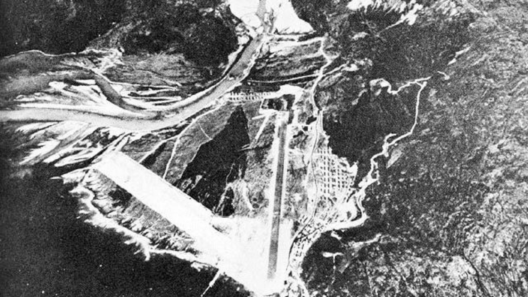
The archive has also published an image from a report prepared by a pilot based at Anápolis under the reference BR_DFANBSB_ARX_256_p0005_0005. Its presence confirms that the operation generated formal military documentation, not only media coverage.
The report’s striking conclusion
The released Air Force report, as described in the National Archives’ collection history, used unusually strong language. Its authors assessed the phenomena as apparently solid and interpreted aspects of their behaviour — including maintaining distance and moving in formation — as displaying a form of intelligence. The report did not require the objects to be crewed. Read the archive’s account of the report.
That conclusion deserves to be reported accurately, but also read at the correct level. It records the command’s interpretation of the available observations. It does not independently demonstrate that each radar return represented a solid object, that every reported light was part of the same phenomenon or that the source was extraterrestrial.
An authentic document proves that officials reached and recorded a conclusion. Whether the evidence justifies that conclusion must be evaluated separately.
Why the case remains difficult to resolve
A modern technical reassessment would ideally require original radar plots, details of the systems and their calibration, weather conditions, aircraft telemetry, precise timelines and the complete records from every sensor and observer. The publicly accessible material cited here does not provide that complete package.
Radar can detect real aircraft or objects, but returns can also be affected by propagation conditions, clutter and equipment behaviour. Visual reports introduce different uncertainties. Multiple sources can strengthen a case only when investigators can demonstrate that they were independently observing the same event at the same time and location.
This does not make the incident meaningless. It explains why the surviving evidence can establish a military response without providing a definitive identification four decades later.
Why Brazil’s disclosure matters
The transfer of the documents and recordings to the National Archives allows the public to examine more than a polished official summary. Researchers can compare the operational communications, written reports and later conclusions while preserving the identity and provenance of the records.
The archive therefore supports a precise conclusion: Brazilian air-defence personnel encountered a series of reports and radar contacts they could not identify on 19 May 1986, and the Air Force launched fighters in response. The available evidence does not establish what the phenomena were.
That boundary is not a weakness. It is the difference between documenting an unresolved incident and claiming to have solved it.