
The new US-Denmark-Greenland defense agreement authorizes an American defense area at Narsarsuaq, where unexplained aerial sightings were reported to Arctic Command in 2024. Historical Danish military files show that Greenland has produced official UFO cases before — raising a new question about who will control anomalous sensor data as military surveillance expands.
When the United States, Denmark and Greenland signed a new Arctic defense agreement in New York on September 22, 2026, one location in the text stood out for reasons that had nothing to do with conventional geopolitics.
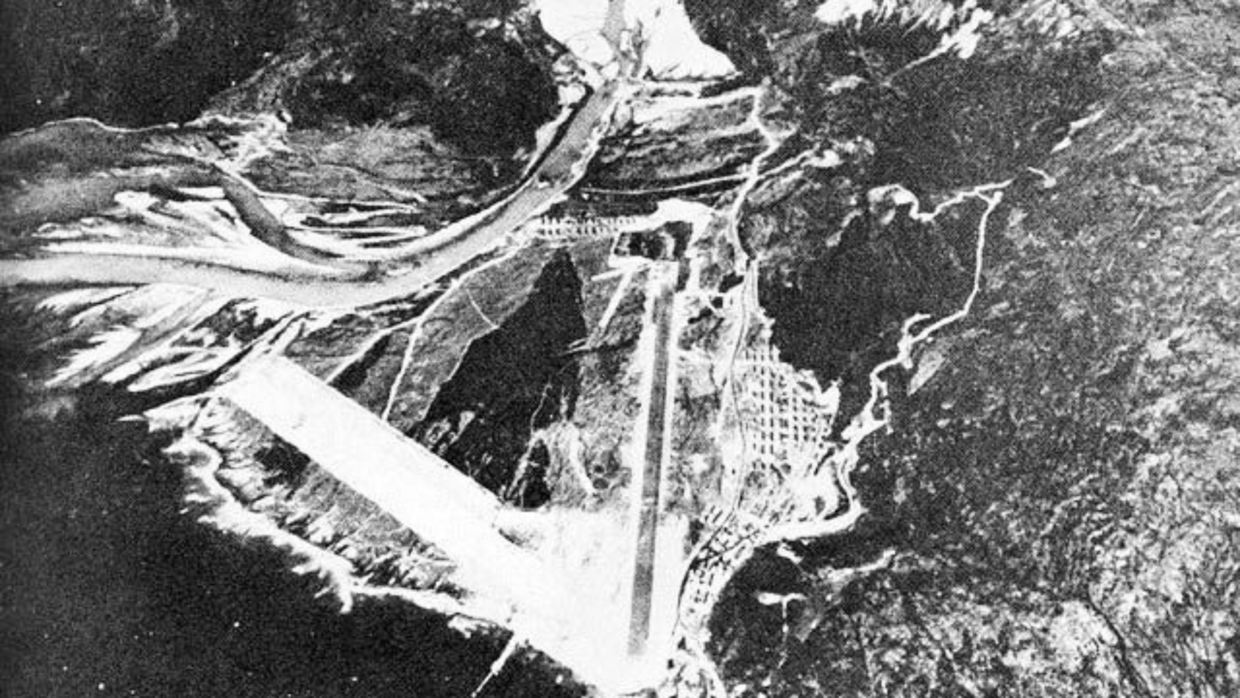
Narsarsuaq, the former American wartime air base in southern Greenland, is to become part of a new US Defense Area alongside Mestersvig in East Greenland. The agreement also allows expanded US activity at Pituffik Space Base, provides for possible future unmanned military installations and grants broad access for American military aircraft, vessels and forces across Greenland.
The stated rationale is conventional and explicit: Arctic security, increased military activity by potential adversaries, NATO defense and protection of Greenland and the North American continent. Nothing in the official agreement mentions unidentified anomalous phenomena, UFOs or unexplained aerial activity.
But Narsarsuaq has another, much less familiar history.
Only two years before the agreement was signed, repeated reports of unexplained lights around the settlement and airport were serious enough to reach Denmark’s Joint Arctic Command.
The Narsarsuaq reports reached the authorities
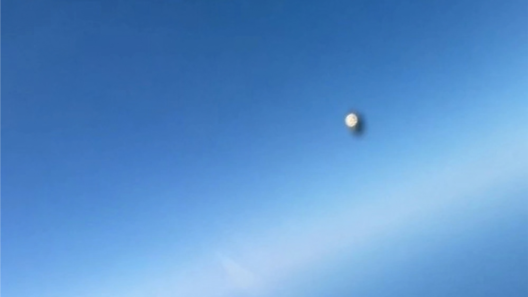
Reports from Narsarsuaq began attracting wider attention in 2023 and early 2024. Witnesses described luminous objects or lights over the mountains surrounding the airport, sometimes appearing to move in unusual ways.
Greenland’s public broadcaster KNR reported in March 2024 that residents had supplied recordings of strange lights above a mountain close to the airport. Documentary filmmaker Lasse Rahbek and podcast host Martin Kleist travelled to the settlement after hearing accounts from residents and aviation personnel. KNR described reports of glowing spheres and alleged silver-colored objects, while noting that some witnesses, including pilots, were reluctant to speak publicly. KNR’s March 2024 report
The story did not remain solely within the UFO community.
In November 2024, KNR reported that the observations had been formally reported to Joint Arctic Command in January of that year. The case was subsequently passed to Greenland Police, which concluded that there was no basis for further investigation. KNR said this was documented in records it had obtained through a freedom-of-information request. KNR’s follow-up investigation
That distinction matters. It does not establish that extraordinary aircraft were operating around Narsarsuaq. It establishes that reports of unidentified aerial phenomena were sufficiently concrete to enter official Danish and Greenlandic channels.
There were also aviation-related accounts. Sermitsiaq reported in 2026 that Kleist’s interest in the location began after he was contacted by a former Greenlandic helicopter pilot who said he had seen an oval luminous object near cloud level while approaching Narsarsuaq. According to Kleist’s account, the pilot also told him that unusual lights were regularly seen in the area. This remains witness testimony relayed through Kleist rather than independently verified sensor evidence. Sermitsiaqs 2026 account
Some of the mystery has conventional explanations
The Narsarsuaq material also demonstrates why unexplained does not mean extraordinary.
During one of Kleist’s later trips, lights that he and others managed to observe and film were identified as satellites. Sermitsiaq reported that Kleist himself acknowledged this.
The Danish UFO organization SUFOI reached a similar conclusion in at least one widely circulated case. Using the time, location and direction of a video recorded near Narsarsuaq on July 15, 2023, its investigators found that the object was very likely the International Space Station disappearing as it entered Earth’s shadow.
Other recordings could not be resolved because essential information — exact time, position, direction and elevation — was missing. One aviation specialist consulted by SUFOI considered aircraft landing lights or training approaches plausible explanations for some reports, but the available data were insufficient to confirm that hypothesis.
That leaves Narsarsuaq in an important but narrower category: a location with repeated UAP reports, some explained and others insufficiently documented to determine what was observed. It is not evidence of extraterrestrial activity or advanced unknown technology.
Greenland’s official UFO record goes back decades
Narsarsuaq is not the first place in Greenland where unusual aerial reports have entered official files.
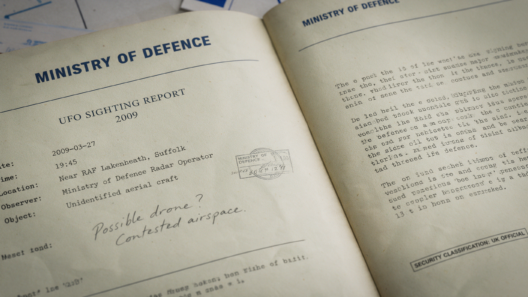
In 2009, the Royal Danish Air Force made its historical UFO archive publicly accessible. The Air Force itself noted that many cases remained unresolved, while sufficiently detailed reports frequently turned out to involve aircraft, weather phenomena, bright planets or other conventional causes. The archive contains reports submitted to Flyvertaktisk Kommando as well as investigations from SUFOI. Royal Danish Air Force UFO archive
One Greenland case concerns Kulusuk in October 1983. A police memorandum records that officers observed a large, bright stationary light between Kulusuk and Kuummiut for about an hour. The light appeared again the following night. One officer considered whether it might have been the North Star, while another similar observation was later recorded.
The police file states that photographs were taken and that a negative was forwarded through the Police Chief in Greenland to Greenland Command in 1984. The surviving released paperwork documents that chain of custody, although the photographic material itself is not present in the publicly available archive reviewed for this article.
Another case occurred at Thule Air Base — today’s Pituffik Space Base — on January 5, 1981.
A machine operator reported seeing a bright, flame-colored object apparently descending toward the mountains south-east of the base at approximately 12:50 local time. Initial inquiries to radar facilities produced no corresponding detection. However, a subsequent police report records that a separate radar system detected an unidentified return at 13:50 that day, approximately 15 nautical miles from the base, moving east at an estimated 20–40 knots. The return remained visible for 20–30 seconds.
The documents themselves contain reasons for caution. The visual observation and radar return were an hour apart, so they cannot simply be treated as the same object. Officials considered several possible explanations for the visual sighting, while a radar operator reportedly said unexplained returns occurred every few weeks and were often attributed to radar errors.
Again, the significance is not that the files prove anything extraordinary. It is that Greenland’s UFO history includes documented reports handled by police, military commands and radar personnel — not merely stories circulating decades later.
What about Mestersvig?
The new defense agreement also names Mestersvig, but the evidence is different there.
A search of the available Danish military UFO archive, Greenlandic reporting and historical material reviewed for this article did not uncover a comparable documented UAP case specifically connected with Mestersvig.
Claims that both of the newly designated locations have established UFO histories should therefore be treated cautiously. At present, the public documentation is substantially stronger for Narsarsuaq — and for other Greenland locations such as Pituffik and Kulusuk — than it is for Mestersvig.
Could the agreement be connected to UAP secrecy?
The coincidence inevitably invites a more provocative hypothesis: could renewed American control of a location associated with UAP reports have something to do with information governments do not want disclosed?
There is currently no evidence for that conclusion.
The agreement provides a detailed conventional security rationale, centered on Arctic defense, NATO, missile defense, surveillance and increased strategic competition. Neither the treaty nor the public reporting surrounding its negotiation provides evidence that UAP influenced the selection of Narsarsuaq or Mestersvig. Claiming otherwise would turn an interesting coincidence into an unsupported causal theory.
There is, however, a different disclosure issue that can be established directly from the agreement.
The United States will be able to expand activities at Pituffik, establish new defense infrastructure at Narsarsuaq and Mestersvig, request unmanned military installations elsewhere and operate across Greenland with substantially increased access. Denmark also commits to improved Arctic surveillance across land, sea, air and space.
That means Greenland could become considerably better instrumented.
If unexplained objects are detected in the future by American or Danish radar, electro-optical systems, missile-warning sensors or other military platforms, the quality of the evidence could be far greater than the cellphone videos that have complicated the Narsarsuaq cases.
But better sensors do not automatically mean greater public transparency.
Military sensor data can be classified because revealing it may expose capabilities, coverage, sensitivity or operational procedures. The agreement contains provisions concerning security around Defense Areas and counter-espionage, but the published text does not establish a public mechanism for releasing anomalous incident data.
That creates a legitimate disclosure question: if future UAP are recorded over Greenland, who will control the underlying data — Greenland, Denmark, the United States, or several of them — and under which country’s transparency and classification rules could the public eventually request it?
That question is especially timely because the agreement signed on September 22 does not enter into force until the necessary parliamentary procedures in Denmark and Greenland have been completed, and important technical details concerning the new Defense Area still have to be agreed by the parties.
The evidence does not show that the United States is returning to Narsarsuaq because of UFOs.
It does show something more defensible: a location with a recent record of officially reported unexplained aerial observations is about to become part of a much larger American military and surveillance architecture.
For disclosure, the critical issue may therefore be less about why the United States chose Narsarsuaq — and more about what happens to the data if something unexplained appears there again.
Sources
2026 US-Denmark-Greenland Defense Agreement — White House
Agreement page — Danish Ministry of Foreign Affairs
KNR: Unexplained objects over Narsarsuaq, March 2024
KNR: Narsarsuaq observations reached Arctic Command, November 2024
Royal Danish Air Force UFO archive
SUFOI analysis of Narsarsuaq reports
Sermitsoq: Follow-up on the Narsarsuaq investigation, 2026