Chile’s official UAP office approaches unexplained sightings as questions of evidence and aviation safety. Its public case files show how reports can be tested — and why some cannot be resolved without original data.
Chile has maintained an official channel for reports of unusual aerial phenomena for decades. Today that work is carried out by the Sección de Estudios de Fenómenos Aéreos Anómalos, or SEFAA, within the country’s Directorate General of Civil Aviation (DGAC).
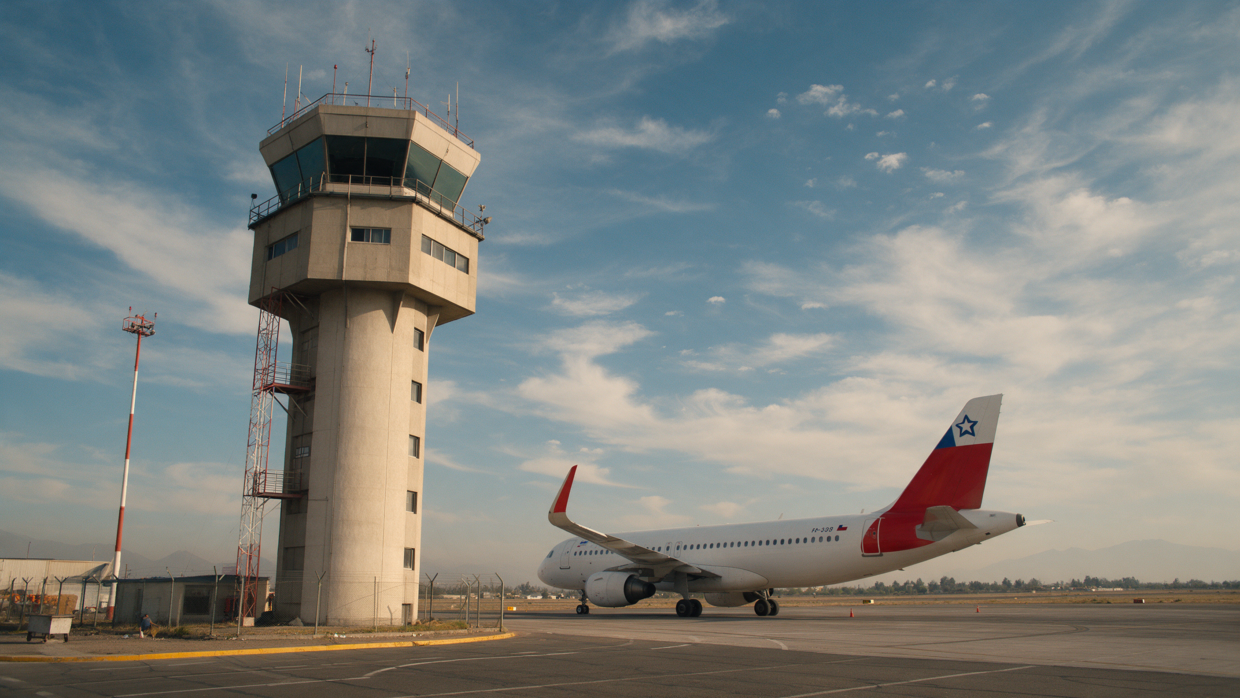
SEFAA’s purpose is not to prove that UFOs have an extraordinary origin. Its stated mission is to support the safety of air operations by investigating anomalous or unidentified phenomena reported in the airspace for which Chile is responsible.
That aviation framework shapes the questions the office asks: What was observed? Where and when did it occur? Could it have affected an aircraft? And does the available evidence support an identification?
What is SEFAA?
SEFAA is the official DGAC body responsible for studying anomalous aerial phenomena in Chile’s area of responsibility. The office says that this airspace covers approximately 32 million square kilometres, extending from northern Chile across a large area of the Pacific and south towards the Antarctic. SEFAA explains its remit and mission.
Its institutional history predates the current name. Chilean authorities began formally collecting reports in 1968 through the former national meteorological office. A provisional scientific commission operated until 1975, and the DGAC created the Comité de Estudios de Fenómenos Aéreos Anómalos — CEFAA — on 3 October 1997.
In October 2021, an administrative reorganisation changed the office from CEFAA to SEFAA and placed it under the DGAC’s communications subdepartment. The mission, however, remained connected to understanding reports that could be relevant to aviation. Read SEFAA’s institutional history.
Who can submit a report?
SEFAA accepts reports from commercial, private and institutional aircrews using Chilean airspace. Crews aboard Chilean aircraft may also report events encountered outside the country, and any member of the public can submit a sighting made within Chile. SEFAA’s reporting eligibility rules.
The reporting instructions request precise information, including:
- the date, time and location of the observation;
- the direction in which the witness was looking;
- weather conditions and nearby artificial lights;
- landmarks that can help reconstruct the viewing geometry; and
- original photographs or video files.
The emphasis on original files is significant. SEFAA warns that screenshots and material passed through messaging services or social networks may lose metadata or be compressed, making analysis more difficult. It also asks for daytime photographs of the observation site when possible. Personal details are treated confidentially and used to contact the witness. See SEFAA’s guidance for submitting evidence.
How SEFAA investigates a case
SEFAA describes a process built around observation, competing hypotheses, analysis and a conclusion. Investigators collect the witness account and available media, then consider explanations such as atmospheric effects, optical reflections, aircraft, satellites, re-entering space objects or astronomical bodies.
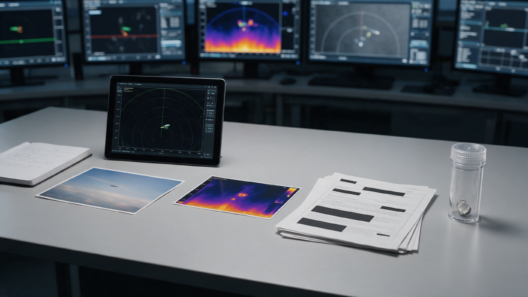
The office says its analysis can include checking image integrity and metadata, confirming the stated time and location, comparing a report with air-traffic information and calculating whether an astronomical or orbital object was visible from the relevant position. Once the investigation is complete, SEFAA replies to the reporting witness and publishes a case summary. SEFAA outlines its investigative method.
| Stage | Evidence or question | Purpose |
|---|---|---|
| Intake | Witness account, time, location and direction | Reconstruct the reported event |
| Evidence review | Original images, video, audio and metadata | Check integrity and technical limits |
| Comparison | Weather, aircraft and astronomical or orbital data | Test ordinary explanations |
| Resolution | Written finding and safety assessment | Explain the conclusion and close or classify the case |
Calling this process scientific does not make every conclusion infallible. The strength of a resolution still depends on the completeness of the evidence, the appropriateness of the tests and whether readers can examine the reasoning.
What the public case files reveal
SEFAA publishes downloadable reports rather than only announcing that cases have been closed. Recent files illustrate both what investigators can establish and how easily unfamiliar objects or photographic effects can appear anomalous.
In case 2251, two oval forms appeared in a photograph taken through a building window at El Bosque. Investigators examined the original image and requested comparison photographs from the same location. The repeated forms and the position of indoor lamps led SEFAA to identify the objects as reflections in the glass. Read case 2251.
Case 2253 concerned lights photographed from the coast at Santo Domingo in June 2026. SEFAA checked the image metadata, viewing direction, air traffic, the Sun’s position and satellite trajectories. It concluded that the photograph was consistent with two Starlink satellites reflecting sunlight and stated that their altitude presented no danger to aviation. Read case 2253.
Another report, case 2230, involved a colour-changing light near the Los Libertadores border complex. Analysis of its red, green and white navigation lights, apparent hovering and orientation led SEFAA to conclude that it was a remotely piloted aircraft, or drone. The report also recorded that no flight authorisation had been issued for the location, showing how identification and regulatory compliance can be separate questions. Read case 2230.
When the evidence is not enough
Not every submission can support the same level of analysis. In case 2252, a witness described fast-moving lights seen through a drone-control display but did not provide the requested original audiovisual material or further directional information. SEFAA closed the file under the classification Relato — an account or narrative — rather than assigning a physical explanation. Read case 2252.
This is an important distinction. A report may remain unidentified because the evidence is genuinely unusual, but it may also remain unidentified because the data needed to test possible explanations were never collected or preserved. “Unidentified” describes the state of the evidence; it does not establish the origin of the phenomenon.
Transparency with practical limits
SEFAA’s public reports offer several useful forms of transparency. They preserve the witness’s description, identify the material examined, show parts of the analytical process and state both the proposed explanation and the aviation-safety assessment. The website organises resolved cases by year and was publishing monthly groups of case reports during 2026. Explore SEFAA’s resolved-case archive.
The files also have limits. They are official agency reports, not independent peer-reviewed studies, and the public documents do not always provide every underlying file or dataset needed to reproduce the analysis in full. A conclusion described as “consistent with” an explanation should not be presented as stronger than the report itself claims.
Chile’s model nevertheless demonstrates what an official UAP process can look like when reporting is connected to aviation, evidence requirements and public case resolutions. Its most useful contribution is not a promise that every sighting will be solved. It is a documented method for separating explainable events, insufficient evidence and cases that may require further investigation.
Sources
- SEFAA: Who we are and institutional mission
- SEFAA: History of official investigations in Chile
- SEFAA: How cases are investigated
- SEFAA: Guidance for reporting a case
- SEFAA: Frequently asked questions
- SEFAA: Resolved-case archive
- SEFAA: Case 2251 — window reflections
- SEFAA: Case 2252 — insufficient original evidence
- SEFAA: Case 2253 — satellite passes
- SEFAA: Case 2230 — remotely piloted aircraft