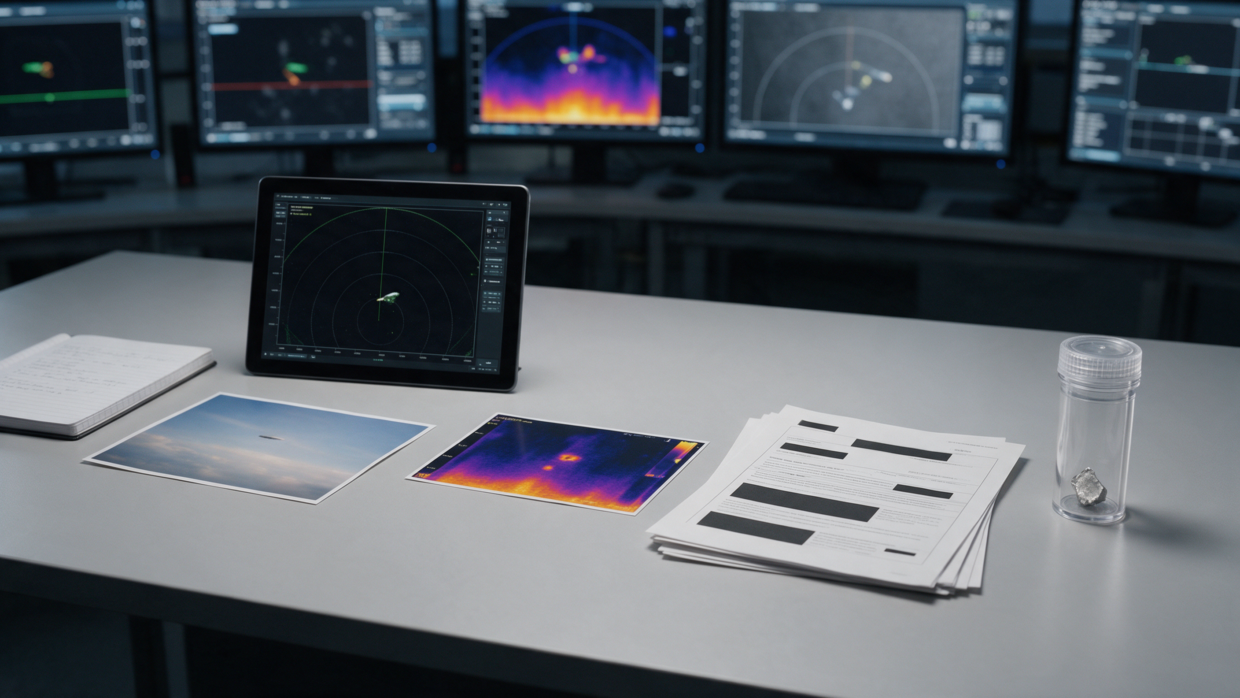
UAP cases can involve eyewitnesses, photographs, radar tracks, government documents and even claims of recovered material. All are forms of evidence, but they do not carry the same weight. Understanding that difference is essential to evaluating disclosure claims without either dismissing them or accepting more than the data support.
A Navy pilot sees an unusual object.
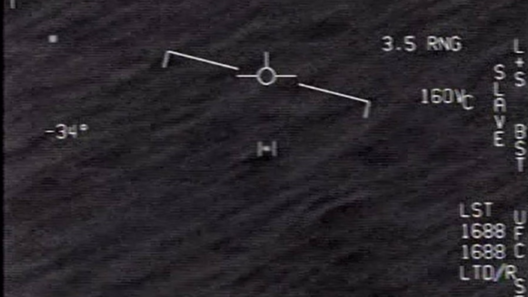
A government infrared camera records something that cannot immediately be identified.
A former intelligence official tells Congress that secret retrieval programs exist.
A document confirms that the government investigated an unusual incident.
All four can reasonably be described as evidence.
None, by itself, proves that non-human intelligence is responsible.
That distinction is frequently lost in the UAP debate, where “there is no evidence” and “the evidence proves non-human technology” are sometimes presented as the only two positions available.
The reality is more complicated.
Evidence exists at different levels of reliability, and stronger conclusions require stronger evidence.
Eyewitness testimony matters — but has limits
Eyewitness accounts are often the starting point for UAP investigations.
Military pilots, police officers, radar operators and civilians have reported objects displaying apparently unusual characteristics. Relevant training and experience can make some witnesses particularly valuable. A fighter pilot, for example, may be better equipped than most people to recognize conventional aircraft or describe relative movement in the sky.
But expertise does not eliminate the limitations of human perception.
Distance, speed and size are difficult to estimate when an observer lacks a known reference point. Viewing angle, atmospheric conditions and expectation can influence interpretation.
NASA’s 2023 independent UAP study concluded that eyewitness accounts should be considered alongside other evidence because they can reveal patterns in location and time. But it also noted that reports without calibrated sensor data cannot conclusively establish the nature of what was observed.
A credible witness can therefore establish something important:
A credible person experienced an event they could not explain.
That is not necessarily the same as establishing what caused it.
Firsthand and secondhand testimony are different
The distinction becomes even more important in whistleblower cases.
David Fravor’s account of encountering the “Tic Tac” during the 2004 USS Nimitz incident is firsthand testimony: he says he personally observed the object.
David Grusch’s 2023 allegations concerning secret crash-retrieval programs are different. Grusch told Congress that people with direct knowledge had informed him about such programs and that he had provided relevant information to inspectors and investigators. His allegations were important enough to justify further investigation, but much of the underlying evidence was not presented publicly at the hearing.
Both are testimony.
They should not be assigned identical evidentiary weight.
Direct observation is generally stronger than repeating information provided by another person. And multiple witnesses are most valuable when they are genuinely independent rather than repeating information originating from the same source.
Photographs and video can still be misleading
Images often feel more definitive.
They are not necessarily so.
A genuine military video establishes that a military sensor recorded something. It does not automatically establish the object’s distance, dimensions, velocity or origin.
Those variables matter enormously.
An apparently fast object can result from parallax produced by a moving camera platform. Infrared systems can create visual effects unfamiliar to ordinary viewers. Compression, glare and zoom can distort apparent shape.
NASA highlighted precisely this problem in its UAP study. Even when photographic or video evidence exists, missing information about the sensor, location, exposure, calibration and other metadata can make reliable interpretation impossible.
A video can therefore be authentic while the extraordinary interpretation attached to it is wrong.
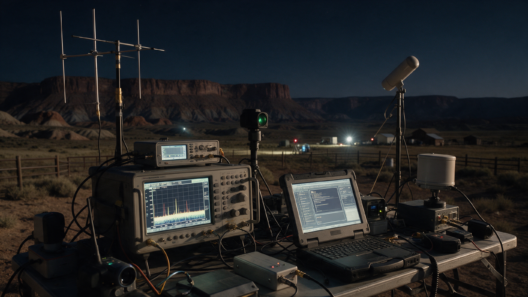
One sensor is useful. Multiple independent sensors are much stronger.
This is why multisensor cases attract particular attention.
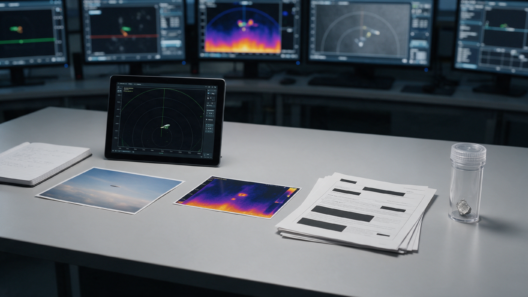
In its 2021 preliminary UAP assessment, the Office of the Director of National Intelligence reviewed 144 U.S. government reports. Eighty involved observations using multiple sensors. The report specifically noted that different sensors can provide complementary information: optical systems can help characterize shape, while radio-frequency systems can provide more reliable range and velocity data.
Consider a hypothetical event recorded simultaneously by:
- two visually independent pilots,
- radar from a ship,
- infrared imagery from an aircraft,
- and another radar installation at a separate location.
If all systems independently track the same object at the same coordinates and time, the case becomes substantially stronger.
Sensor agreement can help eliminate explanations involving individual instrument errors or human misperception.
But even multisensor confirmation establishes first that something physical was detected.
Its origin still has to be determined.
“Unresolved” is not a category of origin
This may be the most important distinction in UAP reporting.
Unresolved does not mean anomalous technology.
It means investigators cannot make a sufficiently confident identification with the available information.
AARO’s own public archive provides good examples. Some cases remain unresolved despite apparently depicting physical objects because there is not enough information to determine exactly what they are. Other cases initially submitted as UAP have subsequently been assessed as balloons, satellites, drones, birds or aircraft.
As of August 15, 2026, AARO’s published statistics showed that almost half of its closed cases had been resolved as balloons and more than a third as satellites. Smaller numbers involved drones, birds, aircraft and other causes.
This does not mean every unresolved case will eventually have an ordinary explanation.
It demonstrates why identification must come after analysis rather than before it.
“Unidentified” is a description of our knowledge, not of the object’s origin.
Government documents prove what the documents prove
Documents occupy another important position in the disclosure debate.
An authentic document proving that the Pentagon funded a UAP investigation is strong evidence that the investigation existed.
It does not automatically validate everything investigators were examining.
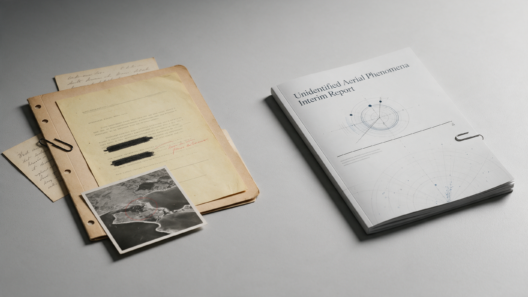
AAWSAP documents, for example, establish that the Defense Intelligence Agency funded research into highly unconventional aerospace concepts. Government files concerning a reported UFO incident can establish that officials investigated it.
Neither fact establishes that the phenomenon under investigation was non-human.
This distinction becomes especially important with intelligence reports. Government archives frequently preserve allegations, witness statements and preliminary assessments because agencies collect information before knowing whether it is accurate.
An authentic intelligence document containing an extraordinary claim proves that someone reported the claim.
Additional evidence is needed to prove the claim itself.
Physical material could change the equation
Claims of recovered material represent a potentially much higher level of evidence.
But only if the material can be independently studied.
A sample alleged to come from a UAP would need a documented chain of custody showing where it came from and how it was handled. Researchers would need to exclude industrial contamination, known terrestrial manufacturing processes and ordinary meteorites or aerospace debris.
Chemical or isotopic anomalies would be interesting, but “unusual” would still not automatically mean “non-human.”
The strongest result would involve independent laboratories examining the same material and obtaining consistent findings that cannot be accounted for using known natural or human manufacturing processes.
If alleged biological material exists, the standard would be even higher.
Such evidence should ultimately be accessible to qualified independent scientists.
The strongest evidence is evidence others can test
NASA’s UAP study identified the underlying problem clearly: much existing UAP information was collected accidentally rather than through instruments specifically designed to study the phenomenon.
The panel recommended calibrated sensors, complete metadata, multiple measurements and standardized collection methods. It emphasized that scientific hypotheses must ultimately be testable and falsifiable.
That provides a useful standard for disclosure as well.
The strongest UAP case would not simply involve an impressive witness or dramatic video.
It would combine independent witnesses, multiple calibrated sensors, complete metadata, documented provenance and data available for independent analysis.
Physical evidence would raise the standard further.
And ultimately, the strongest possible evidence is reproducible: evidence that does not require the public to trust one witness, one intelligence official, one researcher or one government agency.
Disclosure requires better evidence, not lower standards
Taking UAP seriously does not require accepting extraordinary explanations prematurely.
The opposite is true.
If some UAP genuinely represent technology produced by a non-human intelligence, that would be one of the most consequential scientific discoveries in human history. The evidentiary standard should therefore become higher as the claim becomes more extraordinary, not lower because the subject is difficult, classified or politically sensitive.
This is especially important in the disclosure debate because secrecy creates a dangerous evidentiary shortcut.
A witness may say the strongest evidence is classified. A former official may say documents exist but cannot be released. A researcher may say a material sample is held inside a restricted program. Those statements may be sincere and may justify further investigation. But information that cannot be independently examined cannot carry the same weight as evidence available for outside scrutiny.
Classification can explain why evidence is unavailable.
It cannot substitute for the evidence itself.
The same principle applies to institutional credibility. A senior military officer, intelligence official or government scientist may have privileged access and substantial expertise. That makes their testimony more relevant than an unsupported anonymous claim. It does not make them infallible, and it does not remove the need for corroboration.
This is where disclosure reporting can easily go wrong.
Because government secrecy around UAP is itself documented, it can become tempting to treat every gap in the public record as additional evidence of concealment. But absence of accessible information can support multiple explanations. A program may genuinely be hidden. A witness may have misunderstood what they encountered. Relevant records may never have existed. Or the information may remain classified for reasons unrelated to non-human technology.
A rigorous disclosure process has to preserve those alternatives until the evidence distinguishes between them.
Witnesses matter.
Leaks matter.
Government documents matter.
Photographs and sensor recordings matter.
But they answer different questions and carry different levels of evidentiary weight.
A government document may prove that officials investigated a claim without proving the claim. An authenticated military video may prove that a sensor recorded an object without establishing its origin. Multiple credible witnesses may demonstrate that an event deserves investigation without proving that their interpretation is correct.
The threshold rises again when the claim becomes crash retrieval, reverse engineering or biological material associated with non-human intelligence.
At that level, testimony should eventually lead to something independently examinable: program records, chain-of-custody documentation, laboratory results, physical samples, sensor datasets or multiple witnesses with genuinely separate firsthand access.
Otherwise, the debate risks becoming circular. The public is asked to believe extraordinary claims because the evidence is classified, while the classification itself is presented as evidence that the claims must be true.
That is not a sustainable standard.
Nor should skepticism be used in the opposite direction. A case should not be dismissed merely because investigators cannot immediately explain it, and anomalous data should not be forced into conventional categories simply to make uncertainty disappear.
The objective is not to protect either a skeptical or a pro-disclosure conclusion.
It is to increase the quality of the evidence until the range of plausible explanations becomes smaller.
If a conventional explanation survives the data, it should be accepted.
If it does not, the case deserves continued investigation.
And if evidence eventually demonstrates technology or intelligence of non-human origin, the conclusion should emerge because the evidence is strong enough to withstand hostile scrutiny from scientists, governments, journalists and skeptics alike.
That is not an obstacle to disclosure.
It is what would make genuine disclosure convincing.
Sources
NASA — Unidentified Anomalous Phenomena Independent Study Team Final Report
Office of the Director of National Intelligence — 2021 Preliminary Assessment on UAP
U.S. House Oversight Committee — July 26, 2023 UAP Hearing