France has given UFO witnesses an official reporting route for nearly half a century. GEIPAN’s value lies not in proving an extraordinary theory, but in showing how reports are collected, tested, classified and opened to public scrutiny.
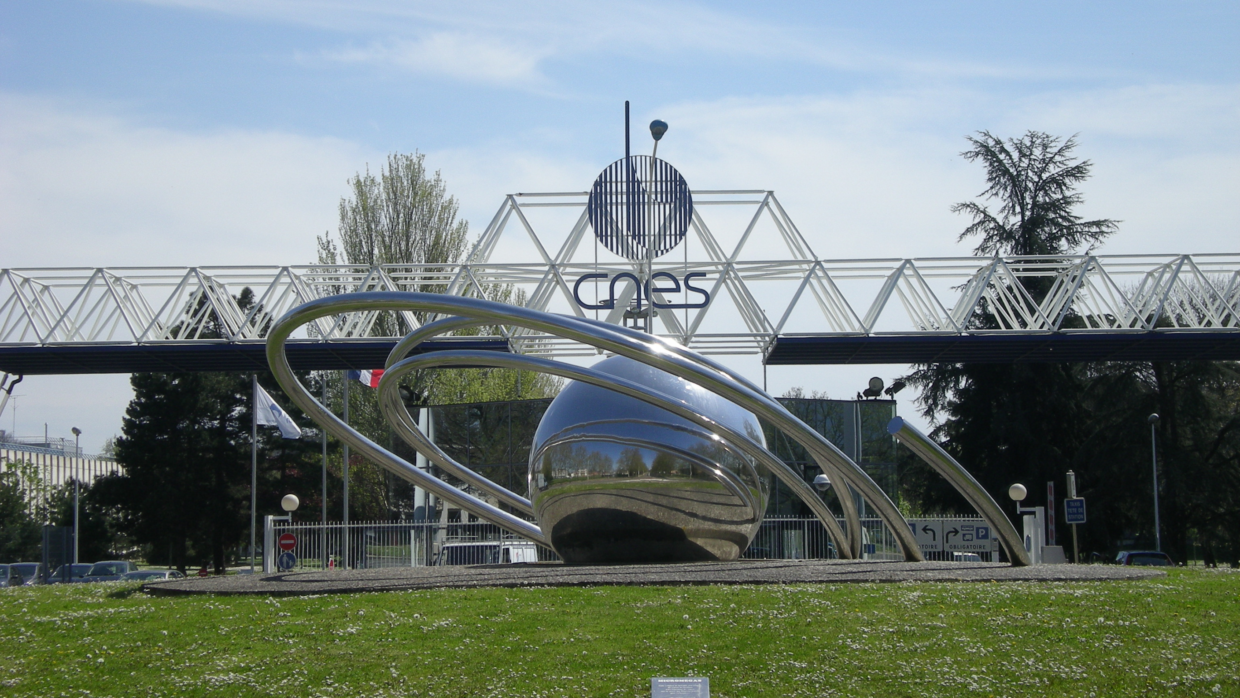
France approaches unidentified aerospace phenomena through GEIPAN, a technical unit of the national space agency CNES. Its mission is to collect, analyse, investigate, publish and archive reports from witnesses.
That makes GEIPAN unusual. It is not a military intelligence office, a national-security service or a permanent system for monitoring the sky. It also states explicitly that it is not a research programme devoted to extraterrestrial life. Its task is narrower: try to explain a reported observation using established knowledge and document what remains unexplained.
From GEPAN to a public case archive
The programme’s institutional history began in 1977 with GEPAN, the Study Group for Unidentified Aerospace Phenomena. SEPRA replaced it in 1988, and the present GEIPAN structure took over in 2005.
The additional “I” in GEIPAN stands for information. Public communication became a formal part of the mission, leading to the online publication of archives and case files. The website opened in 2008 and was redesigned in 2021. CNES outlines GEIPAN’s history and role.
GEIPAN is based at CNES in Toulouse. It works with bodies including the French gendarmerie, police, Air and Space Force, national research organisation CNRS and Météo-France. A steering committee, COPEIPAN, brings together representatives from civil and military authorities and the scientific and academic communities.
This arrangement gives investigators access to expertise in fields such as aviation, astronomy, meteorology, imaging and psychology. It does not make GEIPAN independent of government: it remains a department of CNES.
How a sighting becomes a case
The usual starting point is a direct witness. A person completes a technical questionnaire describing where and when the event occurred, its direction, duration, appearance and movement, together with the observing conditions. Sketches, photographs, video and other material can support the account.
Under GEIPAN’s current submission rules, an image by itself is not enough: the unit generally investigates phenomena directly observed by a witness in French territory. Reports can also reach it through statements recorded by the gendarmerie, civil aviation or other authorities. GEIPAN explains its reporting requirements.
Its published methodology follows seven stages:
- Receive the testimony.
- Create a case file.
- Conduct an initial analysis.
- Investigate and process the evidence.
- Classify the case.
- Remove identifying personal information.
- Inform the witness and publish the file.
Some straightforward reports can be answered without a full investigation and are not published. Other cases may require desk research, interviews or fieldwork. GEIPAN says its analysis combines physical science with human factors, including the limits of estimating the distance, speed and movement of an unfamiliar light without reliable reference points.
Investigators compare reports with known possibilities such as aircraft, satellites, launch activity, balloons, astronomical objects and atmospheric effects. When images are available, GEIPAN uses specialised software called IPACO to examine files for possible alteration, technical artefacts and clues that may support identification. Read GEIPAN’s methodology and its description of IPACO.
What the A, B, C and D classifications mean
GEIPAN evaluates both the consistency of the information and the residual strangeness left after known explanations have been tested. The resulting letter describes the evidential status of the case, not a type of craft.
| Category | GEIPAN definition | Share of published classified cases |
|---|---|---|
| A | Perfectly identified phenomenon | 28.1% |
| B | Probably identified phenomenon | 38.7% |
| C | Unidentified because data are insufficient | 30.0% |
| D | Unidentified after investigation | 3.1% |
These are dynamic figures from GEIPAN’s public database, dated 11 August 2026. They cover 3,381 published, classified cases across all years; investigations still in progress are excluded. View the current GEIPAN statistics.
Categories A and B together account for roughly two-thirds of the published cases. Recent identified entries include satellite flares, aircraft, Venus, space debris and flying lanterns. Category B is used when an explanation is considered very probable but cannot be demonstrated without ambiguity.
Why a C case is not the same as a D case
The distinction between C and D is essential.
A category C case cannot be resolved because the information is inadequate. The time may be uncertain, the viewing direction may be missing or the account may provide too little detail to test possible explanations. “Unidentified” here describes an evidence problem.
A category D case remains unidentified after an investigation using the information available. GEIPAN further distinguishes between D1 cases of medium consistency and D2 cases with stronger consistency, potentially involving independent witnesses, images, recordings or physical traces.
Category D still does not identify the phenomenon as extraterrestrial, technological or even necessarily a physical craft. It means investigators did not find a satisfactory explanation within the available evidence and established knowledge. GEIPAN says C and D cases may be revisited when new information becomes available, so a classification is a documented assessment rather than an irreversible verdict.
What the public can examine — and what it cannot
GEIPAN’s online archive can be searched by classification, location, date, observation type and reported phenomenon. The site also distinguishes new and revisited cases and indicates when photographic or video material is attached. Search GEIPAN’s public case database.
That access allows readers to compare a witness account with the investigation summary and final classification. It also makes ordinary identifications visible instead of presenting only the most mysterious reports.
The archive nevertheless has limits. It depends heavily on human testimony, and supporting sensor data are uncommon. Its acceptance rules exclude some reports, simple cases may not be published, and limited resources mean investigations can take months or years. The database is therefore not a complete census of unusual events in French airspace, and its percentages should not be treated as the probability that any new sighting has a particular cause.
GEIPAN’s most useful contribution is procedural. It separates insufficient evidence from a genuinely unresolved investigation, publishes the reasoning where possible and permits cases to change when better information arrives.
For disclosure efforts elsewhere, that offers a practical standard: collect reports systematically, test ordinary explanations, state the limits of the evidence and let the public inspect how each conclusion was reached.