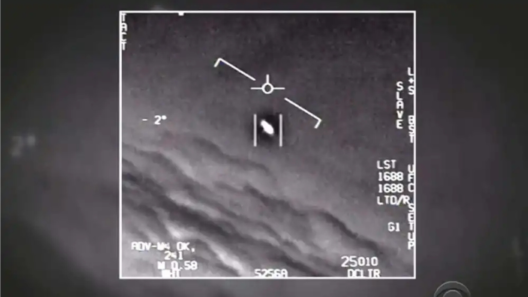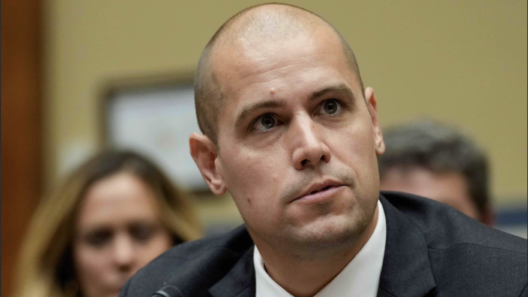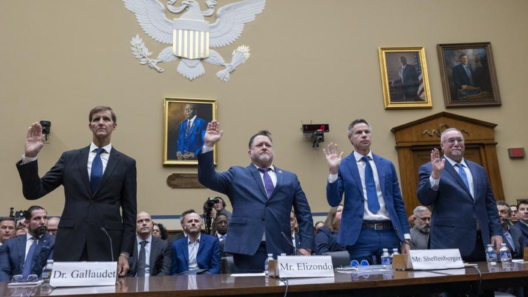
The former intelligence officer placed extraordinary allegations before Congress in 2023. The public record confirms his testimony and whistleblower process—but not the alleged crash-retrieval programme itself.
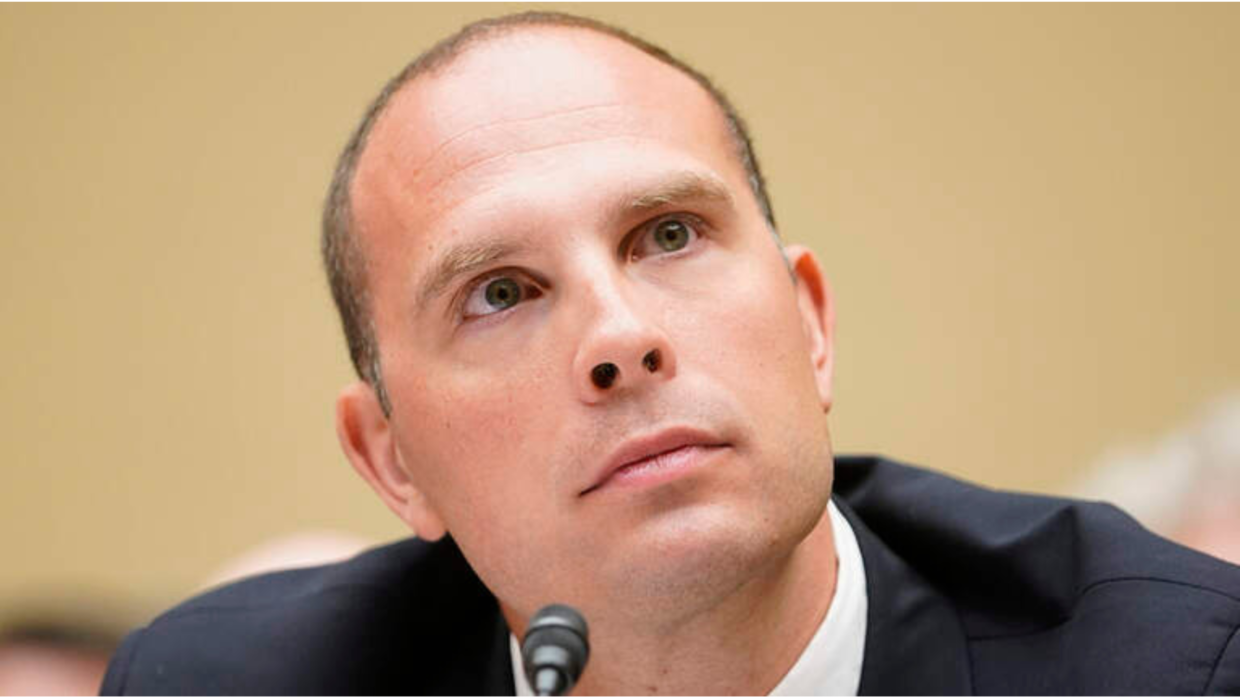
On 26 July 2023, David Grusch told a US House subcommittee that elements of the government had concealed a decades-long programme for recovering UAP and reverse-engineering the resulting technology. He also relayed claims that “nonhuman” biological material had accompanied some recoveries.
The setting, his intelligence background and his use of protected reporting channels made the allegations unusually consequential. They did not make them proven.
The public record establishes what Grusch said, how he says he obtained the information and how government investigators later responded. It does not currently provide the physical material, programme records or named firsthand witnesses needed for the public to verify his central claims.
Who is David Grusch?
In his written statement to Congress, Grusch described 14 years of service as a US Air Force and intelligence officer. He said he represented the National Reconnaissance Office on the UAP Task Force from 2019 to 2021 and later worked on UAP analysis at the National Geospatial-Intelligence Agency.
Grusch said the task force directed him to identify special and controlled access programmes relevant to its mission. During that work, he said, people informed him of a multi-decade UAP recovery and reverse-engineering programme to which he was denied access.
His former positions are relevant because they could have placed him near sensitive information and personnel. A security clearance, however, only establishes eligibility to receive particular classified information. It does not authenticate every claim made by the clearance holder.
What did he tell Congress?
At the hearing, Grusch said his belief that the government possessed UAP was based on interviews with more than 40 witnesses conducted over four years. He claimed to know locations connected to the alleged programme and said he had supplied that information to an inspector general and intelligence committees. He also said people with firsthand knowledge had made protected disclosures.
When asked about reported biological material, Grusch attributed the “nonhuman” assessment to people he described as having direct knowledge of the programme. He said he had not personally seen the alleged bodies. Asked whether he had seen a spacecraft, he declined to answer publicly and offered to discuss the matter in a classified setting. The official hearing transcript records the full exchange.
This leaves different layers of testimony. Grusch had direct knowledge of his assignments, the information presented to him, his attempts to obtain access and the reports he made. His publicly stated basis for the recovery claim, however, relied substantially on what other people told him. Those people and their underlying evidence were not presented publicly at the hearing.
Testimony under oath carries potential consequences if knowingly false. It is still testimony—not independent corroboration.
What does the whistleblower filing establish?
A May 2022 procedural filing documents Grusch’s attempt to use Intelligence Community whistleblower procedures. It alleges that classified UAP-related information was being withheld from Congress and that he experienced retaliation after reporting his concerns.
The filing is evidence that a formal allegation was submitted. It is not a public investigative finding that a crash-retrieval programme existed, and it contains no publicly testable material from such a programme. Whistleblower protection concerns whether a person may lawfully report information and whether retaliation occurred; it does not validate the reported information automatically.
AARO reached a different conclusion
The Pentagon’s All-domain Anomaly Resolution Office reported in 2024 that it had found no empirical evidence that the US government or private companies were reverse-engineering extraterrestrial technology. AARO said some interviewees had associated genuine classified programmes with extraterrestrial activity and that it had disproved most of the specific claims it could test, while some remained under evaluation. Read AARO’s Historical Record Report, Volume I.
A later AARO memorandum released under FOIA documented repeated efforts to interview Grusch. The accompanying correspondence also shows Grusch seeking assurances that AARO could receive and protect information held in especially restricted compartments. The documents therefore record a dispute about the conditions for an interview, not a completed AARO examination of everything Grusch says he supplied elsewhere.
In its FY2025 report, AARO continued to state that it had found no evidence that a US government or private entity had captured or exploited UAP-derived materials. Read the FY2025 UAP report.
AARO’s findings are an official government assessment, not a fully independent public audit. Because important names, records and alleged locations remain unavailable for public examination, readers cannot independently reproduce either side’s complete case.
What evidence would move the case forward?
Meaningful verification would require more than additional anonymous accounts. Relevant evidence could include contemporaneous programme authorisations, budgets and contracts; testimony from identified participants with direct access; imagery with documented provenance; or physical material maintained through a verifiable chain of custody and tested independently.
Classification may legitimately protect sources and military capabilities. Authorized congressional investigators can still inspect sensitive evidence and report whether specific claims are substantiated without exposing operational details.
Grusch’s testimony changed the political discussion by putting detailed allegations into the congressional record. The central factual question remains open at the public level: not whether he made the claims through official channels, but whether evidence independent of his account can demonstrate that they are true.
Sources
- House Oversight Committee: UAP hearing, 26 July 2023
- David Grusch: Written opening statement
- Government Publishing Office: Official hearing transcript
- David Grusch: PPD-19 procedural filing, May 2022
- AARO: Historical Record Report, Volume I
- AARO: Memorandum concerning invitations to interview Grusch
- AARO: Fiscal Year 2025 UAP Report