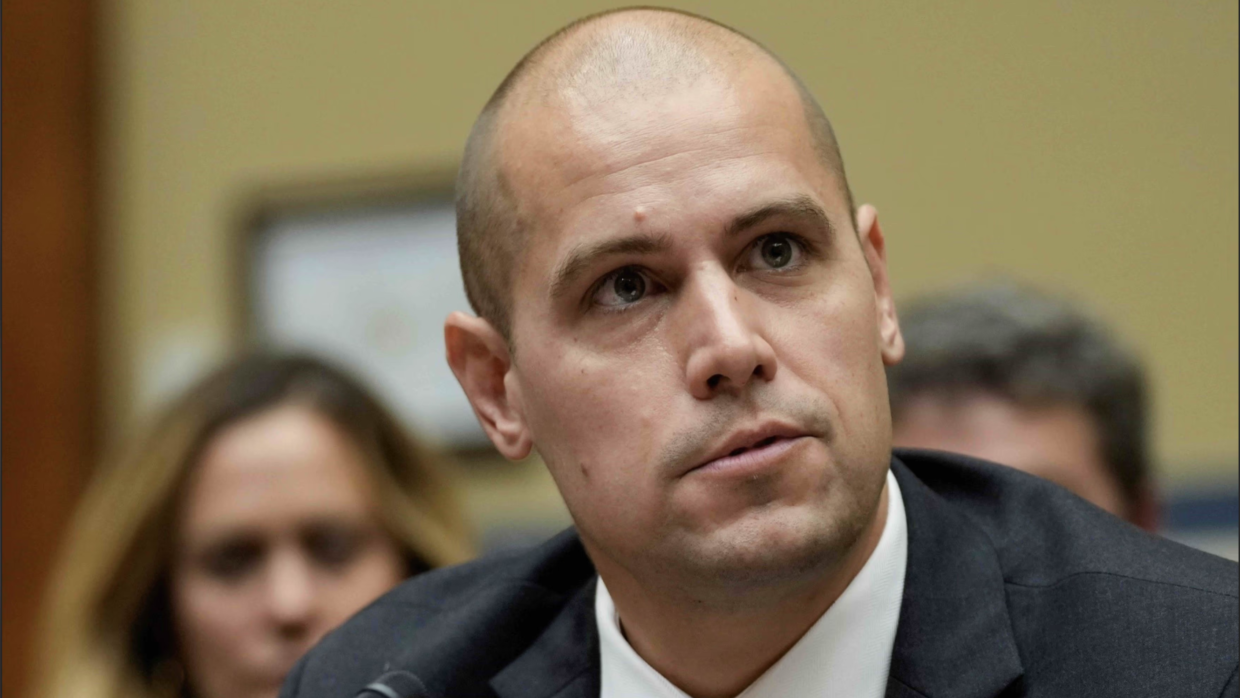
The former US Navy pilot argues that stigma and weak reporting systems leave aviation hazards undocumented. His testimony also shows why witness accounts must be paired with timely sensor data.
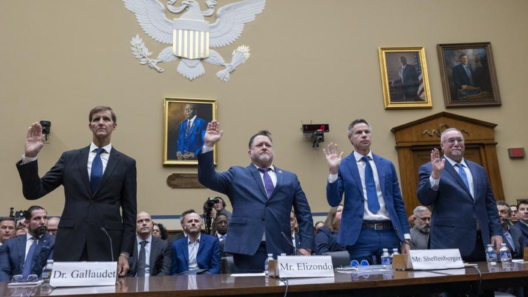
When Ryan Graves testified before a US House subcommittee on 26 July 2023, his central argument was not that every unidentified object had an extraordinary origin. It was that pilots encountered things they could not identify but lacked a trusted system for reporting them. Without prompt reports, potential hazards go undocumented and crucial evidence can disappear.
What Graves told Congress
Graves served as an F/A-18 pilot in the US Navy. In his written testimony, he said pilots in Strike Fighter Squadron 11 began detecting unknown objects after their aircraft received upgraded radar systems in 2014.
According to Graves, aircrew initially suspected radar faults. He said the contacts were subsequently detected by multiple aircraft and, in some cases, corroborated with infrared sensors. Reports became frequent enough to enter daily squadron briefs. Read Graves’ written testimony.
The most serious incident he described occurred in the W-72 training area. Graves relayed that a pilot in one of two jets saw a dark grey cube inside a clear sphere near the point where the aircraft entered the area. The jets passed the object at an estimated separation of about 100 feet and ended the mission. Graves said the squadron submitted a safety report but received no official acknowledgement or further reporting instructions.
His testimony documents what he and other aircrew reported; it does not establish the objects’ nature or origin. Contemporaneous radar records, infrared data, flight logs and safety reports would be needed to corroborate and clarify the accounts.
Why stigma creates a data problem
Graves told Congress that fear of professional consequences discouraged military and commercial pilots from reporting unusual observations. Such stigma can distort the evidence available to investigators.
If only the most confident witnesses file reports, the collection is not representative. Delays can also mean radar recordings, weather data and aircraft telemetry are no longer available, leaving investigators with memories that are difficult to test.
Pilot expertise is valuable, but it does not make perception infallible. A sound system neither dismisses an unusual observation nor treats professional experience as proof of an explanation. It records the account and preserves the relevant data.
What has changed since the 2023 hearing?
The reporting landscape has developed since Graves gave his testimony. AARO’s current instructions encourage civilian pilots to report UAP promptly to air traffic control. The office says it receives UAP-related Pilot Reports, known as PIREPs, from the Federal Aviation Administration. Military personnel and Defense Department civilian employees are directed to report through their service or command procedures. See AARO’s current reporting guidance.
That is a clearer route than the absence of an official civilian process Graves described in 2023. It is not a general public sighting portal, which AARO says it has not yet launched. Its online form instead concerns firsthand knowledge of US government UAP programmes or activities.
AARO’s fiscal year 2025 report shows what civilian reporting can contribute. The office received 42 civilian pilot reports through the FAA and assessed all 42 as satellite flaring — sunlight reflecting from satellite constellations. AARO says individual civilian reports tend to contain less data than military reports, but a wider pool can reveal useful patterns. Read AARO’s FY2025 report.
Those resolutions demonstrate one purpose of reporting: turning unidentified observations into testable, sometimes ordinary explanations.
What should a useful UAP report contain?
The quality of a report determines which explanations investigators can evaluate.
| Information | Why it matters |
|---|---|
| Exact UTC time and coordinates | Allows comparison with radar, air traffic and satellite positions |
| Aircraft altitude, heading and speed | Helps reconstruct viewing geometry and relative motion |
| Duration, bearing and apparent movement | Helps test parallax and estimates of speed or distance |
| Weather, visibility and astronomical conditions | Supports comparison with clouds, planets and other known phenomena |
| Sensor type, mode and original files | Helps distinguish a physical target from a sensor artefact |
| ATC communications and other witnesses | Provides independent records and possible corroboration |
Reports should separate observation from interpretation: what was seen, what instruments displayed and what the witness thought it might be. Original files should be preserved and reports filed promptly. NASA’s independent UAP study similarly emphasized calibrated instruments, multiple measurements and complete sensor metadata. NASA’s study announcement.
Reporting is not confirmation
More reporting may produce more identifications as investigators compare observations with aircraft, balloons, drones, satellites and atmospheric effects. Other cases may remain open because the data are incomplete or remain anomalous after analysis.
“Unidentified” describes the state of the evidence, not the identity of an object.
Graves’ strongest case is independent of any theory about origin. Aircrew should be able to report a potential hazard without career risk, while the information can still be checked. Public confidence also depends on agencies explaining their methods and releasing appropriately redacted case material when possible.
A credible system does not promise a preferred answer. It makes better answers possible.