The former Department of Defense official made sweeping allegations about UAP technology, crash-retrieval programmes and secrecy. The hearing placed those claims on the congressional record, but did not publicly resolve them.
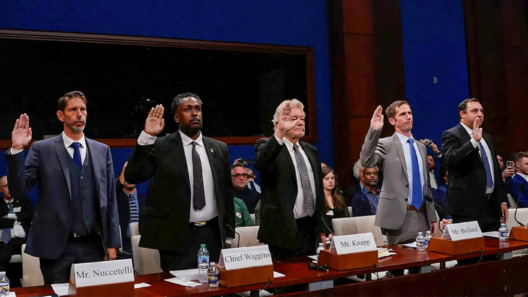
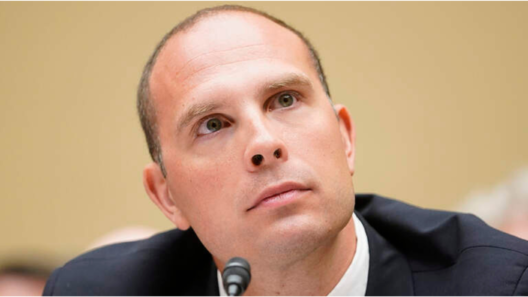
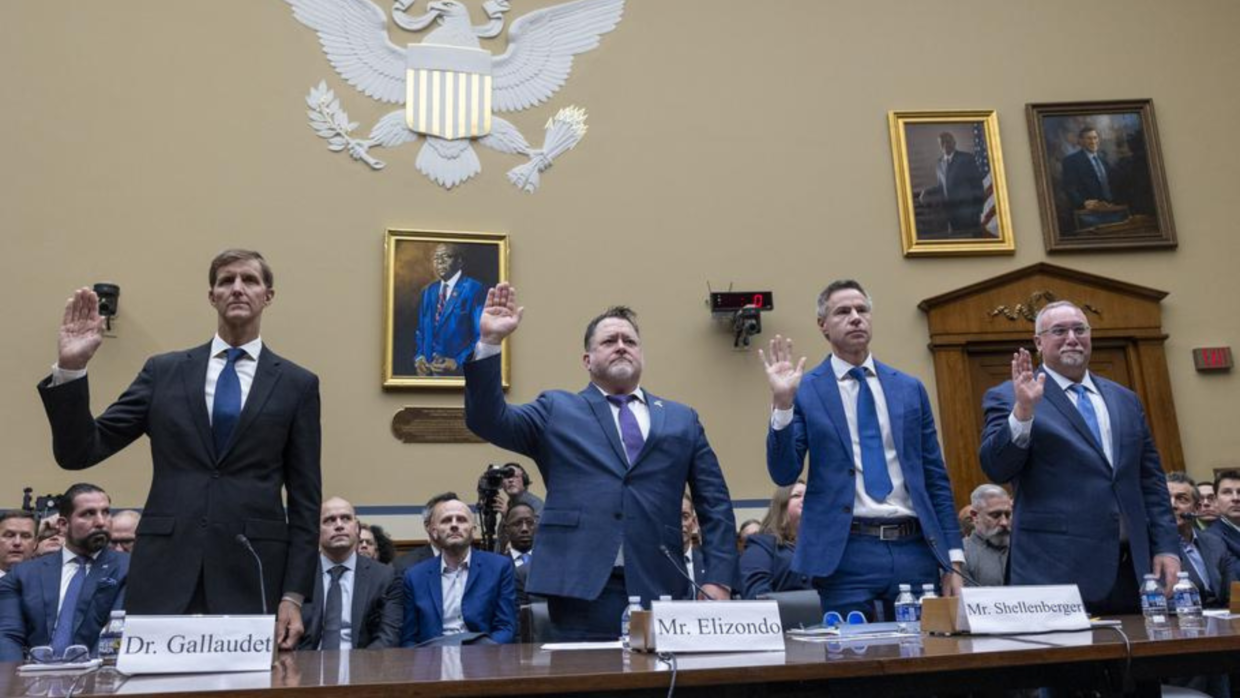
On 13 November 2024, Luis Elizondo appeared before two subcommittees of the US House Committee on Oversight and Accountability. The hearing, titled Unidentified Anomalous Phenomena: Exposing the Truth, focused on alleged government secrecy surrounding UAP.
Elizondo asserted that technologies not made by any government were monitoring sensitive military installations. He further claimed that the United States and some adversaries possessed UAP technology. These consequential allegations were made under oath, but no physical material, authenticated imagery or programme records publicly established them.
What Elizondo claimed
In his written statement, Elizondo said he had protected sensitive programmes and managed a Special Access Program on behalf of the White House and National Security Council. He alleged that certain UAP programmes operated without effective oversight. Read Elizondo’s written testimony.
During questioning, Representative Nancy Mace asked whether the government had conducted secret UAP crash-retrieval programmes. Elizondo answered yes. Asked whether such programmes were intended to identify and reverse-engineer alien craft, he again answered yes.
Representative Tim Burchett later asked whether he agreed with David Grusch’s allegation of a decades-long retrieval and reverse-engineering programme. Elizondo agreed and said UAP programmes operated without proper congressional oversight. He declined to identify them publicly. Read the official hearing transcript.
| Subject | Elizondo’s public testimony | What the hearing publicly established |
|---|---|---|
| UAP technology | The US and some adversaries possess it | The assertion entered the congressional record |
| Crash retrieval | Secret government programmes have operated | No programme records or recovered material were shown publicly |
| Reverse engineering | Programmes sought to study alleged alien craft | No publicly testable technical results were presented |
| Biological material | He was aware of reports that bodies had been recovered | He described the information as anecdotal and dating from before his time |
| Congressional oversight | Some programmes operate without proper oversight | He did not name the programmes in open session |
The important qualification about “biologics”
When Representative Eric Burlison asked about recovered biological material, Elizondo said he was aware of reports that biologics had been recovered. He acknowledged that this was outside his expertise and that the supposed collection predated him.
He confirmed that possession of bodies had been discussed, but called those Pentagon discussions anecdotal. His testimony documented that he had heard such claims; he was not a firsthand witness to bodies or samples.
That distinction is easily lost when testimony becomes a headline. Firsthand observation, access to original records and information repeated by colleagues do not carry the same evidentiary weight.
What classification did — and did not — explain
Elizondo said a Defense Department document limited what he could say publicly about crash retrieval. He referred to the prepublication review of his book and offered to provide more information in a secure setting.
Classification can protect intelligence sources, sensors and military programmes. It also prevents public examination of information invoked to support a claim. Such information becomes meaningful evidence only when an authorized body evaluates the underlying material.
Prepublication clearance is also frequently misunderstood. Defense Department rules state that reviewers protect classified and sensitive information, but have no responsibility for correcting factual errors in privately submitted material. Clearance therefore means information may be released; it is not confirmation that every claim is true. See the Department’s prepublication-review rules.
A direct conflict with AARO’s findings
Elizondo’s claims conflict with the public conclusions of the Pentagon’s All-domain Anomaly Resolution Office. AARO’s 2024 historical review said it found no empirical evidence that the US government or private companies had reverse-engineered extraterrestrial technology. It reported that several allegations arose when authentic classified programmes were incorrectly associated with extraterrestrial activity. Read AARO’s historical report.
AARO’s fiscal year 2025 report went further, stating that no evidence suggested a US government or private entity had captured or exploited UAP-derived material. The same report says AARO is legally authorized to receive UAP information at every classification level, including material protected by special-access controls. Read AARO’s FY2025 report.
An agency conclusion is not automatically beyond challenge, just as sworn testimony is not automatically proven. Resolving the conflict requires an auditable account of which programmes, witnesses and records were examined, and whether investigators had complete access.
What evidence would move the case forward?
Elizondo proposed a single government lead, a national transparency strategy and stronger whistleblower protection. His factual claims require evidence of a different kind:
- authenticated programme records, contracts and funding trails;
- testimony from witnesses with direct programme access;
- imagery and sensor data with provenance and metadata;
- physical material with a documented chain of custody and independent laboratory analysis; and
- findings from inspectors general or congressional investigators able to examine classified evidence.
The 2024 hearing was significant because elected representatives asked direct questions and received direct allegations in a public forum. It did not establish that recovered non-human technology or biological material exists.
The next measure of progress is not how extraordinary the testimony sounds, but how much of it can be independently verified.
Sources
- House Oversight Committee: Unidentified Anomalous Phenomena: Exposing the Truth
- Luis Elizondo: written testimony, 13 November 2024
- US Government Publishing Office: official hearing transcript
- Department of Defense Instruction 5230.29: prepublication review
- AARO: Historical Record Report, Volume I
- AARO: Fiscal Year 2025 Consolidated Annual Report on UAP