The 2004 encounter combined visual observations, reported radar contacts and an infrared recording. Those evidence streams make the case important—but they are not all publicly available or interchangeable.
On 14 November 2004, two US Navy F/A-18F Super Hornets were conducting a training exercise off Southern California when the USS Princeton directed them towards an unknown radar contact. One of the pilots was Commander David Fravor, then commanding officer of Strike Fighter Squadron 41 aboard the USS Nimitz.
Fravor’s account is now one of the most prominent UAP testimonies on the public record. The case is often reduced to one infrared video, but his close visual encounter, the radar information relayed to him and the later recording are separate parts of the story.
The diversion from a training mission
Fravor led two two-seat fighters carrying four aviators. According to his written congressional testimony, the Princeton suspended their exercise and sent them to investigate a contact west of the planned patrol point.
Fravor said the ship’s controller told the crews that its Aegis system had observed unusual objects during the preceding two weeks. He described them as appearing above 80,000 feet, descending rapidly to approximately 20,000 feet, remaining there and then ascending again.
These altitude claims came from the controller. Fravor did not operate the ship’s radar, and its underlying records are not public.
What the four aviators reported seeing
When the fighters reached the designated area at about 20,000 feet, Fravor said their own radars showed no target. The crews instead noticed an area of disturbed white water in an otherwise calm ocean.
Fravor said all four aviators saw a white, oblong object moving abruptly above the disturbance. He later estimated it at approximately 40 feet long and described no wings, rotors, exhaust or visible control surfaces.
Fravor and his weapons systems officer descended while the second aircraft remained higher. He said the object turned towards his aircraft and began climbing. As he attempted to cut across its path at an estimated distance of half a mile, it accelerated out of sight. The other crew also lost visual contact, and the disturbance on the ocean was no longer visible.
This is Fravor’s firsthand testimony, with three other aviators identified as witnesses. His estimates are observations rather than published instrument measurements.
The reported contact 60 miles away
As the fighters turned back, Fravor said the Princeton’s controller reported that the object had appeared at their prearranged patrol point—about 60 miles away—in less than a minute. Fravor did not observe that journey. The performance claim depends on identifying the later radar contact as the same object and on the accuracy of timing and location data that have not been released publicly.
Testing that claim would require synchronized radar tracks, system logs, timestamps and information about how the contacts were classified.
The FLIR video came from a later flight
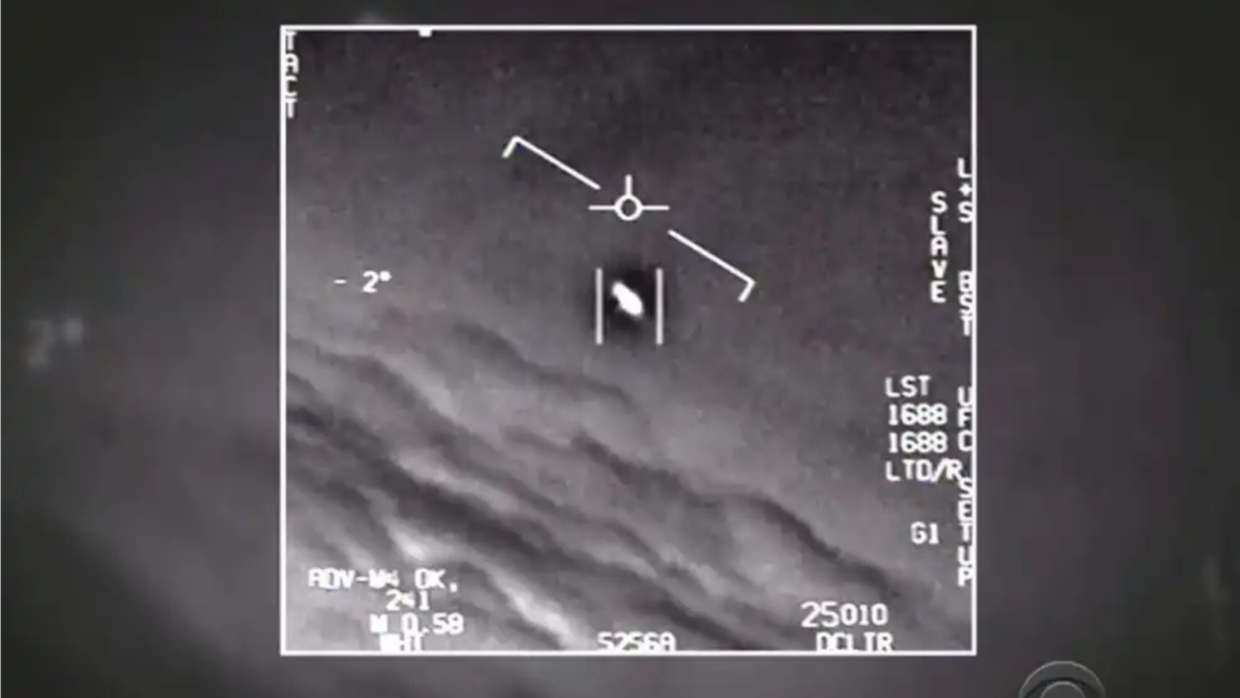
After Fravor returned to the Nimitz, another aircrew launched and recorded the infrared footage now commonly associated with the encounter. Fravor did not capture the video, and it does not show his close approach.
In April 2020, the Pentagon formally released three Navy videos, including one recorded in November 2004. It confirmed that the footage was genuine Navy material and said the phenomena remained classified as unidentified. That confirmation establishes the video’s military provenance; it does not establish what the object was. Read the Pentagon’s release statement.
The current Naval Air Systems Command copy is a 76-second public-domain file. AARO continues to list it as an unresolved FLIR case.
Fravor told Congress that the video showed no conventional infrared exhaust plume and that the later crew reported radar jamming. The publicly released clip does not contain the radar recording he referenced, however. Viewers therefore cannot use the video alone to verify the reported jamming, the 60-mile movement or the object’s size and speed.
| Evidence stream | What the public record supports | Principal limitation |
|---|---|---|
| Visual observation | Fravor says four aviators watched a white, featureless object for about five minutes | Public measurements of range, size and motion are unavailable |
| Ship and aircraft radar | Fravor reports multiple contacts, rapid movement and later jamming | The relevant raw radar data and complete logs are not public |
| FLIR video | The government confirms that the recording is authentic Navy footage from November 2004 | A short infrared clip cannot independently reconstruct the full encounter |
Why the case remains unresolved
The encounter involves identified military witnesses and reported observations by several systems. It is still incomplete as a public evidentiary package.
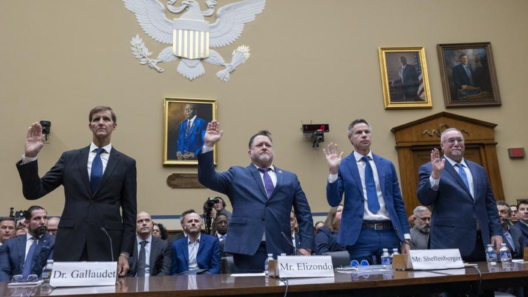
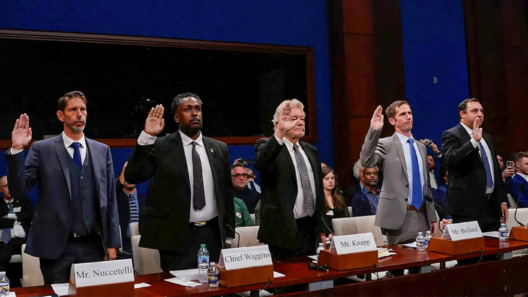
Fravor delivered his congressional statement nearly 19 years after the event. That does not invalidate it, but increases the value of contemporaneous records and independent accounts. A rigorous review would compare them with original radar data, aircraft telemetry, communications and the complete sensor recording.
“Unresolved” means the available information has not produced a supported identification. It does not, by itself, mean extraterrestrial technology.
The Nimitz case remains significant because the missing data could potentially distinguish between competing explanations—and because the Navy’s initial response, as described by Fravor, failed to preserve a complete record for timely investigation.