James Lacatski’s third book on the Pentagon’s controversial AAWSAP program describes an investigation far broader than advanced aerospace theory — including UFO cases, alleged physical materials, Skinwalker Ranch and reported paranormal effects. Official documents confirm much of the program’s structure, but not the extraordinary nature of the phenomena it investigated.
For years, one of the most persistent disagreements in the modern UAP debate has concerned a surprisingly basic question: what exactly was the Pentagon’s Advanced Aerospace Weapon System Applications Program, or AAWSAP, investigating?
Former Defense Intelligence Agency official James T. Lacatski offers an unusually direct answer in his 2025 book Inside the U.S. Government Covert UFO Program: New Insights.
According to Lacatski, AAWSAP was not simply a theoretical study of futuristic aerospace technologies. He describes it as a government UAP investigation whose contractor examined UFO reports, alleged physical effects, unusual materials and phenomena extending well beyond conventional aerospace research.
Some of that picture is supported by documents now publicly available from the Defense Intelligence Agency. Other parts depend heavily on Lacatski’s interpretation of records, witness reports and investigations that remain difficult for outsiders to independently evaluate.
That distinction is central to understanding what New Insights actually adds to the disclosure debate.
A $22 million Pentagon program
AAWSAP was created through the Defense Intelligence Agency and funded with approximately $22 million in congressional appropriations. Bigelow Aerospace Advanced Space Studies, or BAASS, became the principal contractor.
A July 2008 DIA Statement of Objectives describes the program in conventional national-security language. Its stated goal was to understand breakthrough aerospace technologies that could affect the future threat environment through 2050. Areas of research included propulsion, power generation, materials, signature reduction, human effects and even “spatial/temporal translation.”
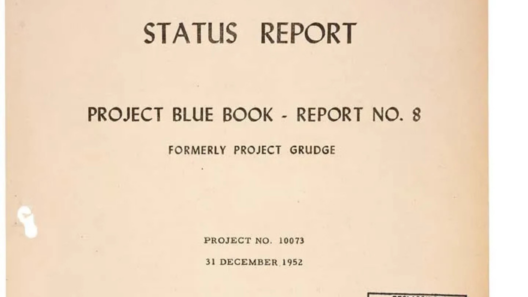
The DIA’s own FOIA reading room now contains a substantial collection of documents associated with AAWSAP and the related AATIP name, including contracts, status reports and Defense Intelligence Reference Documents, or DIRDs. Topics range from advanced propulsion and metamaterials to invisibility cloaking, negative mass and high-frequency gravitational waves.
A 2009 memorandum signed by then-Under Secretary of Defense for Intelligence James Clapper confirms that Bigelow Aerospace Advanced Space Studies had received the contract. It also records Senator Harry Reid’s unsuccessful attempt to place the effort under Special Access Program protections. Pentagon officials at the time concluded that the program’s deliverables did not justify that additional level of secrecy.
The existence of AAWSAP, its funding and its interest in highly unconventional aerospace concepts are therefore not matters of speculation.
The argument begins when asking what happened inside the program beyond those documents.
Lacatski describes something much broader
New Insights is the third volume in Lacatski’s series describing the program. The book was published by RTMA in 2025 and focuses primarily on AAWSAP work conducted during the later part of 2009 and into 2010.
Its scope is striking.
The book includes sections on UAP control, materials and vehicle configuration, investigations drawn from Mutual UFO Network cases, extensive activity associated with Skinwalker Ranch, an AAWSAP investigation in Brazil and another involving the Navajo Nation near Window Rock, Arizona.
Lacatski explicitly characterizes AAWSAP as a government UFO program and says the books were assembled from official DIA files relating to its daily activities. He also states that investigators followed UAP cases into what they considered psychic and paranormal phenomena when the data appeared to lead in that direction.
This is considerably broader than the language found in the original contract solicitation.
It suggests that the formal aerospace-research framework and the actual activities undertaken by BAASS were not necessarily identical.
That possibility is one of the most important elements of the AAWSAP story.
UFO reports, materials and Skinwalker Ranch
The material presented in New Insights makes clear that AAWSAP personnel were not merely commissioning theoretical physics papers.
They were examining reported UFO encounters.
The book describes historical cases involving unusual craft characteristics, apparent effects on witnesses, alleged trace evidence and materials reportedly associated with anomalous events. It also reproduces organizational material describing BAASS personnel responsible for collecting and analyzing UAP information internationally.
Importantly, the book itself does not establish that unusual samples were extraterrestrial.
In its discussion of alleged UAP materials, New Insights notes that isotopic testing of the limited samples considered potentially extraterrestrial had not confirmed such an origin.
That is an important limitation.
AAWSAP investigating a sample is evidence that the program considered the sample worthy of examination. It is not evidence that the sample came from a non-human craft.
The same distinction applies to Skinwalker Ranch.
A substantial portion of New Insights describes reported phenomena associated with the Utah property, including incidents investigated before and during AAWSAP. Lacatski presents the ranch as part of a larger pattern in which UAP encounters could allegedly be accompanied by unusual biological, psychological or paranormal effects.
Those reports are significant because government-funded investigators apparently devoted resources to examining them.
But accounts contained in a government contractor’s files do not automatically establish that the reported events occurred exactly as described, or that their causes were anomalous.
Government clearance is not government confirmation
There is another distinction that is particularly important with New Insights.
The manuscript underwent review by the Defense Office of Prepublication and Security Review and was cleared for public release in February 2025.
That sounds significant, but the book itself carries an explicit warning: clearance does not constitute Pentagon endorsement or confirmation of factual accuracy.
Prepublication review primarily determines whether material can legally be released without exposing protected classified information.
It does not certify that the government agrees with the author.
That means statements in New Insights can legitimately originate from someone who managed the program — and can have passed government security review — without becoming official Department of Defense conclusions.
The connection to KONA BLUE
The AAWSAP story did not entirely end when the DIA effort was terminated.
Afterward, individuals associated with the program attempted to establish a new effort within the Department of Homeland Security under the code name KONA BLUE.
Unlike AAWSAP, KONA BLUE is now extensively documented through declassified government records.
AARO says the proposed Special Access Program was intended to continue work involving sensitive materials and advanced aerospace vehicles. Some DHS officials apparently believed relevant information and material might become available if the program received appropriate security protections.
But KONA BLUE was never fully approved. According to the official history released by AARO and DHS, it received no operational funding and no material was ever transferred into the program.
That is simultaneously revealing and limiting.
The documents show that officials seriously considered creating a highly protected program connected to the AAWSAP network.
They do not demonstrate that non-human technology actually existed for that program to receive.
Why New Insights matters
The strongest contribution of New Insights is therefore not proof of extraterrestrial technology or paranormal phenomena.
It is a detailed insider account of what a real, funded Defense Intelligence Agency program and its contractors were willing to investigate.
Official records already establish AAWSAP’s existence, its $22 million funding structure, its relationship with BAASS and its pursuit of highly unconventional aerospace research. Lacatski’s books argue that the operational reality went considerably further and included direct investigation of UAP reports and associated anomalies.
AARO offers a substantially different interpretation. Its historical review concludes that AAWSAP produced research of insufficient value to the DIA mission and says its wider investigation found no verified evidence that the U.S. government had recovered extraterrestrial technology.
Neither position should simply be accepted because it comes from a former program manager or from the Pentagon’s current UAP office.
For disclosure, the unresolved question is access.
If Lacatski’s account accurately reflects the contents of archived AAWSAP files, releasing more of those underlying case reports, laboratory analyses, management documents and contractor records would allow researchers to assess the program without relying primarily on memoirs or official summaries.
New Insights tells us something important about what AAWSAP investigated.
The next question is how much of the evidence behind those investigations the public will eventually be allowed to see.
Sources
Defense Intelligence Agency — AAWSAP/AATIP FOIA Reading Room
DIA — Advanced Aerospace Weapon System Applications Program Statement of Objectives
Department of Defense memorandum concerning AAWSAP Special Access protection
AARO — History and Origin of KONA BLUE
AARO — Historical Record Report, Volume I
Google Books — Inside the U.S. Government Covert UFO Program: New Insights