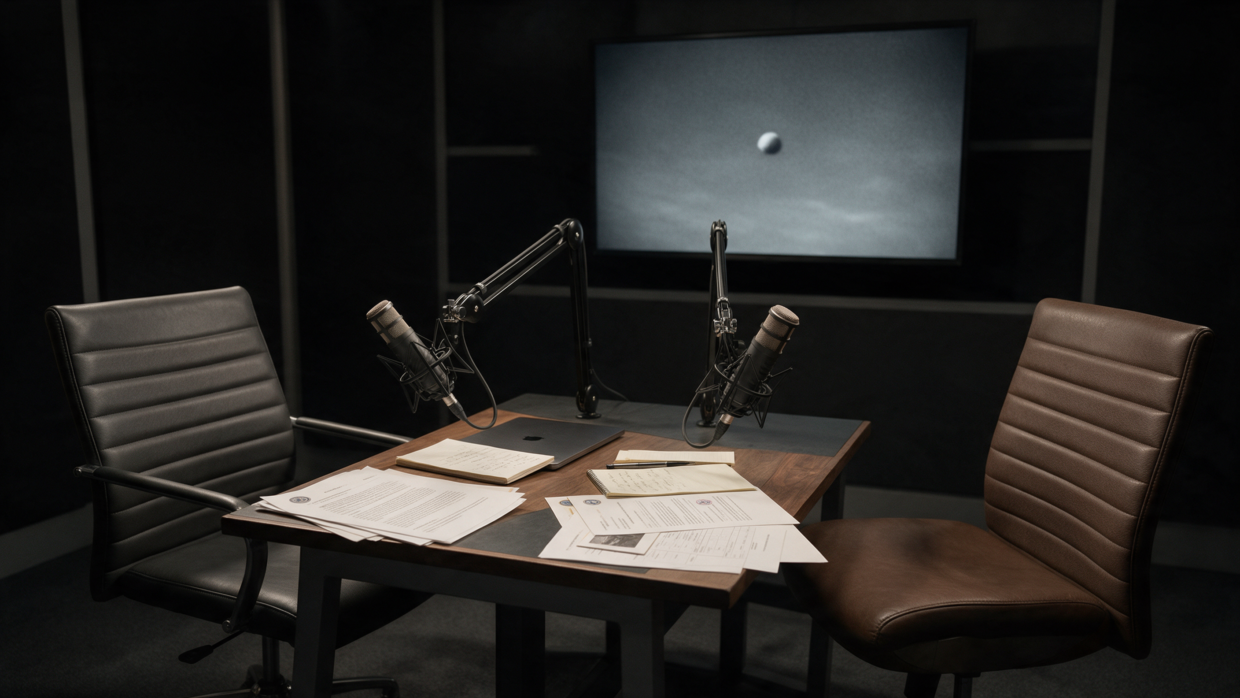
George Knapp and Jeremy Corbell have turned Weaponized into more than a UAP podcast. It is also a platform for whistleblowers, leaked imagery and claims that sometimes reach the public long before official confirmation — creating both opportunities and difficult questions about verification.
When Weaponized launched on January 23, 2023, George Knapp and Jeremy Corbell made clear that they did not intend to produce another conversational UFO podcast.
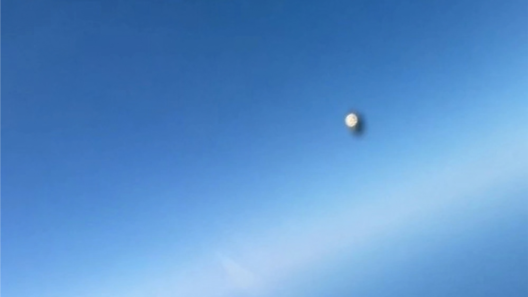
They described the program as an investigative series built around interviews, previously unseen footage, documents and government sources. Its first episode immediately demonstrated the model: alongside discussion of UAP secrecy, Knapp and Corbell released a still image of what became known as the “Mosul Orb,” an apparently spherical object recorded over Iraq in 2016.
That combination — podcast, newsroom, source network and disclosure platform — has since become Weaponized’s defining characteristic.
It is also what makes the program journalistically interesting.
Two very different backgrounds
Knapp brings decades of conventional investigative journalism to the partnership.
He has worked at KLAS-TV in Las Vegas since the early 1980s and became closely associated with UFO reporting after introducing Bob Lazar’s controversial Area 51 claims to a television audience in 1989. His broader investigative work has received multiple Edward R. Murrow Awards, regional Emmys, Peabody Awards and a DuPont Award.
Corbell comes from a different direction. He is a documentary filmmaker and UAP investigator whose work has concentrated heavily on alleged government UFO cases, military witnesses and previously unreleased imagery. Weaponized describes him as an investigative journalist and filmmaker.
Together, they occupy an unusual position. They report on the disclosure process, but they are also participants in it.
They cultivate sources. They receive material. They encourage whistleblowers to come forward. Their website provides an encrypted ProtonMail address specifically for sensitive documents, images and video.
And when they believe material is ready, they sometimes publish it themselves rather than waiting for an established newspaper or television network.
The Mosul Orb shows how the model can work
The Mosul Orb provides one of the clearest examples of both the potential and the limitations of this approach.
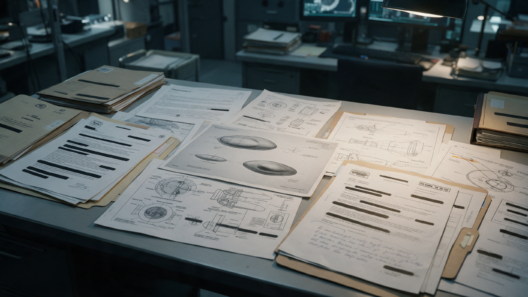
In Weaponized’s first episode, Knapp and Corbell published a still image they said came from a four-second government video recorded over Mosul on April 16, 2016. They said the material was held within U.S. government systems and treated as UAP-related imagery.
At the time, the public could not independently inspect the underlying video.
That changed more than two years later.
Journalist Dustin Slaughter obtained the four-second video after pursuing a Freedom of Information Act case involving the U.S. Air Force and the National Air and Space Intelligence Center. A subsequent federal court filing records that the government released the video to Slaughter on June 25, 2025 after making metadata redactions.
The footage corresponded to the image Knapp and Corbell had previously published.
That does not establish what the object was.
It does establish something narrower but important: material initially presented through their source network was later shown to be footage actually held and released by the U.S. government.
The case demonstrates why leaks can matter. Information can enter the public domain before an agency voluntarily provides it, after which FOIA litigation or official releases may allow parts of the original reporting to be tested.
Government footage does not equal extraordinary technology
There is an equally important lesson on the other side.
Authentication of a video does not authenticate every interpretation placed upon it.
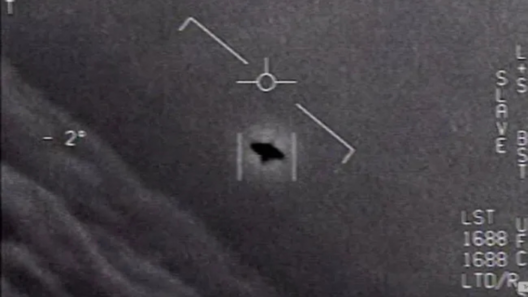
This distinction became evident with military UAP footage released by Corbell before Weaponized existed. In 2021, the Pentagon confirmed that photographs and videos published through Corbell and Knapp’s reporting had indeed been recorded by Navy personnel and examined by the UAP Task Force.
But the Pentagon’s confirmation concerned the provenance of the imagery. It did not confirm broader claims about what the objects represented.
The same problem applies to later Weaponized cases.
In January 2024, for example, Knapp and Corbell published the now-famous “Jellyfish UAP” footage from a U.S. base in Iraq. Their accompanying description states that the object displayed “transmedium capability.”
The publicly released video itself does not demonstrate an object entering water and emerging again.
That alleged portion of the event depends on information attributed to sources rather than evidence available for independent examination.
The distinction matters enormously.
A military video can be authentic while an object in it is still a balloon, aircraft, sensor artifact or something else. “Unidentified” describes the state of identification, not the origin of the object.
AARO’s own public case archive illustrates this repeatedly. Some military UAP recordings remain unresolved because there is insufficient data; others have subsequently been assessed as balloons, birds or conventional aircraft.
The source problem
Weaponized faces a problem common to national-security reporting but particularly acute in the UAP field.
Some of its most significant information comes from people who cannot initially be named.
Anonymous sources are not inherently unreliable. Major investigative journalism routinely depends on confidential sources, particularly in intelligence and defense reporting.
But anonymous sourcing places additional responsibility on the publisher.
Readers cannot evaluate the source’s access, motives or proximity to the information. They must instead trust the journalists’ assessment.
And UAP reporting creates another complication: genuinely classified information, mistaken interpretations and deliberate disinformation can potentially travel through exactly the same source networks.
That makes corroboration crucial.
A claim becomes significantly stronger when it can eventually be connected to official documents, FOIA releases, multiple genuinely independent witnesses or publicly examinable data.
The Mosul Orb moved somewhat in that direction when the underlying government-held video became public.
Other claims presented on Weaponized remain much harder to independently assess.
From observer to disclosure participant
The podcast has also increasingly become a venue for people directly involved in the political disclosure effort.
Episodes have featured former government officials, military witnesses, UAP researchers and members of Congress. In March 2026, Representative Eric Burlison appeared on the program to discuss classified access, congressional investigations and what he said he had learned during a secure site visit. Later episodes focused heavily on people describing themselves as UAP whistleblowers and the consequences they said they experienced after coming forward.
This access is an obvious strength.
It also blurs a traditional journalistic boundary.
Knapp and Corbell are not detached observers documenting a political movement from outside. They openly support greater UAP transparency, maintain relationships with many of the people seeking it and sometimes assist in bringing information or witnesses into public view.
That does not invalidate their reporting.
But audiences should understand the distinction.
Weaponized is simultaneously covering disclosure and helping to advance it.
Why Weaponized matters
Whatever conclusion one reaches about individual cases, Weaponized represents a significant change in how UAP information reaches the public.
The old model depended heavily on government statements followed by newspaper or television reporting.
The new model is less orderly.
A military image may reach a filmmaker through a confidential source. It can be published on a podcast, circulated across social media, questioned by independent researchers, discussed by members of Congress and eventually become the subject of FOIA requests or litigation.
Official confirmation may arrive months or years later — or never.
That creates opportunities for information that might otherwise remain hidden to reach the public.
It also removes some of the institutional filters that traditionally sit between a source and an audience.
For disclosure, that tension is unavoidable.
Leaks can expose secrecy. Whistleblowers can reveal information institutions would prefer to keep hidden. Journalists cannot demand an official press release before investigating every classified claim.
But the more extraordinary the allegation, the more important the next stage becomes: documents, provenance, independent corroboration and data.
Weaponized has demonstrated that unconventional UAP journalism can sometimes get genuine government material into public view.
The larger challenge is determining what that material actually proves.
Sources
Weaponized — Episode #1, January 23, 2023
Weaponized — The Jellyfish UAP
U.S. District Court filing documenting release of the Mosul Orb video
Department of Defense — AARO official UAP imagery archive
Department of Defense — Release of historical Navy UAP videos