
The surviving record confirms a recovered object and a rapid change in the Army’s public explanation. It does not document an extraterrestrial craft or bodies—and important archival gaps remain.
On 8 July 1947, Roswell Army Air Field announced that personnel from the 509th Bomb Group had recovered a “flying disc” near Roswell, New Mexico. By the next day, the military was describing the debris as a radar-tracking weather balloon.
That reversal became the foundation of the Roswell controversy. Decades later came claims of alien bodies, hidden wreckage and a cover-up. Assessing them requires separating records created in 1947 from testimony and official investigations produced much later.
The announcement that created the mystery
The original announcement shows that Roswell personnel initially used the term “flying disc.” It does not establish what they believed after examining the material, and the phrase was not synonymous with an extraterrestrial spacecraft in 1947.
Brigadier General Roger Ramey’s headquarters at Fort Worth then identified the material as part of a weather balloon with a radar target. The contrasting statements show that the Army changed its public account, but not whether this was a correction, an effort to protect classified work or something else.
The two contemporary records located by GAO
At Representative Steven Schiff’s request, the US General Accounting Office—now the Government Accountability Office—searched numerous agencies for federal records relating to Roswell. It published its findings in 1995.
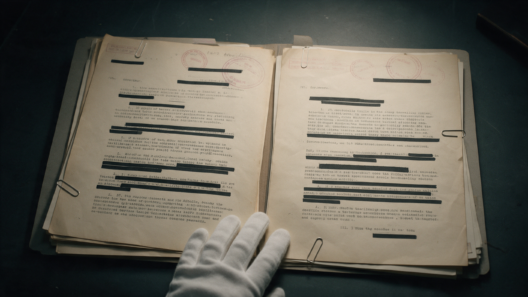
GAO located only two 1947 government records that directly addressed the event. The monthly history of the 509th Bomb Group and Roswell Army Air Field recorded the recovery of a “flying disc” and said military officials later determined it was a radar-tracking balloon.
An FBI teletype dated 8 July relayed a military description of a roughly hexagonal disc suspended by cable from a large balloon. It resembled a high-altitude weather balloon with a radar reflector. The FBI conducted no further investigation.
Neither record mentions occupants, unusual metals or an extraterrestrial vehicle. The National Archives also says the surviving Project Blue Book files contain no Roswell case documentation. Blue Book began years later, so it cannot serve as a contemporary source. National Archives guidance.
The Project Mogul explanation
In 1994, the Air Force concluded that the debris most likely came from Project Mogul, a then-classified effort to detect evidence of Soviet nuclear testing. Mogul used balloon trains carrying instruments and radar reflectors. Its reconstruction attributed the Roswell debris to one such train.
This could reconcile the two 1947 statements: personnel may have encountered unfamiliar equipment, while “weather balloon” concealed the project’s sensitive purpose. The Air Force’s Roswell overview identifies Mogul as the best fit found during its later search.
This is a retrospective reconstruction based on project records and historical circumstances—not a laboratory identification made in 1947. The surviving documentation provides no complete chain of custody from the ranch debris to a specific Mogul flight.
Missing files are a real limitation
GAO found that Roswell Army Air Field administrative records for March 1945–December 1949 and outgoing messages for October 1946–December 1949 had been destroyed. Disposal forms did not say by whom, when or under what authority.
This limits any reconstruction, but it does not by itself prove targeted destruction. A National Archives official told GAO that many Air Force organizational files from the period were disposed of without a recorded authority, and GAO found comparable paperwork elsewhere.
GAO also sought an aircraft accident report. Four military aircraft accidents occurred in New Mexico that July, all after 8 July and elsewhere. The Air Force said a balloon crash required no aircraft accident report. Its absence is therefore consistent with—but does not prove—the balloon explanation.
What about the reported bodies?
Claims of bodies came from accounts given years or decades later. GAO found no contemporary federal record documenting bodies at Roswell.
In its 1997 follow-up, The Roswell Report: Case Closed, the Air Force argued that later recollections compressed unrelated 1950s events into 1947. It cited test-dummy recoveries, a 1956 aircraft accident and a 1959 balloon mishap as possible sources for later details. The official summary.
Because those events postdate Roswell, this is a hypothesis about memory and chronology. It may explain some descriptions but cannot establish what every witness remembered. Later testimony also cannot substitute for contemporary records or physical evidence.
What the record supports
The record supports limited conclusions: military personnel recovered debris; the Army issued conflicting descriptions; the two 1947 federal records located by GAO describe a balloon and radar reflector; and the Air Force later identified Project Mogul as the most likely source.
The material reviewed by GAO does not document an extraterrestrial craft, alien bodies or a secret programme exploiting recovered non-human technology. Gaps leave open the reasoning behind the first statement and the debris’s complete path.
Missing information should not be ignored, but neither should it become proof. Project Mogul is the best-supported explanation in the available official record. It remains a historical reconstruction whose evidence—and limitations—should be visible to the reader.
Sources
- GAO: Government Records—Results of a Search for Records Concerning the 1947 Crash Near Roswell, New Mexico
- FBI Vault: Roswell UFO file
- National Archives: Project Blue Book and Roswell records
- US Air Force: The Roswell Report
- GovInfo: The Roswell Report—Fact versus Fiction in the New Mexico Desert
- US Air Force: The Roswell Report: Case Closed