Newly released Navy records expose internal communications from the formative years of the Pentagon’s modern UAP effort, while three prominent whistleblowers are asking the White House for permission to tell the public what they say they know.
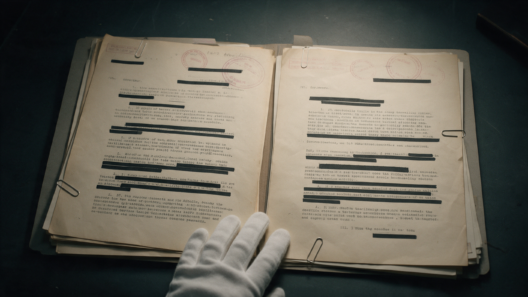
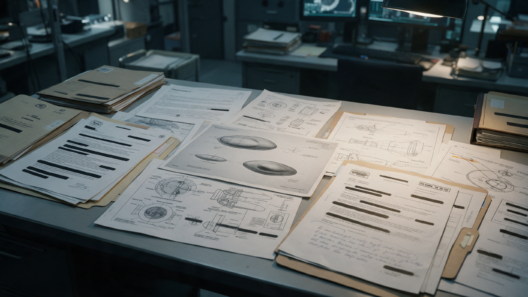
The U.S. Navy has released 1,019 pages of emails and related records involving former Deputy Director of Naval Intelligence Scott W. Bray, providing one of the largest documentary windows yet into the internal workings of the government’s modern unidentified anomalous phenomena effort.
The records were released on September 23 in response to a Freedom of Information Act request filed by researcher John Greenewald in May 2022. The Navy identified 1,321 responsive pages but withheld 302 pages entirely; the remaining 1,019 were released with additional redactions. The Black Vault
The release does not establish that UAP are extraterrestrial, nor does it document a secret crash-retrieval program. What it does establish is less dramatic but important for disclosure: senior Navy, Defense Department and intelligence officials were coordinating UAP briefings, congressional engagement, classification questions and public messaging while the UAP Task Force was taking shape. The Black Vault
The paper trail behind the UAP Task Force
Bray occupied a central position in the government’s UAP structure. He served as Deputy Director of Naval Intelligence from January 2020 until 2023 and later became Acting Director of Naval Intelligence. He is now NATO’s Assistant Secretary General for Intelligence and Security. NATO
One released email explicitly describes former UAP Task Force director Jay Stratton as leading the Navy’s task-force effort while working directly for Bray.
Other correspondence includes exchanges involving senior Navy officials, Pentagon intelligence personnel and congressional briefings. A March 2020 exchange, for example, shows Defense Intelligence official Neill Tipton telling Bray that he had a document relevant to a previous discussion that he preferred to deliver in hard copy. The released record does not reveal what that document contained. The Black Vault
The emails also document preparations for classified congressional briefings and internal discussions about public language surrounding UAP. Some correspondence concerns the April 2020 official release of three Navy videos that had already circulated publicly.
That matters because the records add contemporaneous documentation to a period often reconstructed through later interviews and testimony.
But their limitations are substantial. The FOIA search was based on specific terms, hundreds of pages remain completely withheld, and released pages contain redactions. News stories and outside claims forwarded among officials also appear in the collection; their presence in a government inbox does not mean the Navy considered those claims true. The Black Vault
Whistleblowers want permission to go beyond PURSUE
The document release comes as three prominent UAP whistleblowers seek something substantially different from the reporting mechanism recently established by the Department of War.
Former intelligence officer David Grusch, former Air Force intelligence specialist Dylan Borland and former contractor Matthew Brown have publicly asked President Donald Trump to authorize them to discuss information they say remains restricted by nondisclosure agreements. The request was reported on September 19. New York Post
That request should not be confused with the Pentagon’s September 14 PURSUE waiver.
The PURSUE measure allows qualifying current and former personnel and contractors to provide UAP-related National Defense Information to designated government representatives without ordinary civil or administrative enforcement of specified secrecy agreements. It does not authorize them to reveal classified information publicly. Existing law had also already created an authorized UAP reporting pathway through AARO. UFOUAP
Grusch, Borland and Brown have made extraordinary allegations involving recovered craft, classified programs or non-human intelligence. Those allegations remain claims. No publicly available primary documentation released this week independently verifies them.
That distinction is central to evaluating the new pressure for disclosure: authorization to speak could make claims more detailed and testable, but it would not make them true by virtue of being authorized.
Scientists are also asking for access
The question of access surfaced from another direction this week.
In a September 22 episode of Reality Check, NewsNation journalist Ross Coulthart interviewed University at Albany astroparticle physicist Matthew Szydagis, a member of the government’s UAP Science Advisory Council.
Szydagis said council members do not hold the security clearances needed to examine classified UAP holdings and that more than 50 declassification requests have already been submitted. He also discussed laboratory analysis of a material sample associated with longstanding UAP claims; importantly, he said millimeter-scale holes in the sample point toward human manufacture rather than supporting an exotic origin. My Podcast Data
That is the kind of distinction a scientific advisory process needs to preserve: investigating an extraordinary claim is not equivalent to validating it.
Disclosure now faces a test of access
The developments of the past week expose three different layers of the same problem.
FOIA is revealing portions of the historical paper trail. PURSUE provides an authorized pathway for restricted information to move inside government. Whistleblowers are asking to move information outside that system and into public view. Scientists, meanwhile, are requesting access to material they cannot currently examine.
The new Navy emails demonstrate that UAP were the subject of sustained internal coordination at senior levels of government. They do not tell us what the phenomena ultimately were.
The next meaningful step in disclosure is therefore not simply another claim. It is whether withheld records, classified evidence and underlying sensor data can be released in forms that allow Congress, scientists and the public to test those claims independently.
Until that happens, the growing documentary record can illuminate how government handled UAP without resolving the much larger question of what UAP represent.
Sources
The Black Vault — Navy releases Scott Bray UAP records, September 24, 2026
NATO — Scott W. Bray official biography
New York Post — whistleblowers seek authorization for public disclosure, September 19, 2026
Reality Check — Matthew Szydagis on UAP science, September 22, 2026