Ross Coulthart approached the UFO subject with the tools of an investigative reporter rather than a lifelong ufologist. His 2021 book In Plain Sight helped frame UAP as a question of sources, documents, national security and government accountability — but its most consequential claims still depend heavily on testimony that the public cannot independently verify.
When Ross Coulthart began investigating UFOs, he says he expected the story might fall apart.
Instead, the Australian journalist has repeatedly said that conversations with military, intelligence and national-security sources persuaded him that the subject deserved serious investigation. In a 2026 interview reflecting on that process, Coulthart said he initially thought he might end up writing a debunking book before concluding that UAP represented a genuine story.
The result was In Plain Sight: An Investigation into UFOs and Impossible Science, first published by HarperCollins Australia in 2021 and later released in an expanded 2023 edition. The publisher describes Coulthart’s investigation as drawing on interviews with witnesses, scientists, defence officials, intelligence sources and researchers.
The book arrived at a pivotal moment.
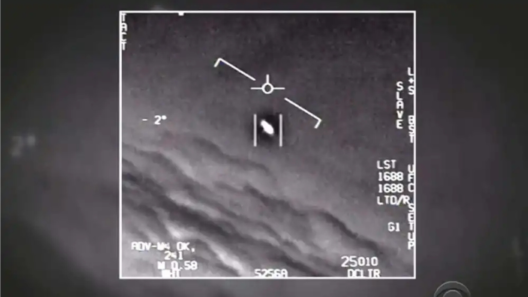
In April 2020, the U.S. Department of Defense officially released three Navy videos showing unidentified aerial phenomena recorded in 2004 and 2015. The Pentagon confirmed the footage was genuine military imagery while making no claim that the objects were extraterrestrial.
Then, in June 2021, the Office of the Director of National Intelligence released its first major public UAP assessment. Of 144 military reports considered, only one had been identified with high confidence; 80 involved observations from multiple sensors. The report also acknowledged that stigma had historically discouraged military personnel from reporting unusual observations.
In Plain Sight appeared directly into that changing environment.
From ridicule to investigation
One of Coulthart’s central arguments is not that every UFO report represents something extraordinary.
It is that journalism had largely failed to investigate the subject seriously.
Before turning to UAP, Coulthart had spent decades in mainstream Australian journalism, including work for The Sydney Morning Herald, ABC’s Four Corners, 60 Minutes and Sunday Night. His reporting career includes five Walkley Awards, including the Gold Walkley.
That background matters because In Plain Sight is structured less like traditional UFO literature and more like an attempt to construct a case through witnesses, institutional history and source relationships.
The book moves through military encounters, historical cases, government programs, unusual aerospace research and allegations that some information about UAP has been deliberately withheld.
Coulthart also confronts the stigma surrounding the subject. In interviews around the book, he criticized the longstanding tendency of television news to introduce UFO stories with jokes, stereotypical flying-saucer graphics or X-Files-style music rather than treating them as potentially legitimate aviation or intelligence stories.
That critique has subsequently been partly validated by government policy itself. The 2021 ODNI assessment explicitly identified reputational stigma as an obstacle to collecting reliable UAP data.
The book’s strongest — and most difficult — claims
Where In Plain Sight becomes much more controversial is its treatment of alleged crash-retrieval and reverse-engineering programs.
Among Coulthart’s most important sources was Nat Kobitz, a former U.S. Navy Director of Science and Technology Development.
Coulthart says Kobitz told him he had been briefed into a program involving recovered anomalous craft and had been shown unusual material at Wright-Patterson Air Force Base. Coulthart later identified Kobitz as a named source in In Plain Sight and has continued to stand behind the account. In a 2026 written response to the Australian Broadcasting Corporation’s Media Watch, Coulthart specifically pointed to pages 280–281 of the book and described Kobitz as someone with direct knowledge of a secret retrieval and reverse-engineering effort.
That is significant testimony.
It is not the same thing as public confirmation.
No publicly available program records currently establish the crash-retrieval program Kobitz allegedly described, and the unusual material he discussed has not been made available for independent scientific examination.
This distinction runs throughout In Plain Sight.
Coulthart’s reporting frequently introduces sources with substantial government, military or scientific credentials. Their backgrounds may make their allegations worthy of investigation, but credentials alone cannot establish that every conclusion or recollection is correct.
The evidentiary standard becomes especially important when the claim changes from “military personnel encounter objects they cannot identify” to “the government possesses non-human technology.”
The former is now officially documented.
The latter remains publicly unproven.
A book that became more important after publication
In Plain Sight also became more consequential because Coulthart did not stop reporting when the book was finished.
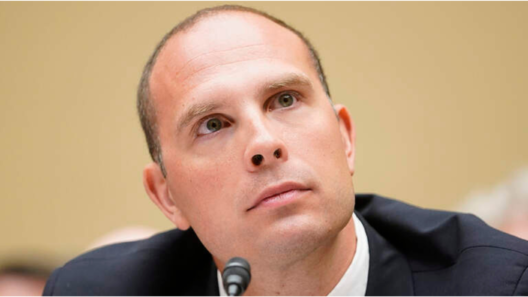
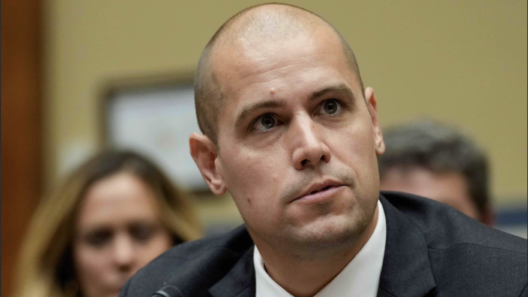
In June 2023, he conducted the first extended television interview with former U.S. intelligence officer David Grusch, who alleged that a secret UAP crash-retrieval and reverse-engineering program had been concealed from proper congressional oversight.
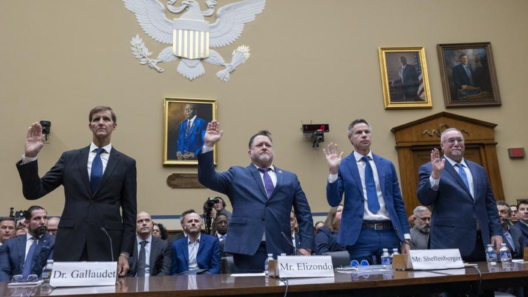
Grusch later appeared before Congress on July 26, 2023, alongside former Navy pilots David Fravor and Ryan Graves. Under oath, he repeated allegations that information concerning recovered craft and non-human biological material had been withheld.
Those hearings did not prove Grusch’s most extraordinary claims.
But they demonstrated that the investigative direction Coulthart had pursued in In Plain Sight was no longer confined to UFO literature. Questions about hidden programs, whistleblower protection and congressional access had become subjects of formal government proceedings.
Coulthart has since become a special correspondent for NewsNation and host of Reality Check, continuing to focus heavily on UAP and alleged government secrecy.
Journalism cannot end with testimony
The strength of In Plain Sight is also its central limitation.
Coulthart has built relationships with people who claim knowledge of extraordinary government activity. Those sources provide leads that journalists, congressional investigators and researchers can pursue.
But much of the most important evidence remains inaccessible to the reader.
This is not unique to UAP reporting. National-security journalism frequently begins with confidential sources whose claims cannot initially be published alongside classified documents.
The difference is the magnitude of the conclusion.
Evidence that a government is conducting an undisclosed surveillance operation requires a high standard of verification.
Evidence that humanity has recovered technology originating from a non-human intelligence requires a much higher one.
For that reason, In Plain Sight should neither be dismissed because some of its conclusions are extraordinary nor treated as confirmation simply because the people making the allegations held senior positions.
Its value lies in identifying claims, people and institutional questions that can potentially be investigated.
Why In Plain Sight matters to disclosure
Coulthart helped change the presentation of the UFO subject.
Rather than asking audiences simply to believe that extraordinary objects exist, In Plain Sight asks a more journalistic set of questions:
Who knows what? What programs existed? Which documents can be obtained? Which witnesses had direct access? What information was withheld from Congress? And what evidence could settle the dispute?
Those questions have become increasingly central to the disclosure debate.
The book does not prove that the United States possesses recovered non-human technology.
It does make a case that credible allegations of such programs exist and deserve investigation rather than automatic ridicule.
That distinction is important.
Disclosure cannot ultimately depend on trusting Ross Coulthart, David Grusch, Luis Elizondo, the Pentagon — or any other individual or institution.
If the underlying claims are true, the decisive step will be making the evidence available beyond the people who currently say they have seen it.