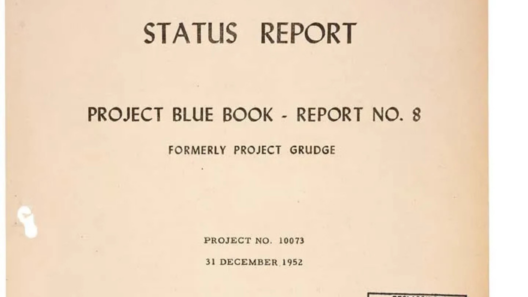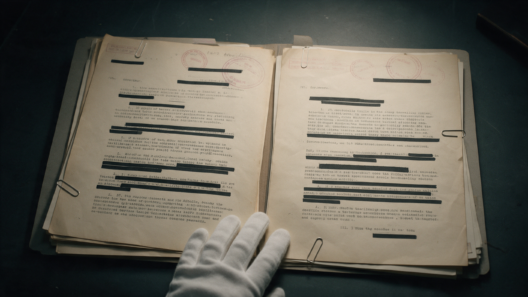

Thousands of pages released under FOIA show NASA researching UAP-related propulsion, drone configurations and human perception while officials debated whether the agency could accurately say it maintained no records specifically classified as UAP documents.
A newly released collection of NASA records is providing an unusually detailed look inside the agency’s response to unidentified anomalous phenomena — including an internal disagreement over how NASA described the records it actually maintained.
NASA responded on September 28 to Freedom of Information Act request 26-00789-F-HQ, filed May 4, releasing thousands of pages of correspondence involving Mark McInerney, NASA’s first Director of UAP Research, and research librarians at the Goddard Space Flight Center. The material was published by Australian researcher Grant Lavac on September 30. UAP Globe
The documents do not reveal a hidden NASA archive of unexplained spacecraft observations, nor do they provide evidence of extraterrestrial technology. Instead, they show NASA personnel assembling scientific and technical literature relevant to UAP research — and expose a more complicated record-management debate than the agency’s earlier statement that it did not maintain records specifically classified as UAP documents might suggest.
NASA’s UAP director was commissioning technical research
The larger FOIA release concerns communications between McInerney and librarians at NASA’s Goddard Space Flight Center.
According to the released correspondence, the research covered subjects including spherical and triangular drone configurations, propulsion technologies and visual perception. The material therefore documents an active effort to establish a scientific literature base around subjects potentially relevant to interpreting UAP reports. UAP Globe
That should not be confused with evidence that NASA possessed unexplained sensor data or recovered technology.
The distinction is important. A government researcher requesting papers about unconventional propulsion demonstrates research interest, not possession of unconventional propulsion systems. Likewise, investigating spherical drones provides potential conventional comparison data for UAP analysis; it does not establish that reported spherical objects are extraordinary.
The records nevertheless add substance to NASA’s previously announced intention to approach UAP through scientific methodology rather than treating the subject solely as an intelligence or defense problem.
An internal dispute over “no records”
A second FOIA release provides potentially more significant disclosure context.
In February 2024, Daniel Evans, who had served as the designated federal officer for NASA’s independent UAP study team, wrote that following a review NASA did not hold or manage records classified specifically as UAP documents.
NASA Records Officer Patti Stockman immediately challenged that formulation internally, questioning how the agency could have conducted its public UAP study without accumulating relevant records. The exchange was released through FOIA case 26-00029-F-HQ. UAP Globe
The apparent contradiction requires careful interpretation.
NASA’s statement concerned records formally categorized as UAP documents. The newly released records include correspondence, literature searches and administrative material generated around UAP-related work. Those two propositions are not necessarily mutually exclusive.
The documents therefore do not establish that NASA falsely denied possessing a secret collection of UAP evidence.
They do show that NASA’s own records officer questioned the adequacy of the agency’s characterization at the time — an important distinction for researchers attempting to understand how UAP material is indexed, retained and ultimately discoverable through FOIA.
The records also indicate that NASA officials received substantial amounts of unsolicited UAP correspondence from the public, much of which was not considered an agency record and was deleted under existing records-management guidance. UAP Globe
For disclosure, this illustrates a broader problem: whether a search for “UAP records” succeeds can depend not merely on what an agency possesses, but on how those records are classified, indexed and legally defined.
Grusch makes his most detailed public claims yet
While NASA’s records provided documentary evidence about government process, former intelligence officer and UAP whistleblower David Grusch returned to The Joe Rogan Experience on September 30 with considerably more extraordinary claims.
Grusch said he had personally viewed contemporary government video showing a recovery operation involving a craft and several dead entities that he described as closely human in appearance. He also discussed alleged underwater facilities, different forms of non-human intelligence and accounts of violent encounters between recovery personnel and beings described to him by other sources. UFO Intelligence Center
The evidentiary distinctions are crucial.
Grusch’s statement that he viewed retrieval footage is a claim of direct exposure to evidence, but the footage itself has not been released publicly. His accounts involving other types of beings and alleged confrontations were described as information received from other people rather than events he personally witnessed. Alien News
No independently authenticated imagery, biological material, program documentation or other primary evidence substantiating these new claims accompanied the interview.
That does not demonstrate that Grusch’s account is false. It means the public evidentiary position has not changed sufficiently to establish the underlying claims.
Disclosure increasingly depends on access to primary evidence
The contrast between this week’s two major developments is instructive.
NASA’s FOIA releases contain primary records that allow outsiders to examine how an institution approached UAP, while revealing ambiguities in how records were categorized. Grusch is describing what he says exists inside classified systems that outsiders still cannot examine.
Both concern transparency, but they occupy fundamentally different evidentiary categories.
The next major threshold for disclosure will not be another increasingly detailed description of classified evidence. It will be access to that evidence itself — records, imagery, sensor data or physical material that can be independently examined.
Until then, the documentary record can tell us increasingly more about how governments have investigated UAP without necessarily telling us what the phenomena ultimately are.
Sources
NASA UAP FOIA case analysis and released records — UAP Globe
Grant Lavac — NASA FOIA release, September 30, 2026
NASA FOIA records reporting — Noticias Ufológicas
The Joe Rogan Experience #2560 — David Grusch, September 30, 2026