
The technology entrepreneur says mounting testimony, government activity and scientific research have moved UAP beyond a subject he is willing to dismiss — although several of the claims he cites remain unverified or more tentative than his conclusions suggest.
Peter Diamandis, founder and executive chairman of the XPRIZE Foundation, has publicly entered the UAP debate with one of his most detailed statements yet, arguing that the accumulated evidence surrounding unidentified anomalous phenomena deserves serious attention.
In an essay published September 7 and promoted through an X post, Diamandis says he has had no firsthand experience with UAP or non-human intelligence, or NHI. Instead, he says his interest has been driven by the growing body of government testimony, scientific research and institutional activity surrounding the subject.
His central argument is deliberately framed as a call for investigation rather than belief. But some of the evidence presented in the essay is substantially stronger than other parts, making the distinction between documented developments, testimony and hypothesis important.
A reported US preparedness plan for possible NHI confirmation
Perhaps the most consequential claim cited by Diamandis concerns an August 31 meeting involving the UAP Science Advisory Council at the Office of the Director of National Intelligence, or ODNI.
Council member Jennice Vilhauer wrote on September 3 that the group was told the US government has a preparedness plan in place should the existence of non-human intelligence ever be confirmed. She also said the council was told that the United States was prepared to assume an international leadership role if necessary.
That account is significant, but its limits matter.
Vilhauer explicitly cautioned that contingency planning does not mean the government has confirmed NHI, expects confirmation to occur soon or is preparing an announcement. No preparedness document has been made public, and no public ODNI statement independently confirming the details of her account has been identified.
The claim therefore currently rests on the firsthand account of a participant in the meeting, rather than a publicly released government document.
Diamandis goes somewhat further when he writes that the existence of such planning shows the possibility has been taken seriously enough to warrant preparation. That interpretation is reasonable if Vilhauer’s account is accurate, but preparedness planning itself is not evidence that NHI exists.
Whistleblower testimony adds weight — but not verification
Diamandis also points to intelligence and military figures who have publicly made extraordinary claims about UAP.
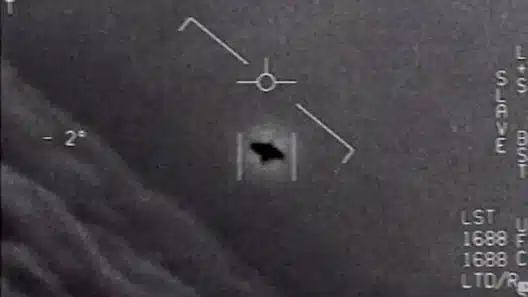
Among them is former intelligence officer David Grusch, who testified before the US House Oversight Committee in July 2023 and alleged that secret crash-retrieval and reverse-engineering programs had been concealed from proper congressional oversight. Grusch appeared alongside former Navy aviators David Fravor and Ryan Graves during the public hearing.
The existence of the testimony is documented. The underlying claims, however, remain a separate question.
The Pentagon’s All-domain Anomaly Resolution Office, or AARO, stated in its 2024 historical review that it had found no verifiable evidence that the US government or private industry had possessed or reverse-engineered extraterrestrial technology. AARO has also acknowledged that some UAP cases remain unresolved, often because the available data are insufficient for a reliable conclusion.
That leaves an unresolved conflict between whistleblower allegations and the government’s publicly documented findings.
The nuclear connection has real research behind it — with important limits
One of Diamandis’ stronger scientific references concerns a 2025 paper published in Scientific Reports examining more than 100,000 short-lived astronomical transients recorded on Palomar Observatory photographic plates between 1949 and 1957.
Researchers found that transients were 68 percent more likely to appear one day after an atmospheric nuclear weapons test. Their statistical model also found an 8.5 percent increase in the number of transients for each additional UAP report recorded on the same date.
Those results are statistically significant, but they do not establish what the objects were.
The authors themselves describe the associations as small, note substantial noise in historical UAP reporting and state clearly that the results do not demonstrate causation. They consider several possibilities, including previously unknown atmospheric effects as well as the more speculative possibility that some transients represented artificial objects.
Another statistic cited by Diamandis requires considerably more caution. He describes a 2023 statistical study finding an average of 1,588 additional UFO reports in countries that detonated nuclear weapons. The exact figure appears in a 2023 Reddit analysis rather than an identifiable peer-reviewed publication. The original author also acknowledged major biases, including the dominance of US reports in the underlying database and uncontrolled changes in population, technology and reporting behavior.
Calling that analysis simply a “statistical study” risks giving it more academic weight than its publication status supports.
The AI connection remains a hypothesis
Diamandis goes further by proposing a possible relationship between today’s UAP activity and the development of artificial superintelligence, or ASI.
His reasoning is that nuclear weapons represented one civilization-changing technological threshold, while advanced AI may represent another. If an external intelligence were monitoring humanity, he suggests, those might be precisely the developments worth watching.
It is an interesting hypothesis, but Diamandis provides no comparable statistical study demonstrating a UAP-ASI correlation. At present, that part of his argument should be treated as speculation rather than evidence.
Why Diamandis’ intervention matters
Diamandis’ involvement matters less because it proves any particular explanation for UAP and more because of where the argument is coming from.
He has spent decades working around commercial spaceflight, emerging technologies and scientific incentive programs through XPRIZE and other ventures. His decision to publicly conclude that the subject deserves serious investigation illustrates how far UAP has moved from its former position outside mainstream scientific and policy discussion.
NASA now openly studies how better data might be collected on UAP, although the agency continues to state that it has no data supporting the conclusion that UAP represent alien technology.
That distinction remains essential.
Diamandis is right that some UAP questions can no longer be dismissed simply because the subject has historically attracted speculation. But taking the evidence seriously also means applying the same scrutiny to evidence supporting extraordinary interpretations as to conventional explanations.
The most important new development is therefore not confirmation of non-human intelligence. It is that another prominent technology figure is calling for the subject to be investigated openly — while a participant in a newly formed scientific advisory council says US officials are already considering how government would respond if the most consequential possibility were ever confirmed.
Sources
- Peter Diamandis — “The Evidence Around UAPs Is Getting Harder to Ignore”
- Peter Diamandis — original X post
- Jennice Vilhauer — US Government NHI Preparedness Plan account
- Scientific Reports — Palomar transients, nuclear testing and UAP reports
- US House Oversight Committee — July 2023 UAP hearing
- NASA — UAP research and FAQs
- AARO Historical Record Report Volume 1