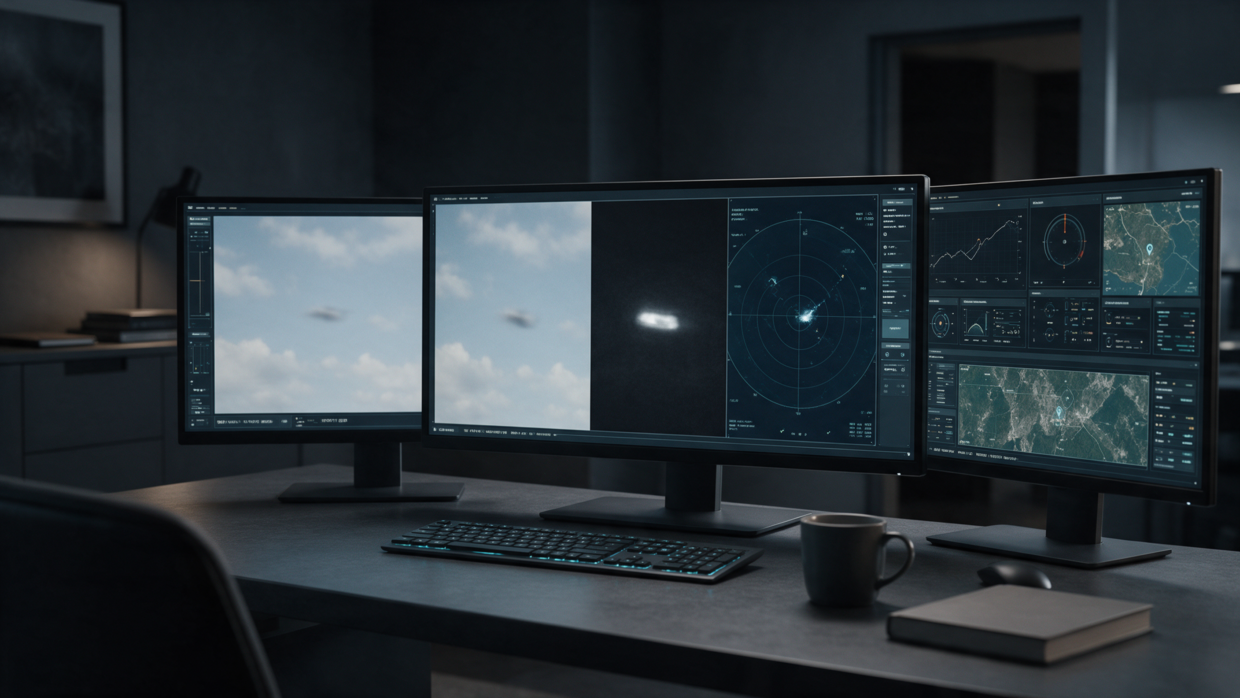
NASA’s 2023 independent study did not investigate famous sightings or announce evidence of extraterrestrial technology. It examined a more fundamental problem: how can UAP observations become reliable scientific data?
When NASA released its independent UAP study on 14 September 2023, much of the public attention focused on the agency’s involvement in the subject. The report itself was more restrained. It did not attempt to identify unidentified anomalous phenomena, revisit historical cases or determine whether any event had an extraordinary origin.
Instead, the study asked what data NASA and other civilian organizations could contribute, how future observations should be collected and which analytical tools might help distinguish genuinely unusual events from known objects, environmental effects and sensor artifacts.
Its central conclusion was straightforward: the main obstacle is not a lack of possible explanations or analytical techniques. It is a lack of consistent, well-characterized data.
What NASA asked the study team to do
NASA commissioned the external study in June 2022. The 16-member team included specialists in astronomy, Earth science, aerospace safety, data analysis, artificial intelligence, commercial space and scientific communication. Astrophysicist David Spergel chaired the group.
The team worked for nine months using unclassified information. Its assignment was to recommend how NASA could use open data, scientific methods and technical expertise to study future UAP observations. NASA explicitly states that the resulting report was not a review or assessment of previous incidents. NASA’s announcement of the independent study report.
That boundary matters. The panel did not conduct new investigations of cases such as the 2004 Nimitz encounter, nor did it have a mandate to validate claims about concealed programs or recovered materials. It assessed the research process that would be needed before stronger scientific conclusions could be drawn.
The data problem behind UAP investigations
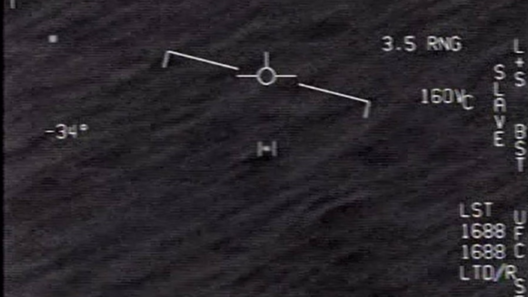
Many UAP reports begin with observations made for another purpose. A military camera may be tracking an operational target. A weather radar is designed to monitor precipitation. A smartphone records a small light without measuring its distance. The resulting material may be useful, but it is rarely optimized for determining the nature and motion of an unexpected object.
The study identified four recurring weaknesses:
- inadequate sensor calibration;
- missing metadata;
- a lack of simultaneous measurements from multiple sensors; and
- insufficient baseline data showing how known objects and effects appear to the same instruments.
Calibration establishes how an instrument responds to known inputs and helps identify systematic errors. Metadata supplies the context required to interpret its output: the time and location of an observation, sensor type, operating mode, exposure, sensitivity, noise characteristics and other technical details.
Without reliable distance information, for example, an analyst may be unable to calculate an object’s size or speed. Without knowing how a camera moves and processes an image, apparent motion or a visual trail may be misinterpreted. A video can be authentic while still being inadequate for determining what it shows.
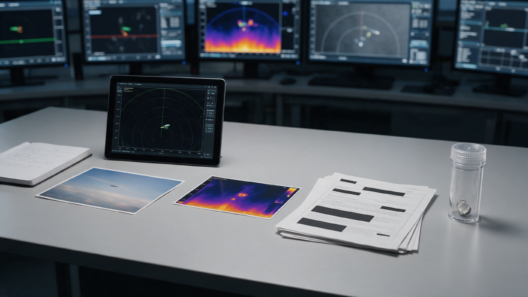
The report therefore argued that UAP should be recorded using multiple, well-calibrated sensors wherever possible. Combining optical imagery, radar, infrared measurements, sound and environmental data can test whether different instruments are detecting the same event and constrain its physical characteristics. NASA’s UAP Independent Study Team Report.
Establishing what “normal” looks like
Searching for anomalies requires a baseline. Investigators first need to understand how aircraft, balloons, drones, birds, satellites, atmospheric effects and sensor artifacts appear under different conditions.
This is important because an anomaly is defined relative to what is expected. A machine-learning system cannot reliably recognize a meaningful deviation if its training data do not adequately describe ordinary events. Human analysts face the same limitation.
The study recommended building well-curated catalogs of known observations recorded by calibrated instruments. These could help investigators compare a reported UAP with familiar signatures and reduce false positives. Only after normal background behavior is characterized can a remaining deviation be assessed properly.
The purpose is not to assume that every report has an ordinary explanation. It is to rule explanations in or out using measurements rather than appearance alone.
What NASA’s satellites could contribute
NASA operates a large network of Earth- and space-observing instruments, but the report did not claim that those systems continuously record small unidentified objects in high resolution.
In fact, it acknowledged that many NASA Earth-observing satellites lack the spatial resolution required to detect objects at the scale commonly associated with UAP reports. Their strongest contribution may instead be environmental context. Satellite data can show cloud cover, weather, atmospheric conditions and other factors at the time and location of an event initially detected by another system.
The panel also identified commercial remote-sensing satellites as a possible source of higher-resolution imagery. Such coverage is not continuous, so useful data would depend on a satellite having observed the relevant area at the relevant time. A coincident collection could support an investigation; the mere existence of a satellite constellation does not mean that a specific event was captured.
This distinction illustrates the report’s practical approach. Existing systems may contribute pieces of evidence, but their capabilities and limitations must be documented before conclusions are drawn.
AI can search data, but it cannot repair missing evidence
Artificial intelligence and machine learning received significant attention in NASA’s report. These methods can search enormous datasets for rare events, group similar observations and identify signals that differ from an established background.
The study also placed an important condition on their use: the data must be well characterized. An algorithm trained on incomplete, inconsistent or poorly calibrated observations can reproduce those weaknesses at scale. It may identify compression artifacts or unusual camera behavior as anomalies without bringing investigators closer to the nature of the event.
The panel concluded that UAP analysis was more constrained by data quality than by the availability of analytical techniques. Better observations should therefore take priority over developing novel algorithms. Existing methods from astronomy, particle physics and other fields may be adaptable once suitable data are available. The report’s findings on AI, calibration and baseline data.
AI is potentially useful as a filter and discovery tool. It is not a substitute for measurement, provenance or independent verification.
A more useful role for public reports
Eyewitness reports can identify patterns and direct attention to a time or location, but they are difficult to reproduce and may lack the measurements needed to test competing explanations.
The panel proposed exploring an open-source smartphone reporting system capable of collecting more than a written description. With appropriate consent and safeguards, an application could preserve original imagery together with time, location and sensor metadata. Near-simultaneous observations from multiple witnesses could potentially help triangulate an object’s position and estimate its size and velocity.
That proposal was not an announcement that NASA had launched such an application. It was a recommendation to investigate whether a standardized crowdsourcing system could improve civilian data collection.
Standardization would be essential. A large database of inconsistent reports may increase volume without increasing evidential value. Useful public reporting requires clear fields, preservation of original files, technical metadata, documented vetting and transparent handling of uncertainty.
Pilots, aviation safety and the FAA
The study treated UAP reporting as an aviation-safety issue as well as a scientific question. It recommended making better use of the Aviation Safety Reporting System for commercial-pilot reports and exploring how future air-traffic-management systems could collect relevant information.
NASA’s long relationship with the Federal Aviation Administration could support this work. Air-traffic systems already observe large volumes of activity, but they are not necessarily designed to detect anomalous objects, and the metadata required for UAP analysis may be absent.
The report also identified stigma as a source of data loss. If pilots, scientists or members of the public avoid reporting unusual observations because they expect ridicule or professional consequences, potentially useful information never reaches investigators. Reducing stigma does not require accepting an extraordinary explanation. It means creating a reporting environment in which observations can be documented and evaluated critically.
Transparency is part of the method
The team worked with unclassified material so that its process and recommendations could be discussed publicly. This supported scientific review, but it also limited the study’s scope. Classified military and intelligence data may contain additional information, yet classification can prevent independent researchers from examining sensors, methods and results.
NASA’s value in this area lies partly in its culture of publishing data and documenting instruments. The report referred to FAIR data principles: information should be findable, accessible, interoperable and reusable. Applied to UAP, that would mean datasets with clear provenance, consistent formats and enough supporting information for qualified researchers to repeat an analysis.
Transparency does not mean that every observation must be released without regard to privacy, security or sensitive capabilities. It means that publicly stated conclusions should be accompanied by as much evidence, methodology and explanation as those constraints allow.
What the report did not establish
The 2023 study is sometimes described as though NASA began a dedicated search for UAP or endorsed a particular explanation. NASA’s current public position is narrower.
Its FAQ, updated in May 2026, says that NASA does not actively search for UAP and has not established a UAP search program with associated programmatic funding. The agency makes its materials and expertise available to the All-domain Anomaly Resolution Office and notes that its Earth-observation data are publicly accessible, although they are not collected specifically to identify UAP. NASA also states that it has found no evidence that UAP are extraterrestrial. NASA’s current UAP FAQs.
The study should therefore be read as an advisory roadmap, not evidence that every recommendation has been implemented. An announced intention, a proposed system and an operating research program are different things.
How progress could be measured
The report provides practical standards against which future initiatives can be judged. Meaningful progress would include:
- a published and consistent reporting standard;
- preservation of original data and complete metadata;
- observations from multiple calibrated sensors;
- baseline catalogs of known objects and sensor effects;
- searchable datasets with documented provenance;
- analytical methods that state assumptions and uncertainty; and
- rapid follow-up procedures when a potentially significant event is detected.
These improvements would not guarantee a dramatic discovery. They would make ordinary explanations easier to confirm, false anomalies easier to recognize and genuinely unresolved events more scientifically valuable.
NASA’s study shifted the central question from “What do people believe UAP are?” to “What would we need to measure in order to find out?” That is its most important contribution. Better evidence may resolve many cases and leave a smaller number unexplained. Either outcome would represent progress because the conclusions would rest on data that others can examine.