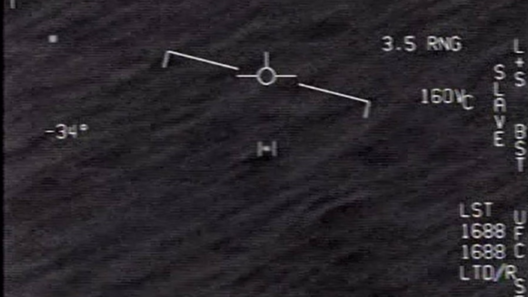

UFO, UAP and non-human intelligence are often used as if they mean the same thing. They do not. Understanding the difference helps separate an unexplained observation from a claim about what caused it.
The language surrounding unidentified phenomena can make a modest fact sound like an extraordinary conclusion. A witness reports something that could not be identified. A government office records it as a UAP. A headline then describes it as possible alien technology.
Those statements are not equivalent.
“Unidentified” describes the state of an investigation at a particular time. “Extraterrestrial” proposes an origin. “Non-human intelligence” introduces a claim about agency. Disclosure concerns access to information. Careful reporting keeps those levels separate.
UFO: the historical term
UFO stands for unidentified flying object. In its basic sense, it describes an object seen in the sky that the observer or investigator has not identified. The acronym does not say that the object is a spacecraft, that it behaves beyond known physics or that it comes from another world.
That distinction can be seen in the history of Project Blue Book. The US Air Force investigated 12,618 reported sightings between 1947 and 1969 and listed 701 as unidentified. Its published summary nevertheless stated that it found no evidence that sightings in that category were extraterrestrial vehicles. “Unidentified” was the outcome of classification, not a conclusion about origin. US Air Force overview of Project Blue Book.
Over time, however, UFO acquired a strong cultural association with alien spacecraft. That association can cause confusion even when a source is using the term neutrally. Historical accuracy still matters: Project Blue Book files and other older records should not be silently rewritten with modern terminology. The National Archives accordingly describes its holdings as records relating to both UFOs and UAPs. National Archives guide to historical UFO and UAP records.
UAP: from “aerial” to “anomalous”
UAP was initially used widely in US government reporting to mean unidentified aerial phenomena. Current US law and NASA use unidentified anomalous phenomena.
This was more than a stylistic edit. In 2022, Congress replaced “aerial” with “anomalous” in the statute governing the All-domain Anomaly Resolution Office. The current legal definition covers three groups: airborne objects that are not immediately identifiable, objects observed moving between domains such as air and water, and certain unidentified submerged objects. The current statutory definition in 50 U.S.C. § 3373.
NASA also says that it now uses “unidentified anomalous phenomena” to remain consistent with the National Defense Authorization Act, while noting that its 2023 independent study was largely concerned with aerial events. NASA’s UAP terminology explanation.
Definitions can therefore depend on the agency, country and date. When reading a report, the safest approach is to use the source’s own definition rather than assume that every appearance of UAP has exactly the same scope.
Why “unidentified” is not the same as “unexplainable”
An observation can remain unidentified for several reasons. The object may have been genuinely unusual, but the available image may also be too compressed, the viewing angle uncertain, the sensor characteristics unknown or the duration too short. An investigator may be unable to choose confidently among ordinary possibilities.
In that situation, “unresolved” can be the most accurate conclusion. It means that the evidence does not support a reliable identification. It does not mean that every conventional explanation has been disproved.
NASA says that the limited number of high-quality UAP observations currently prevents scientific conclusions about the nature of the events. It also states that most sightings provide very limited data and that there is no evidence UAP are extraterrestrial. NASA’s UAP FAQs.
This is why a case can be interesting without supporting an extraordinary explanation. A lack of evidence may leave a question open, but it cannot automatically become evidence for one preferred answer.
What does “anomalous” tell us?
An anomaly is something that does not fit an expected pattern or cannot yet be reconciled with the available information. The word identifies a problem for investigation; it does not explain the problem.
An apparent anomaly can arise from the object itself, the environment, the observer, the recording system or the analysis. For example, apparent motion depends on distance, viewing angle, camera movement and the sensor’s field of view. Without those inputs, speed can be difficult to estimate from video alone.
Calling an event anomalous therefore does not necessarily mean that it violates known physics. It means there is a discrepancy or an unresolved feature worth examining. Better measurements may make that feature ordinary, confirm that it is unusual or show that the original interpretation was mistaken.
Non-human intelligence is a claim about agency
The phrase non-human intelligence, often shortened to NHI, operates at a different level from UFO or UAP. UFO and UAP label an observation that has not been identified. NHI proposes that some form of intelligence not attributable to humans is involved.
The phrase is also broader than “extraterrestrial.” On its own, it does not specify where the alleged intelligence comes from, what form it takes or what evidence would establish it. Its precise meaning should therefore be taken from the speaker, document or law using it.
The term appears in the mandate for the federal UAP Records Collection. The National Archives explains that agencies must identify records relating to UAP, technologies of unknown origin and non-human intelligence, including equivalent subjects recorded under other names. National Archives FAQ on the UAP Records Collection.
That language defines the scope of a records search. It is not a finding that non-human intelligence exists. A government archive can contain a witness allegation, an internal question, a rejected hypothesis or an analytical conclusion. The presence of a phrase proves that the subject appears in the record; evaluating the underlying claim requires evidence beyond the document’s title or existence.
Disclosure, release and declassification
Disclosure is an umbrella term rather than a scientific category. It can refer to the release of records, testimony before legislators, answers to public-records requests, official acknowledgements or the publication of underlying data.
Related words describe more specific actions:
- Released means information has been made available. It may never have been classified.
- Declassified means an authorized decision removed or reduced a national-security classification.
- Leaked generally means information was disclosed without authorization. Authenticity, provenance and completeness still have to be established.
- Redacted means part of a released record has been withheld or obscured, usually under a stated legal basis.
None of these labels establishes that every assertion in a document is true. An authentic declassified report can faithfully preserve an inaccurate witness statement. Conversely, a record can be important even when it does not validate the explanation proposed within it.
A practical glossary
| Term | What it tells the reader | What it does not establish |
|---|---|---|
| UFO | An observed flying object was not identified in the relevant account or investigation | Alien origin or extraordinary performance |
| UAP | A phenomenon falls within the source’s category for unidentified aerial or anomalous events | One universal definition or a particular cause |
| Unresolved | Available evidence did not support a confident resolution | That ordinary explanations were ruled out |
| Anomalous | Something did not fit expectations or available analysis | A violation of physics |
| NHI | A source is referring to alleged intelligence that is not human | That such intelligence exists or is extraterrestrial |
| Disclosure | Information is being sought, examined or made accessible | That the released claims have been verified |
| Extraterrestrial | An origin beyond Earth is being proposed | That a UFO or UAP is evidence for that proposal |
How to read a UAP headline
Before accepting the implication of a headline, ask five questions:
- Which definition is the source using? “UAP” may refer only to aerial observations in one document and to a broader all-domain category in another.
- What was observed? Separate the original sighting or sensor return from later interpretations of it.
- What does “unresolved” mean in this case? Look for missing data, failed identification attempts and explanations that were considered.
- Is the source reporting evidence or an allegation? Testimony, an intelligence tip and independently examined data have different evidential weight.
- What became public? Distinguish the date of the event from the date a document was created, declassified or released.
Precise language does not make the subject less compelling. It makes the remaining mystery clearer. When terms are used consistently, readers can see what is known, what has merely been claimed and what evidence would be needed to move from one category to the next.
The most important word in both UFO and UAP remains “unidentified.” It marks the beginning of an investigation, not its answer.