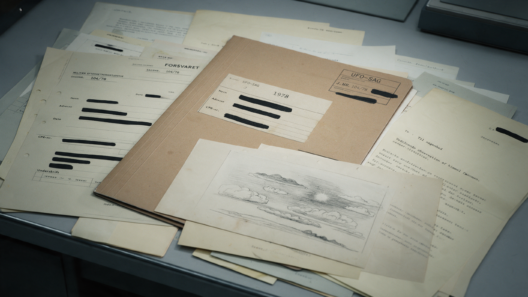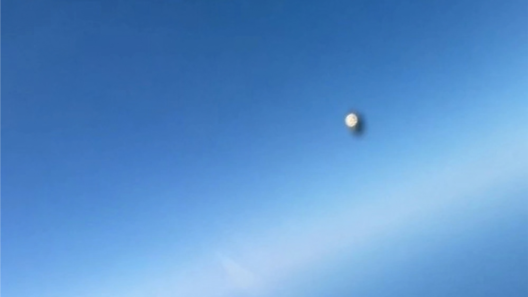
The National Archives provides access to documents, images and recordings about UFOs and UAP. Finding useful records begins with understanding how the archive is organized.
The US National Archives and Records Administration does not maintain one complete “UFO file.” Its holdings combine a new UAP collection with older material distributed across agencies, record groups and formats. A file’s position in that structure helps establish its creator, history and release status.
Begin with Record Group 615
Record Group 615 is the Unidentified Anomalous Phenomena Records Collection established under the 2024 National Defense Authorization Act. It contains digital copies transferred by federal agencies and is the clearest starting point for recent releases.
On its page last reviewed on 4 September 2026, NARA listed records from eight bodies: the Federal Aviation Administration, Nuclear Regulatory Commission, Office of the Director of National Intelligence, Office of the Secretary of Defense, National Security Agency, Department of State, FBI and Department of the Air Force. More records are being added on a rolling basis.
Choose an agency, then follow its National Archives Identifier—NAID—into the Catalog. The adjacent “Agency Provided Metadata” records how the agency identified and processed the files.
Understand the archive hierarchy
The Catalog describes records at several levels, so a search result may represent a large body of material rather than one document.
| Level | What it usually represents |
|---|---|
| Record group | Records associated with a major agency or organizational source |
| Series | Related records created or maintained together |
| File unit or item | A case file, folder, report, photograph, recording or other specific record |
| Digital object | The downloadable scan, PDF, image, audio or video file |
NARA says more than 95 percent of its holdings are described at series level. A description without an online scan does not mean the records are empty or nonexistent. Open it, check the “Includes” field and look for digital objects. NARA’s Catalog guide.
Read the metadata before the document
For RG 615, agencies must provide metadata that includes the originating office, creation date, agency identifiers, previous and current classification, release status and any basis for withholding. Release status can be “Released in Full,” “Released in Part” or “Withheld in Full.” NARA’s transfer guidance.
An event date may differ from the document’s creation, review, transfer and publication dates. The transferring agency may also differ from its originator.
Record the NAID whenever you save a file. Titles and web layouts may change; the identifier provides a stable route back to the Catalog entry and its provenance.
Search beyond the new UAP collection
RG 615 does not replace NARA’s older UFO holdings. Its UFO and UAP research page links to photographs, recordings, textual files and presidential libraries across many record groups.
Historical terminology matters. Try combinations of:
UAPandunidentified anomalous phenomenaUFOandunidentified flying objectflying disc,flying diskandflying saucer- A location, date, military base, flight number or agency name
- A programme name such as
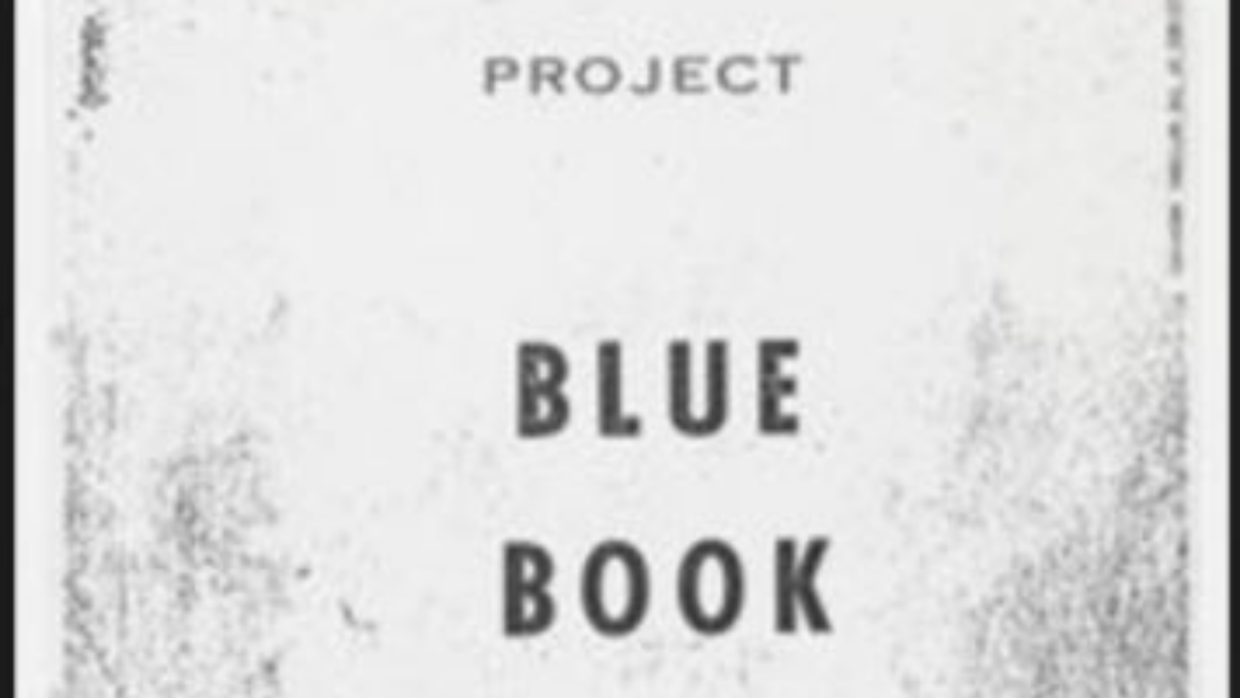
Project Blue Book
The textual and microfilm guide, for example, points to records from the FAA, NASA and Air Force. NARA’s broader record-group index includes sanitized Project Blue Book case files, photographs, films, sound recordings and Roswell research files. Searching only for the modern term “UAP” will miss much of this material.
Use bulk downloads for larger investigations
For comparisons across an agency or series, NARA provides UAP bulk downloads. Packages include available PDFs, images, video or audio alongside searchable JSON metadata.
Check the download size before starting: some packages contain many gigabytes. NARA says the bulk collections are updated at least three times a year, so note the update date and retain the metadata file used for your research.
Not every described record is included. Some audiovisual material is unavailable online because of copyright or other rights restrictions and must be consulted onsite at the National Archives in College Park, Maryland.
Treat gaps and redactions accurately
For a partly restricted RG 615 record, NARA requires an unredacted version and a redacted public copy. A withheld passage should be reported as unavailable—not reconstructed through speculation.
Likewise, failure to find a document online can mean that it has not been digitized, has not yet been transferred, is described under different terminology or remains restricted. It does not prove that the record never existed.
For every document used in an article, preserve the title, NAID, originating agency, creation date, relevant page or filename, release status and access date. Then ask what kind of record it is. An official witness report proves that a report was filed; it does not by itself establish the cause or origin of the observation.
The archive is most valuable when its structure remains attached to its contents. A dramatic page can attract attention, but metadata, context and corroboration determine what it can actually show.
Sources
- National Archives: Record Group 615
- National Archives: UFO and UAP-related records
- National Archives: UAP Records Collection FAQ
- National Archives: Guidance to agencies transferring UAP records
- National Archives: Using the Catalog
- National Archives: Textual and microfilm UAP records
- National Archives: UAP bulk downloads